


Blog
7 Common Vaping Myths Debunked: Facts Over Fear

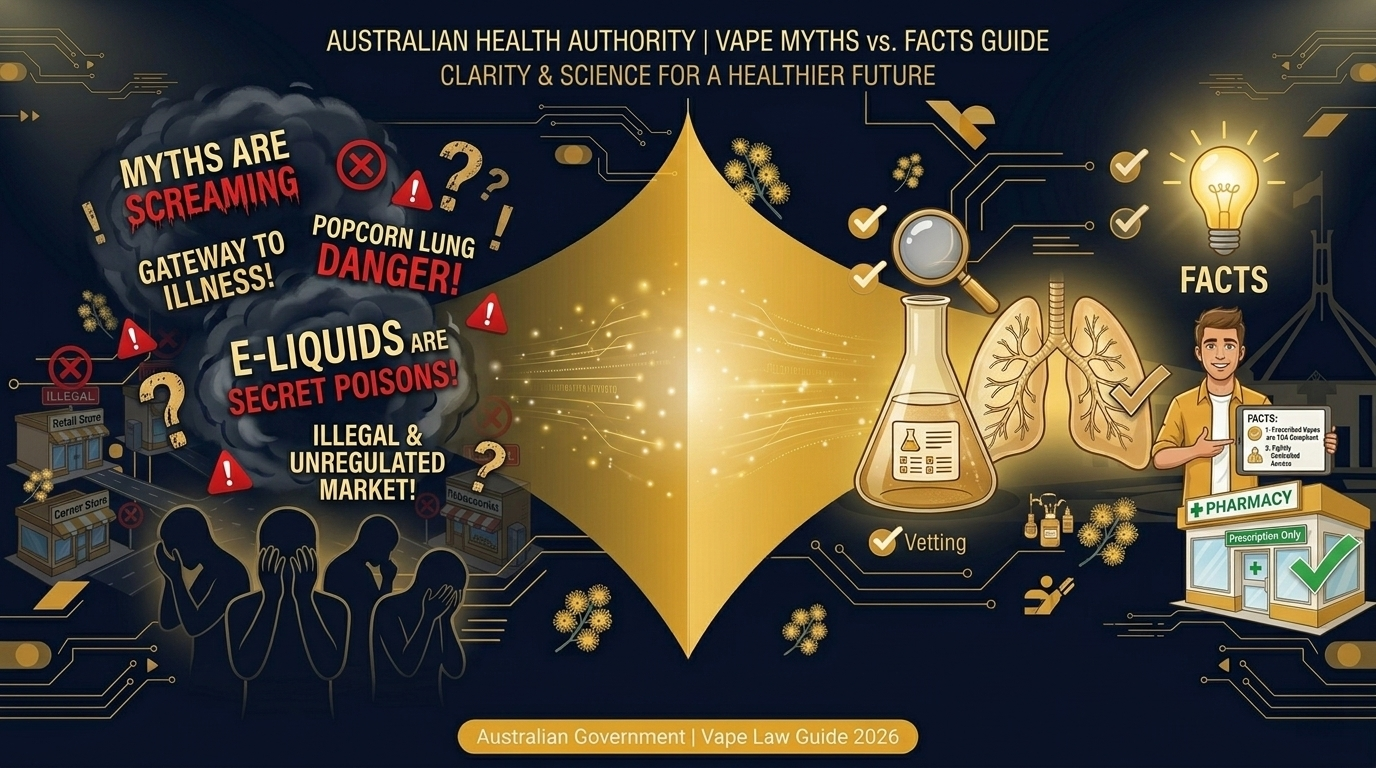
🔗 Related Health Science Articles
Introduction: Why Vaping Myths Persist
Vaping is a relatively new phenomenon, and where there's uncertainty, myths thrive. Headlines often grab attention with alarming claims, but the full story is usually more nuanced. This article examines the most common vaping myths causing unnecessary fear. We separate what we know as FACT, what is MISREAD or exaggerated, and what REMAINS UNDER STUDY. Our goal is to help you interpret health information with a balanced, evidence-based perspective.
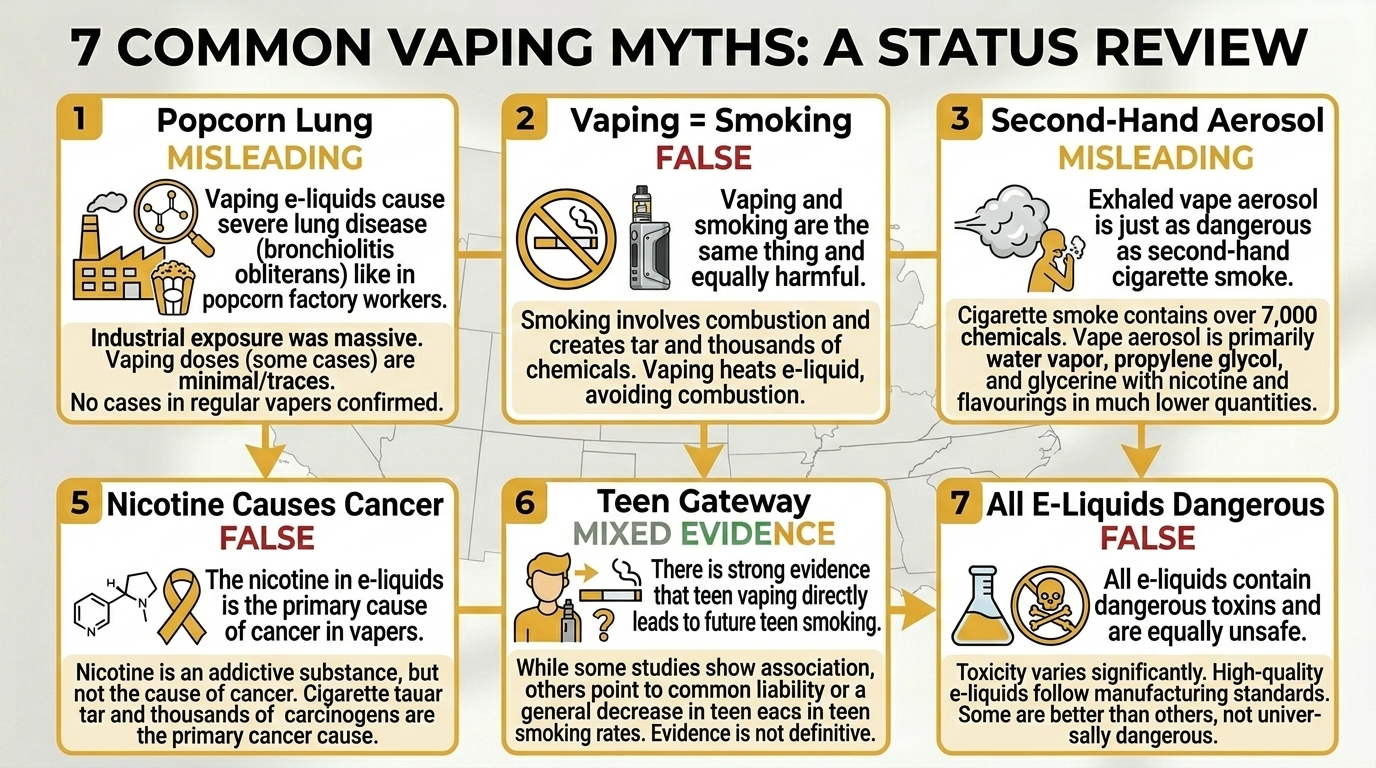
Myth #1: Popcorn Lung from Vaping Is a Major Risk
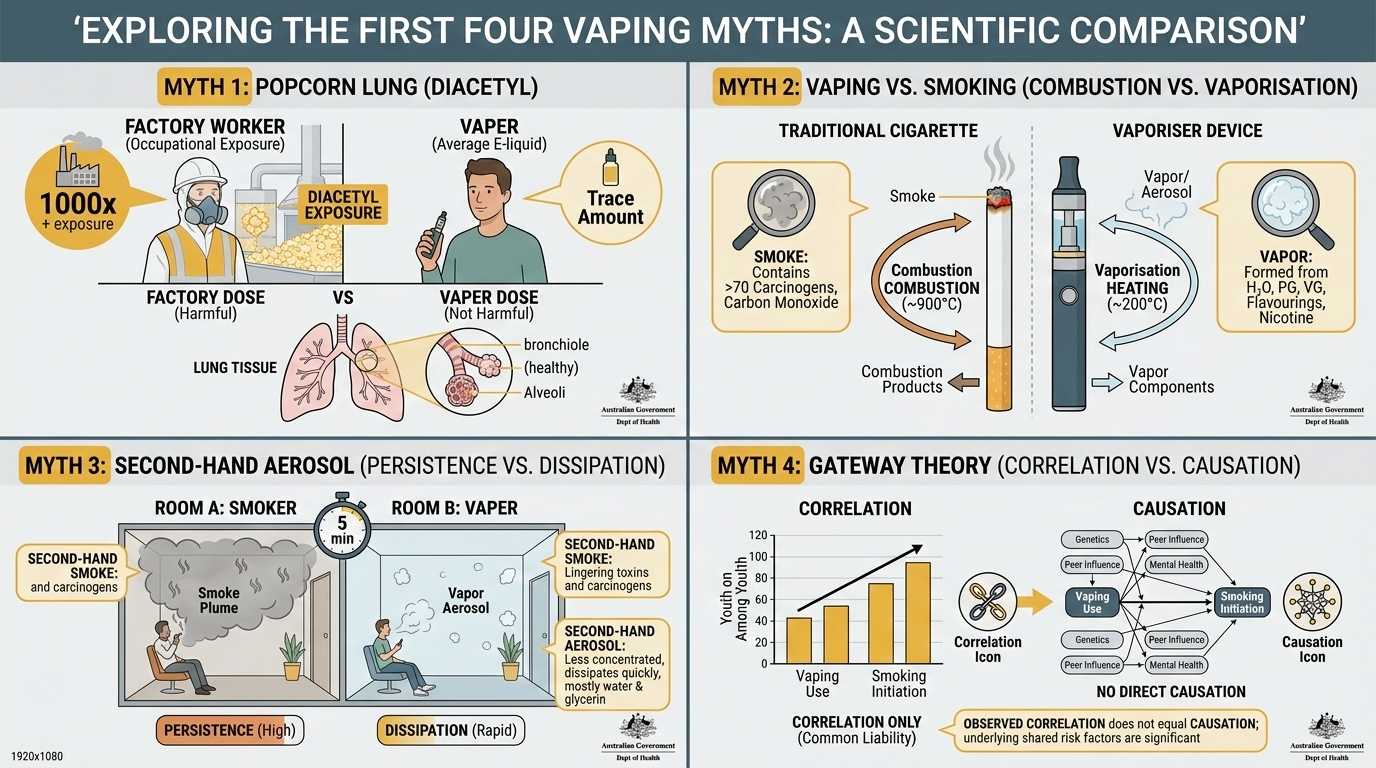
THE MYTH: Vaping exposes you to diacetyl, the chemical linked to popcorn lung (bronchiolitis obliterans), putting vapers at high risk of this rare lung disease.
THE FACT: The concern is real but the risk is often exaggerated. Diacetyl was found in some e-liquids a decade ago, leading to media panic. However, factory workers inhaled diacetyl at levels thousands of times higher than vapers. Cigarette smoke contains more diacetyl than most e-liquids, yet popcorn lung isn't common among smokers. Most reputable brands removed diacetyl after early reports. There is no documented case of bronchiolitis obliterans caused solely by commercial vaping. For a deeper dive, read our full guide: Popcorn Lung and Vaping: Separating Myth from Medical Fact.
STILL UNCERTAIN: Long-term effects of inhaling even low levels of diacetyl are unknown. Some individuals may be more susceptible. The absence of proof is not proof of safety.
Myth #2: Vaping Is Just as Harmful as Smoking
THE MYTH: Vaping and smoking carry the same health risks. They both deliver nicotine, so they must be equally bad.
THE FACT: This ignores the fundamental difference: combustion vs. vaporisation. Cigarettes burn at ~900°C, producing tar, carbon monoxide, and thousands of toxins, many carcinogenic. Vaping heats liquid to 200–250°C, creating an aerosol without combustion. The toxins in cigarette smoke are responsible for the vast majority of smoking-related diseases.
STILL UNCERTAIN: While vaping likely carries lower risk than smoking, the long-term health effects over decades remain unknown. Lower risk is not no risk.
Myth #3: Second-Hand Vape Aerosol Is as Dangerous as Second-Hand Smoke
THE MYTH: Being near someone who vapes exposes you to the same level of toxins as cigarette smoke.
THE FACT: Studies consistently show that second-hand aerosol contains fewer and lower levels of toxicants than cigarette smoke. It dissipates faster and doesn't contain combustion byproducts like carbon monoxide. However, it is not harmless—it contains nicotine, ultrafine particles, and flavourings. For more detail, see our guide Second-Hand Vape Aerosol: What We Know About Indoor Risks.
STILL UNCERTAIN: Long-term health effects of chronic exposure to second-hand aerosol are not yet well-studied. The precautionary principle suggests minimising exposure, especially for vulnerable individuals.
Myth #4: Vaping Always Leads to Smoking
THE MYTH: Vaping is a gateway that inevitably leads young people to start smoking.
THE FACT: This is an oversimplification. While some studies show correlation between teen vaping and later smoking, causation is debated. Most adults who vape are current or former smokers using it as a harm reduction tool. For youth, any nicotine use is concerning, but the gateway narrative ignores that smoking rates have declined as vaping has increased.
STILL UNCERTAIN: The long-term trajectory for today's young vapers remains unknown. Continued monitoring is essential.
Myth #5: Nicotine in Vapes Causes Cancer
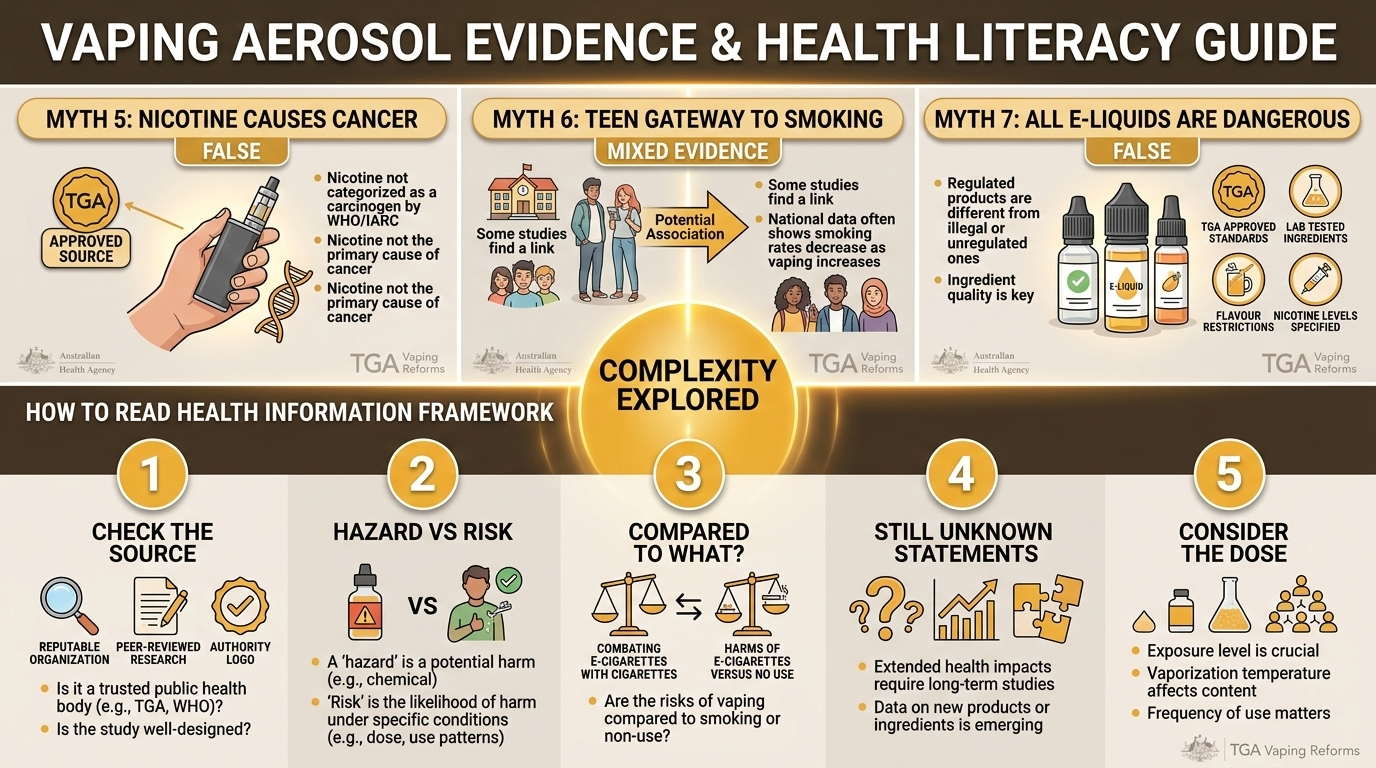
THE MYTH: Nicotine itself is a carcinogen, so vaping causes cancer.
THE FACT: Nicotine is addictive but is not classified as a carcinogen by major health authorities. The cancer risk from smoking comes primarily from the thousands of chemicals produced during combustion, not nicotine itself. This is why nicotine replacement therapies (patches, gum) have been used safely for decades.
STILL UNCERTAIN: Nicotine may have other cardiovascular effects, and its long-term impact when inhaled (rather than absorbed through skin) is still being studied.
Myth #6: Vaping Is a Gateway for Teens to Start Smoking
THE MYTH: Vaping is causing a new generation to take up smoking.
THE FACT: Evidence is mixed. Many teens who vape would have experimented with other substances regardless. Youth smoking rates in countries with high vaping rates (like the US and UK) have continued to decline. The concern is legitimate, but the gateway framing may be too simplistic. Understanding youth risks is also covered in Kids and Vapes: The Real Child Safety Risk No One Talks About.
STILL UNCERTAIN: Long-term studies tracking youth into adulthood are needed to understand true trajectories. Current data does not support a simple gateway conclusion.
Myth #7: All E-Liquids Contain Dangerous Chemicals
THE MYTH: E-liquids are unregulated and full of toxic ingredients.
THE FACT: In Australia, products that meet TGA standards (for prescription access) must comply with quality and safety requirements. Even outside the regulated market, the vast majority of e-liquids contain only a few base ingredients (propylene glycol, vegetable glycerin, nicotine, flavourings). However, the illicit market does contain products with unknown ingredients, which is why regulated access is important.
STILL UNCERTAIN: Long-term inhalation safety of some flavouring compounds is not fully understood. This is an active area of research.
How to Read Health Information: A Balanced Approach
Fear sells headlines, but balanced decisions require more context when evaluating e-cigarette misconceptions. Here's a framework for interpreting vaping-related health claims:
Prioritise peer-reviewed studies and government health agencies.
Hazard ≠ risk at given exposure levels.
Relative risk matters—especially for smokers.
Good reporting acknowledges uncertainty.
The dose makes the poison.
Myths at a Glance: Status Summary
Popcorn lung is a major risk
MISLEADING
Vaping = smoking in harm
FALSE
Second-hand aerosol = smoke
MISLEADING
Vaping always leads to smoking
OVERSIMPLIFIED
Nicotine causes cancer
FALSE
Vaping is a teen gateway
MIXED EVIDENCE
All e-liquids contain dangerous chemicals
FALSE — regulated products meet safety standards
Conclusion: Rational Caution, Not Panic
Vaping, like any behaviour that involves inhaling substances, carries some risk. But the most common vaping myths circulating online often exaggerate those risks far beyond what evidence supports. The goal of this article is not to dismiss legitimate health concerns—nicotine addiction, potential lung irritation, and unknown long-term effects are real issues. Instead, it's to help you distinguish between reasonable caution and unnecessary fear.
For adult smokers, understanding the difference in risk profile between smoking and vaping can inform better decisions about quitting or switching. For context on cessation, read Can Vaping Help You Quit Smoking? A 2026 Evidence Check. For non-smokers, especially youth, the message remains clear: don't start any nicotine product. And for everyone, a healthy scepticism toward sensational headlines—paired with curiosity about actual evidence—is the best approach to navigating health information.
📖 Explore More Myth-Busting Guides
🇦🇺 G'DayVape perspective: We believe in providing clear, evidence-based information to help Australian adults make informed decisions. Understanding vaping myths debunked and separating fact from fear allows vapers to navigate health information with confidence. For more myth-busting content, explore our related guides above.
📚 References & Authoritative Sources
- National Academies of Sciences, Engineering, and Medicine. (2018). Public Health Consequences of E-Cigarettes. nap.edu
- UK Office for Health Improvement and Disparities. (2026). Nicotine vaping in England: evidence reports. gov.uk
- Australian Department of Health and Aged Care – Vaping Hub. (2026). Health information on vaping. health.gov.au
- Therapeutic Goods Administration (TGA). (2026). Nicotine vaping products regulation. tga.gov.au
- Cancer Council Australia. (2025). Position Statement: Electronic Cigarettes. cancer.org.au
All external sources are government, academic, or official health institutions. Links are dofollow and open in new tabs. Information current as of March 2026.
© 2026 G'DayVape — Australian vape knowledge, grounded in clarity. Always adult-only. This guide is for informational purposes only and does not constitute medical advice. Always consult healthcare professionals for personal health decisions.
 RELX Pod