


Blog
Nicotine Explained: Why It’s Addictive and Why People Still Use It

How Nicotine Works: Hijacking the Brain's Reward System
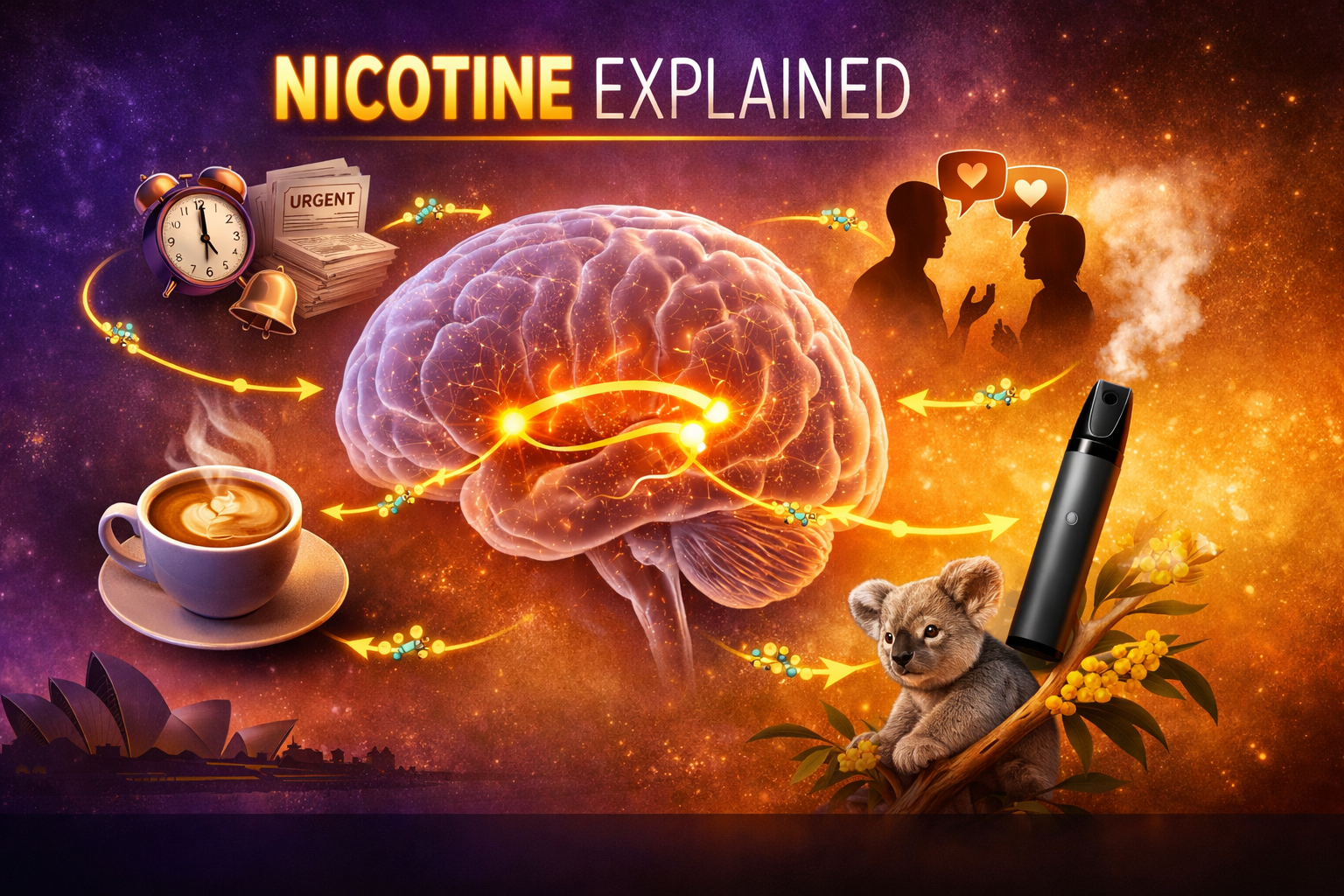
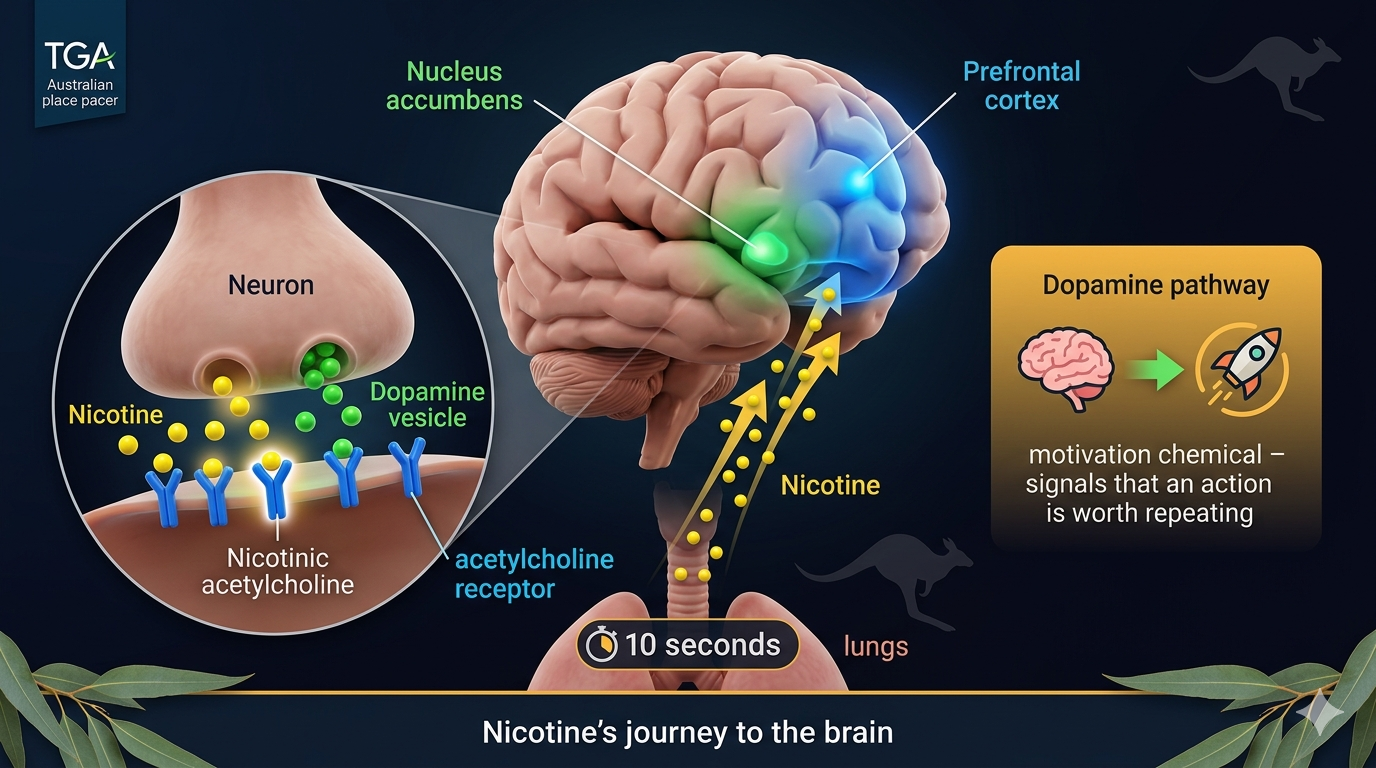
Nicotine is a natural alkaloid found in tobacco leaves, but its effect on the human brain is anything but simple. When inhaled, nicotine reaches the brain in seconds [citation:7]. It locks onto specialised receptors—nicotinic acetylcholine receptors—that normally respond to the neurotransmitter acetylcholine [citation:7].
This binding triggers a cascade: the adrenal glands release adrenaline, raising heart rate and blood pressure. More importantly, nicotine stimulates the release of dopamine in the nucleus accumbens, the brain's reward centre [citation:7]. Dopamine is often called the "pleasure chemical," but it's more accurately described as the "motivation chemical." It signals that an action is worth repeating [citation:7].
Key takeaway: Nicotine hijacks a system designed to reinforce survival behaviours (eating, social bonding) and applies it to the act of inhaling a substance.
Why Addiction Is Not a Failure of Willpower
One of the most persistent and harmful myths is that addiction simply reflects weak self‑control. Neuroscience tells a different story [citation:1][citation:7].
With repeated exposure, the brain adapts. Receptors multiply, and the reward system becomes less sensitive to natural dopamine triggers. What once produced a mild sense of pleasure becomes necessary just to feel "normal." This is called neuroadaptation [citation:7].
When nicotine is absent, the brain's chemistry is temporarily unbalanced, leading to withdrawal symptoms [citation:7]. These are not signs of moral weakness; they are signs of a brain attempting to restore its equilibrium.
As the Royal Australian College of General Practitioners states, nicotine dependence is a chronic condition, not a character flaw [citation:7]. Recent research from Springer shows that during early abstinence, the brain undergoes significant transcriptional and chromatin remodelling, including sustained upregulation of the Dusp4 gene, which may underlie relapse vulnerability [citation:1]. This is biological, not behavioural.
The Withdrawal-Relief Cycle: Why It "Feels" Like Stress Relief
Many people say they vape or smoke to relax or focus. But research from mental health services explains why this feeling is misleading: nicotine doesn't solve stress, it temporarily relieves nicotine withdrawal [citation:2].
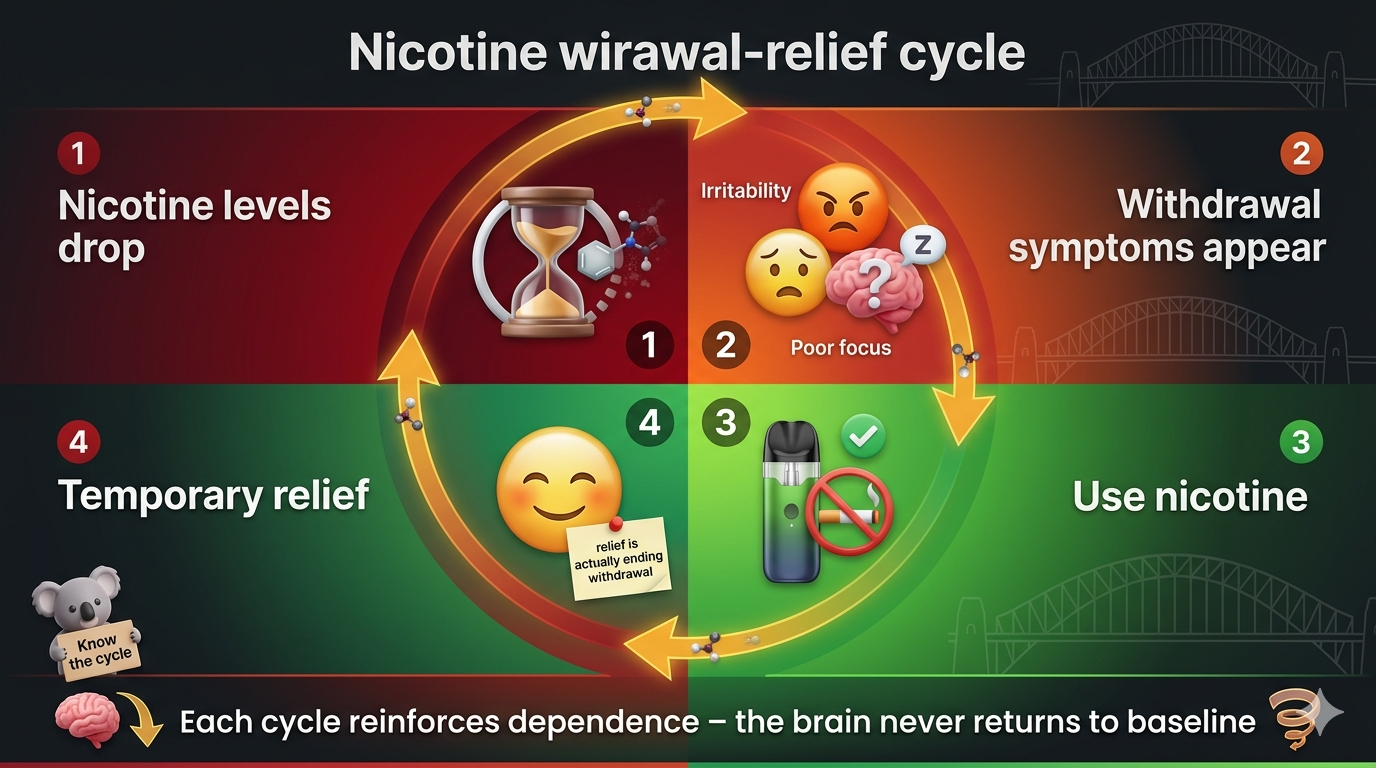
- As nicotine levels drop, the brain experiences withdrawal: irritability, anxiety, poor concentration [citation:2][citation:7].
- Using nicotine temporarily ends those symptoms, creating a powerful illusion of stress relief or cognitive enhancement [citation:2].
- In reality, the user is simply restoring normal function after withdrawal [citation:2].
The "Normalisation" Effect
Research confirms that smokers in withdrawal show cognitive impairments. After smoking, performance returns to baseline—but rarely exceeds that of non-smokers [citation:5]. This "normalisation" is often misinterpreted as improvement. The Global Institute for Novel Nicotine notes that sustained dependence may reinforce cycles of withdrawal and relief rather than confer stable performance advantages [citation:9].
The Real Reasons People Continue to Use Nicotine
If nicotine only caused addiction with no redeeming qualities, the picture would be simple. But for many adults, nicotine serves functional roles beyond avoiding withdrawal [citation:9].
Nicotine can temporarily improve concentration and reduce anxiety by boosting dopamine and serotonin [citation:9]. For users accustomed to these effects, it becomes a quick‑acting tool to manage daily pressure.
The act of vaping or smoking provides a structured pause in a busy day—a moment to step outside, breathe, and reset. This psychological anchoring is often as important as the chemical effect [citation:9].
Shared smoke breaks or vape sessions create informal bonds. For some, quitting means losing not just nicotine, but a social ritual [citation:9].
Controlled studies show acute nicotine exposure can enhance attention, alertness, and working memory, particularly in individuals experiencing withdrawal [citation:9]. However, long-term cognitive health is not enhanced [citation:9].
Acknowledging these realities is not an endorsement. It is simply recognising that nicotine use, for many, is a coping mechanism—an imperfect solution to the demands of modern life [citation:9].
Nicotine, Cigarettes, and Vapes: Not the Same Story
This is where the delivery system becomes crucial. Nicotine itself is addictive and not risk‑free, but the delivery method dramatically changes the overall health impact [citation:4][citation:7].
| Product | Delivery Method | Key Health Context |
|---|---|---|
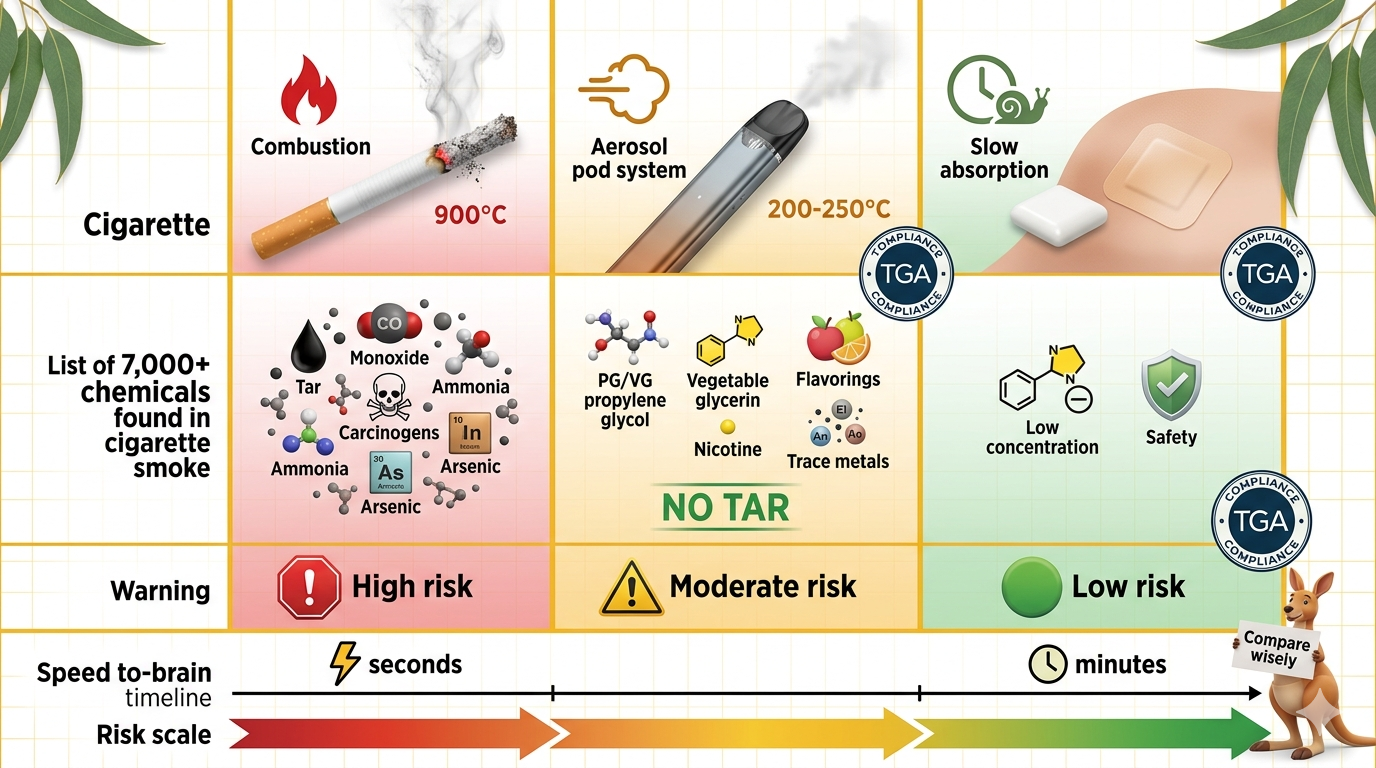
| Cigarettes | Combustion (900°C) | Deliver nicotine alongside 7,000+ chemicals, including tar and carbon monoxide. These by-products cause the majority of smoking-related disease [citation:4][citation:7]. |
| Vapes | Aerosolisation (200-250°C) | Deliver nicotine without combustion. Risk profile is different—substantially lower in toxins that cause cancer and lung disease, but still carries the risk of nicotine addiction [citation:4][citation:7]. |
| NRT (gum, patches) | Slow absorption | Deliver nicotine slowly, without sensory and ritual elements. Effective for cessation but less attractive as a long-term substitute [citation:7]. |
Recent research from the Cochrane Library confirms that nicotine's addictive potential depends not only on dose but also on the rapidity of delivery. Smoke inhalation is one of the most rapid methods, while NRT carries minimal risk of dependence due to slower delivery [citation:3]. Vapes more closely mimic the pharmacokinetics of smoking, which explains both their appeal to smokers and their dependence potential [citation:3].
What This Means for Australian Users – and Non‑Users
There is no contradiction in stating both of the following [citation:9]:
- Nicotine is addictive. Anyone who does not currently use nicotine has no reason to start. The healthiest choice is to never use it [citation:7].
- For current smokers, completely switching to a non‑combustible nicotine product (like a vape) is likely to reduce exposure to the most harmful chemicals in tobacco smoke. This is harm reduction, not harm elimination [citation:4][citation:7].
Many adult vapers are not "in denial" about addiction—they are making a calculated trade‑off: accept continued nicotine dependence in exchange for moving away from the unequivocal dangers of burning tobacco [citation:7].
Common Misconceptions Explained
- ❌ "People use nicotine because they're weak-willed."
Reality: Neuroscience shows addiction is a chronic condition involving neuroadaptation, not willpower. The brain literally changes with repeated exposure [citation:1][citation:7]. - ❌ "Vaping is just as addictive as smoking."
Reality: Both contain nicotine, but cigarettes are engineered to maximise addiction through rapid delivery and added chemicals. Research shows over 2/3 of people who try one cigarette become daily smokers [citation:4]. - ❌ "Nicotine causes cancer."
Reality: The severe diseases caused by smoking are primarily driven by combustion products (tar, carbon monoxide, carcinogens), not nicotine itself [citation:4][citation:7]. Nicotine is addictive but not the primary cause of cancer. - ❌ "If vaping wasn't addictive, people wouldn't use it."
Reality: This ignores the functional roles nicotine plays—stress modulation, ritual, social bonding. Many adults make an informed choice to accept addiction for these benefits [citation:9].
Conclusion: Understanding Before Judgement
Nicotine is neither a demon nor a harmless pleasure. It is a substance with real neurological effects, real addictive potential, and—for some—real functional value in navigating stress and habit [citation:9].
By separating the science of addiction from moral judgement, we can have more honest conversations. Whether the goal is quitting, switching, or simply understanding, the first step is always the same: acknowledge the complexity, respect the individual, and rely on evidence [citation:9].
🇦🇺 G'DayVape difference: We're committed to providing accurate, evidence-based information to help Australian adults make informed decisions. Always consult health professionals for personal medical advice.
📚 References & trusted sources
- Springer / Cellular and Molecular Neurobiology – Extinction of Nicotine and Cocaine Seeking in Rats Reveals Novel, Unique and Time-Dependent Molecular Adaptations in the Medial Prefrontal Cortex (Jan 2026). link.springer.com [Molecular mechanisms of nicotine relapse vulnerability]
- Feel Good Suffolk (NHS Service) – Smoking and mental health. feelgoodsuffolk.co.uk [Withdrawal-relief cycle, smoking and anxiety/depression]
- Cochrane Library – Reduced‐nicotine cigarettes for smoking cessation and reduction (protocol, March 2026). cochranelibrary.com [Nicotine delivery speed and dependence potential]
- Australian Government Department of Health – What is smoking and tobacco? (Jan 2024). health.gov.au [Tobacco chemicals, nicotine as addictive drug]
- CiNii / Japanese research database – Neuropharmacological/Cognitive Aspects of Tobacco Smoking (Jan 2026). cir.nii.ac.jp [Cognitive effects of nicotine, normalisation vs stimulation]
- ScienceDirect / Drug and Alcohol Dependence – Sustained effects of reduced nicotine cigarettes and co-use of non-combusted alternative nicotine delivery systems (Jan 2026). sciencedirect.com [VLNC cigarettes and ANDS co-use]
- Australian Government Department of Health – Nicotine is addictive (Dec 2024). health.gov.au [Nicotine addiction mechanism, withdrawal, neuroadaptation, quitting support]
- Global Institute for Novel Nicotine (GINN) – Nicotine, Cognition and Mental Health: Implications for Evidence-Based Regulation (March 2026). ginn.global [Cognitive effects, mental health correlations, regulatory implications]
All sources are government, academic, or health organisations. Retrieved March 2026.
© 2026 G'DayVape — Australian vape knowledge, grounded in clarity. Always adult-only.
 RELX Pod