

Blog
Popcorn Lung and Vaping: 5 Essential Facts Aussies Must Know

🔗 Related Health Science Articles
1. Where Does Popcorn Lung Come From?
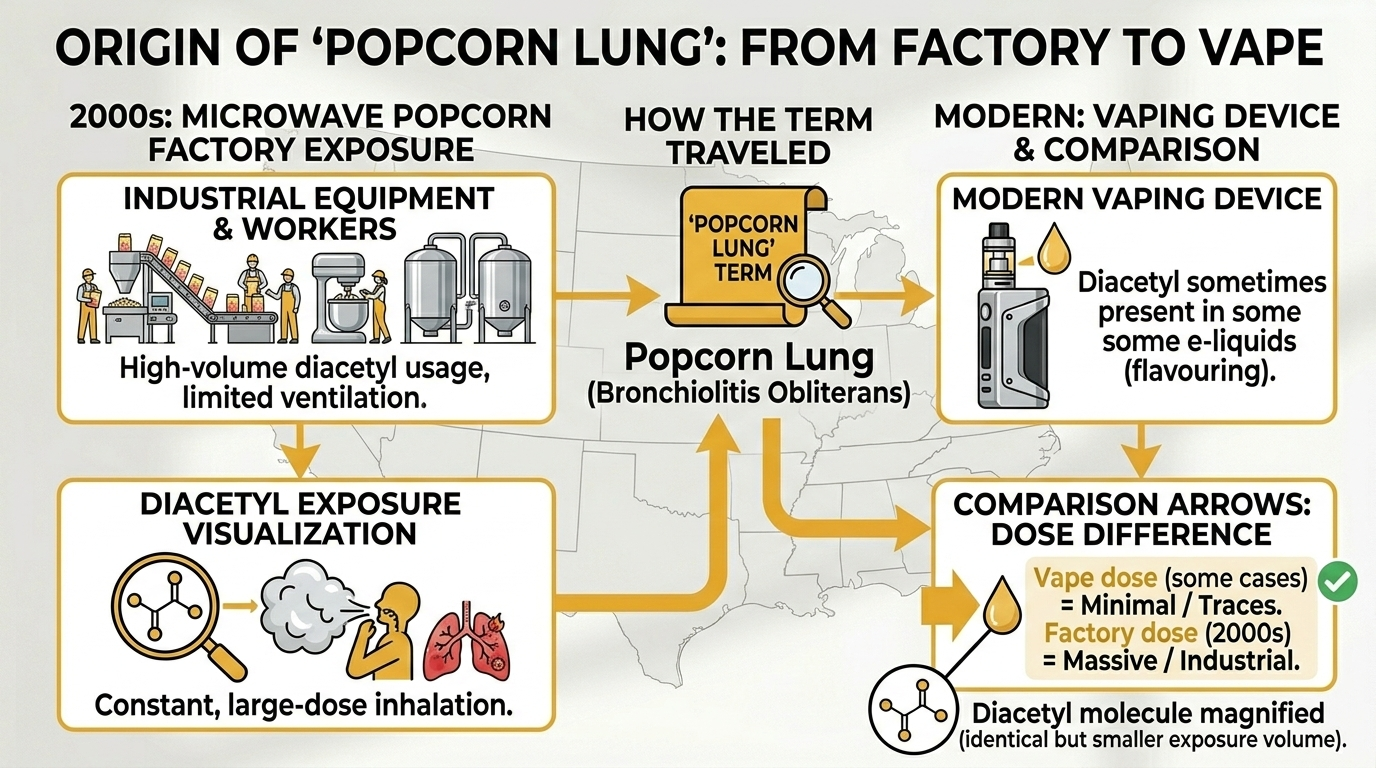
The medical name for popcorn lung is bronchiolitis obliterans. It's a rare, serious lung disease where the smallest airways (bronchioles) become inflamed and scarred, leading to persistent cough and shortness of breath. It is not a form of cancer, and it is not exclusive to any single cause—it can result from infections, autoimmune diseases, or exposure to certain chemicals. The term popcorn lung and vaping became linked through a specific historical event.
The popcorn link comes from an outbreak in the early 2000s among workers at a microwave popcorn plant in the United States. They inhaled large amounts of diacetyl, a chemical used to give popcorn its buttery flavour. Over time, some workers developed bronchiolitis obliterans. The media coined the term popcorn lung, and the name stuck. For broader context on respiratory health, our guide on Second-Hand Vape Aerosol explores indoor air considerations.
2. Why Did This Get Linked to Vaping?
The connection to vaping is straightforward but often oversimplified. Early in the vaping industry, some e-liquid manufacturers used diacetyl to create creamy, buttery, or dessert-like flavours (e.g., custard, cake batter). Laboratory tests confirmed its presence in a portion of flavored e-liquids. Because diacetyl was the suspected cause of the factory workers' illness, public health advocates raised a logical question: if inhaling diacetyl in a factory setting caused lung disease, could inhaling it from an e-cigarette pose a similar risk? This question was legitimate. The problem arose when it was presented as a proven fact rather than a hypothesis requiring investigation. Understanding what's actually in e-liquids is also covered in our 7 Common Vaping Myths Debunked article.
3. How the Media Distorted the Story
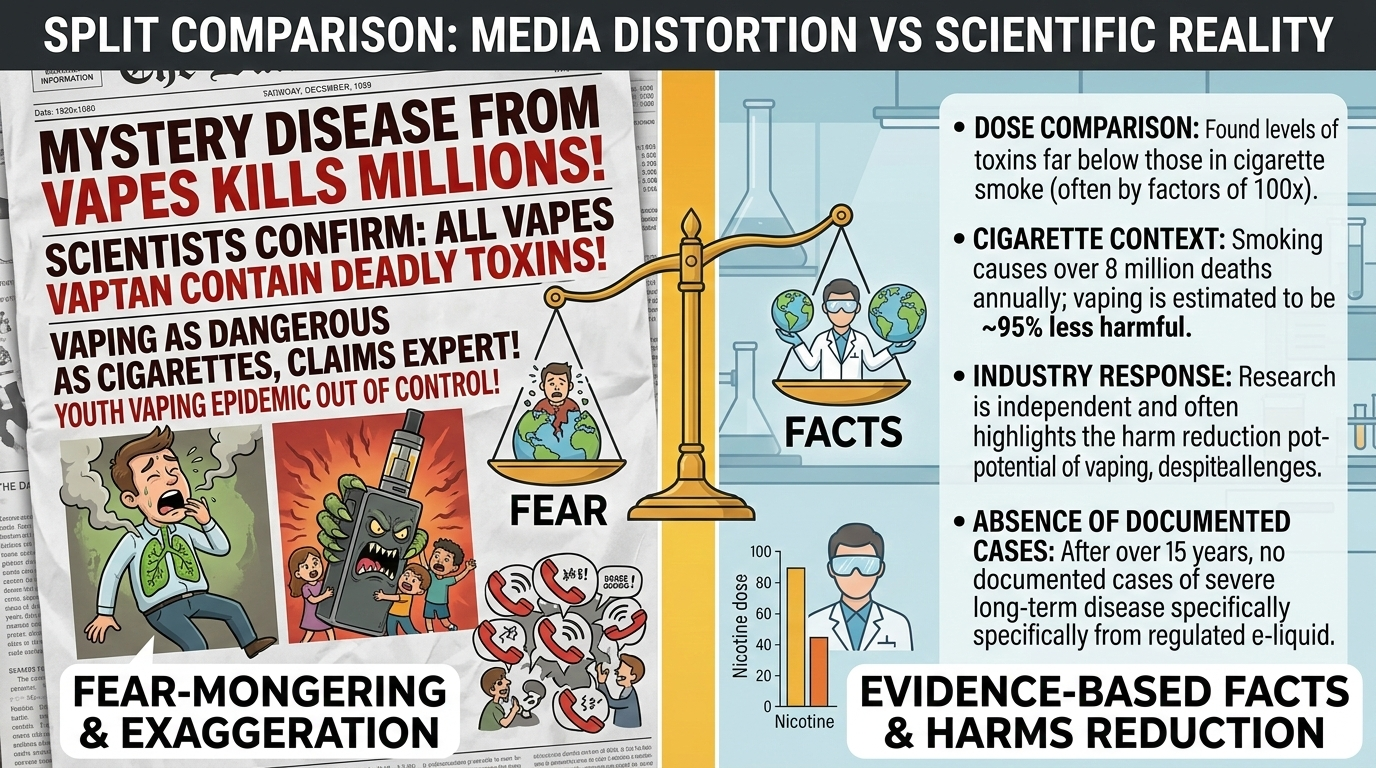
Once the diacetyl-in-e-liquids finding was published, it was picked up by news outlets. The narrative often followed a pattern: dramatic headlines about dangerous chemicals found in e-cigarettes, mention of factory workers, and implication that vapers were at similar risk. What was frequently missing from these stories was dose comparison (factory workers inhaled diacetyl at levels thousands of times higher), cigarette context (cigarette smoke contains more diacetyl than most e-liquids), and industry response (many reputable manufacturers removed diacetyl after early reports). This isn't to say the concern was baseless—it prompted necessary scrutiny and reform. But the way it was communicated created widespread fear that outstripped the actual evidence regarding diacetyl in e-liquids.
4. What Does Current Evidence Actually Show?
Let's look at where the science stands today on vaping lung risks and diacetyl, without drawing absolute conclusions.
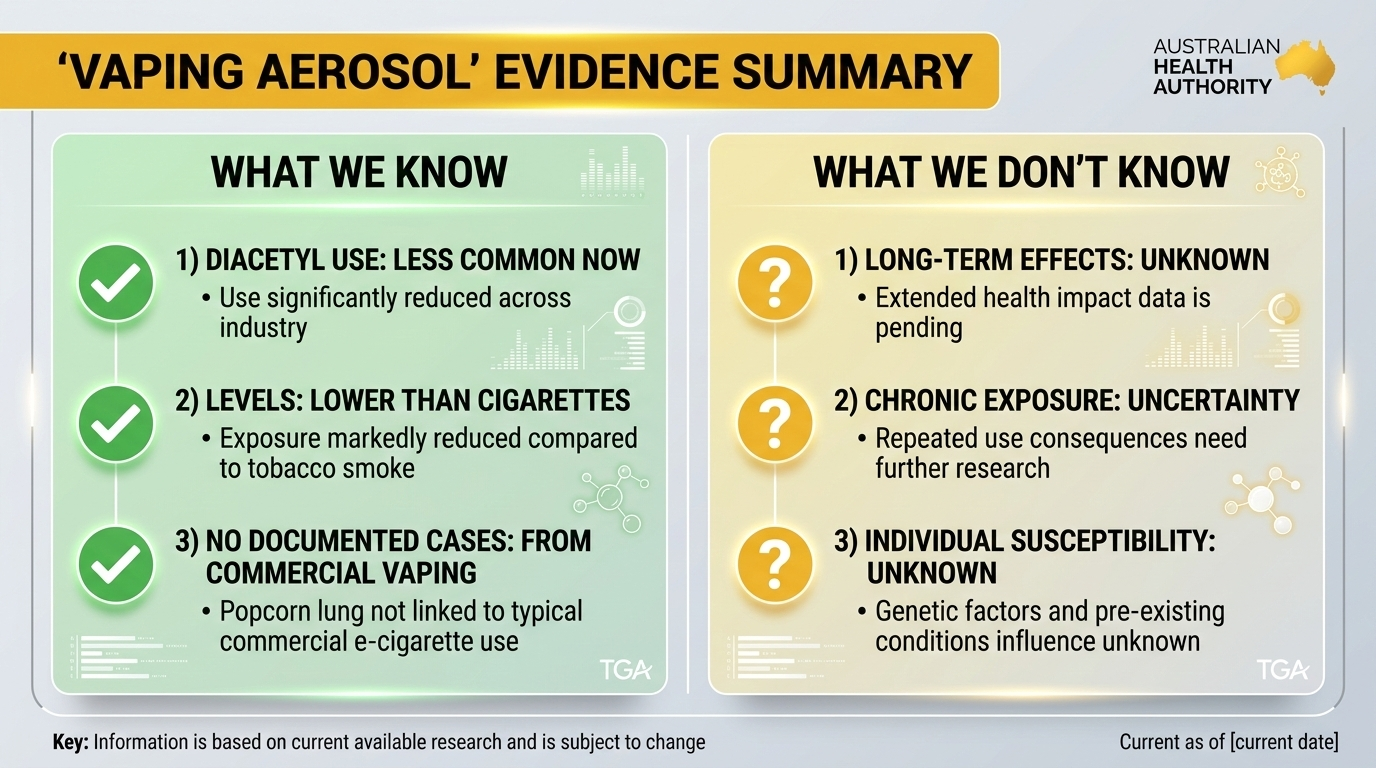
✅ What We Know
- Diacetyl is present in some e-liquids, though far less commonly than a decade ago due to manufacturer action and consumer awareness.
- When present, diacetyl levels in e-liquid are typically much lower than in cigarette smoke.
- There is no documented case of bronchiolitis obliterans caused solely by commercial e-liquid use. The disease remains extremely rare.
- Long-term inhalation studies on diacetyl at e-cigarette-relevant doses do not exist—we are still in the era of limited data.
❌ What We Don't Know
- We cannot say that inhaling diacetyl from e-liquids is safe. Absence of evidence is not evidence of absence.
- We do not know if chronic exposure to even low levels contributes to other forms of lung injury over decades.
- We cannot predict individual susceptibility—some people may be more vulnerable than others.
The responsible scientific stance, echoed by bodies like the U.S. National Academies of Sciences, is that diacetyl in e-cigarettes is a potential concern but not a proven cause of the specific disease popcorn lung in vapers. For perspective on relative risks, our article Can Vaping Help You Quit Smoking? examines the evidence on harm reduction.
5. Putting It in Perspective for Australian Users
How should an Australian vaper or someone considering vaping interpret this information about bronchiolitis obliterans vapes?
- Compared to smoking: If you currently smoke and are switching to vaping as a harm reduction step, your diacetyl exposure will likely decrease, because cigarettes contain more of it. This is one part of the different risk profile.
- Choosing products: Many Australian vendors (including those supplying pharmacies under the therapeutic model) now list ingredients or avoid diacetyl altogether. If you are concerned, you can look for brands that explicitly state diacetyl-free.
- For non-smokers: There is no health reason to start using any nicotine product, including e-cigarettes. The precautionary principle applies: avoid unnecessary exposure to inhaled substances.
Four Facts We Hold at the Centre of This Discussion
- Nicotine is addictive — in any form.
- Vaping is not without health risks, including potential respiratory effects from ingredients like diacetyl.
- Compared to smoking, the risk profile of vaping is different and generally lower, partly because cigarette smoke contains higher levels of many harmful chemicals.
- For many, vaping is a transition away from smoking. Understanding specific concerns like popcorn lung and vaping allows for informed choices, not fear-driven ones.
6. Helping Readers Lower Unnecessary Panic
Fear sells headlines, but it doesn't help people make balanced decisions. Here's a calm, evidence-based summary on vaping lung risks:
- Popcorn lung is a real but extremely rare disease.
- Its link to vaping comes from the presence of diacetyl in some e-liquids, not from a proven outbreak among vapers.
- Diacetyl levels in e-liquids are generally lower than in cigarette smoke, and many products now exclude it.
- The absence of documented cases doesn't prove zero risk, but it does mean the risk is not large enough to have been detected in the real world after more than a decade of widespread use.
If you are an adult who uses vaping as a tool to move away from smoking, this information should inform your choices—not paralyze you with worry. It's a reminder that all inhaled substances carry some uncertainty, and that the goal is always to reduce harm step by step.
📖 Deepen Your Understanding
Conclusion: Informed Caution, Not Fear
The story of popcorn lung and vaping is a classic example of how a legitimate scientific question can be distorted into widespread fear. The concern about diacetyl was valid and led to positive industry changes. But the risk to individual vapers, based on current evidence, appears to be much lower than early headlines suggested.
For smokers considering switching, this information should be weighed against the known, severe risks of continued smoking. For non-smokers, the message remains clear: avoid unnecessary inhalation of any substance. And for everyone, maintaining a balanced, evidence-based perspective—free from fear-mongering—is the healthiest approach.
🇦🇺 G'DayVape perspective: We believe in providing clear, evidence-based information to help Australian adults make informed decisions. Understanding diacetyl in e-liquids and separating myth from science allows vapers to navigate health information with confidence, not fear. For more myth-busting content, explore our related guides above.
📚 References & Authoritative Sources
- Therapeutic Goods Administration (TGA). (2026). Nicotine Vaping Products: Health Information. Australian Government Department of Health. tga.gov.au
- Australian Government Department of Health and Aged Care. (2026). About vaping and e-cigarettes. health.gov.au
- National Health and Medical Research Council (NHMRC). (2025). Health Advice on Vaping: Evidence-Based Information. nhmrc.gov.au
- Cancer Council Australia. (2025). Position Statement: Electronic Cigarettes. cancer.org.au
- National Academies of Sciences, Engineering, and Medicine. (2018). Public Health Consequences of E-Cigarettes. nap.edu
All external sources are government, academic, or official health institutions. Links are dofollow and open in new tabs. Information current as of March 2026.
© 2026 G'DayVape — Australian vape knowledge, grounded in clarity. Always adult-only. This guide is for informational purposes only and does not constitute medical advice. Always consult healthcare professionals for personal health decisions.
 RELX Pod