


Blog
Can Vaping Help You Quit Smoking? 2026 Essential Evidence Check


🔗 Related Health Science Articles
What Does the Evidence Actually Say?
The most comprehensive and up-to-date evidence comes from the Cochrane Review (January 2025), which analyzed 90 studies with over 29,000 participants. This is considered the gold standard in evidence-based medicine for answering Can Vaping Help You Quit Smoking.
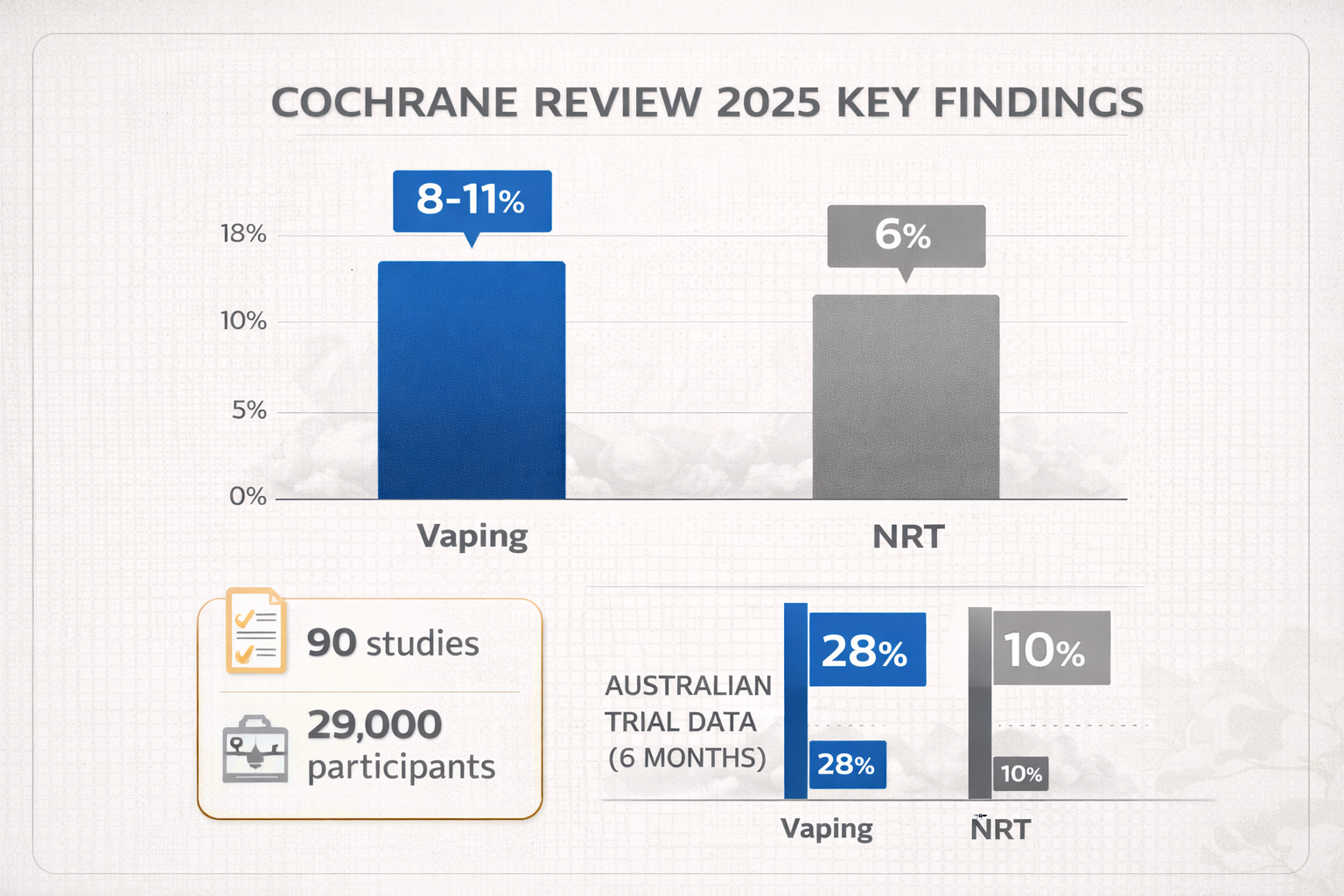
🔵 Nicotine Vaping
quit rate per 100 users
High-certainty evidence from Cochrane Review 2025
⚫ Nicotine Replacement Therapy (NRT)
quit rate per 100 users
Patches, gum, lozenges
Australian trial (2025): Among socially disadvantaged smokers, 28% using vapes remained smoke-free at 6 months, versus 10% using NRT gum/lozenges.
Important Context — March 2026
"For every 100 people using nicotine e-cigarettes to stop smoking, 8 to 11 might successfully stop, compared with only 6 of 100 people using nicotine-replacement therapy" — Cochrane Review 2025.
Who Might Benefit — and Who Should Avoid
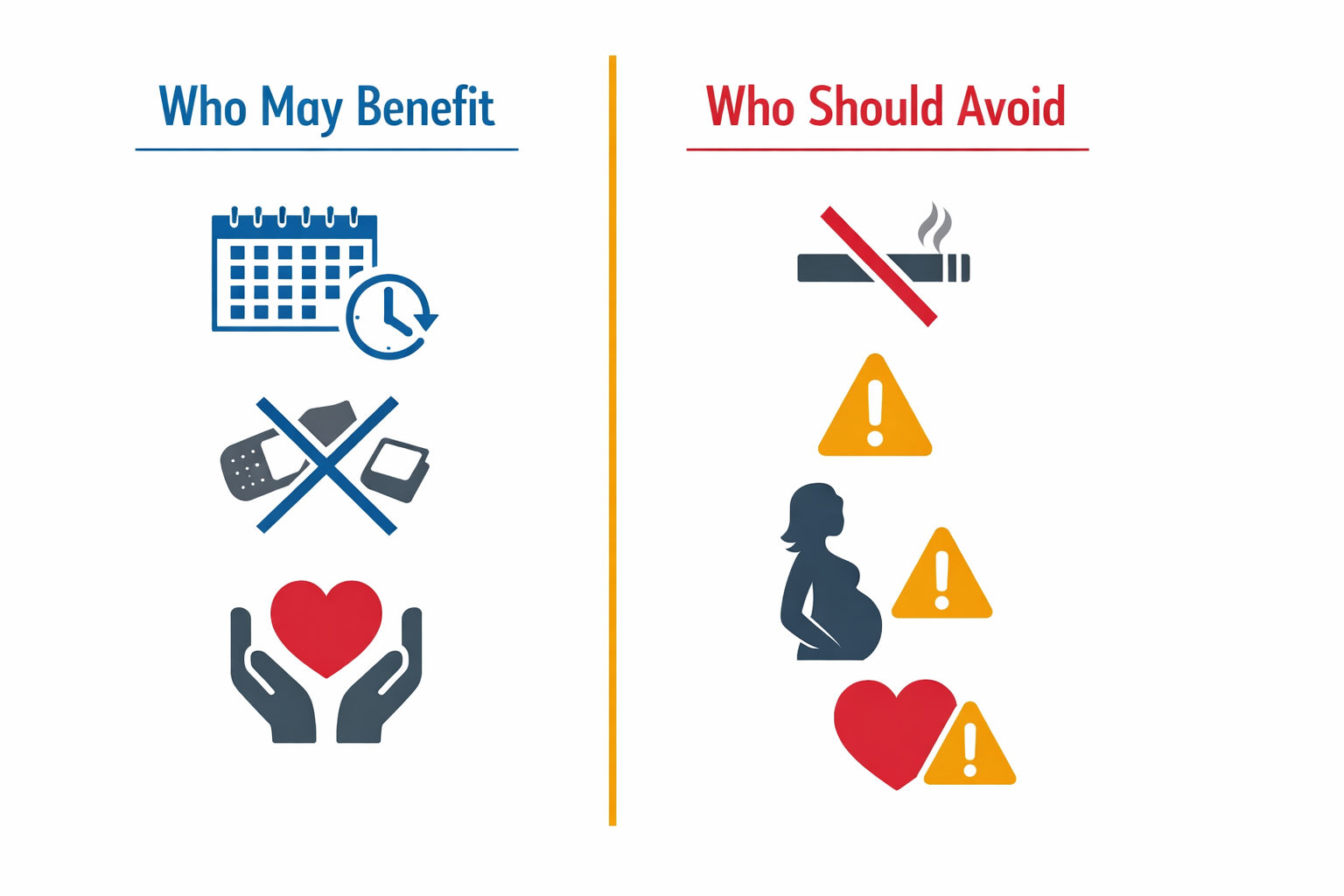
✅ Groups Where Evidence Suggests Potential Benefit
- Long-term smokers who have failed other methods: The Dutch Ge-Bu review suggests vapes may be considered for individuals who have unsuccessfully tried multiple other cessation methods, under medical supervision.
- Socially disadvantaged populations: The 2025 Australian trial specifically recruited participants receiving government assistance and found higher quit rates with vaping for smoking cessation.
- Those seeking harm reduction: For smokers unable or unwilling to quit completely, switching completely to regulated vaping products reduces exposure to harmful chemicals found in combustible tobacco.
❌ Groups Who Should Avoid Vaping
- Non-smokers and youth: The 2025 PubMed review warns that vulnerable populations may exhibit greater proclivity to adopting vaping, with unknown long-term consequences.
- Pregnant individuals: Limited safety data exists for nicotine use during pregnancy via vaping.
- Those with cardiovascular conditions: Emerging data demonstrates vaping can impact cardiovascular health.
Note on long-term use — March 2026: Some individuals who switch from smoking to vaping may continue vaping long-term rather than quitting nicotine entirely. The Ge-Bu review notes this as a significant consideration when evaluating e-cigarettes quit smoking outcomes.
Vaping as a Transitional Tool, Not a Destination
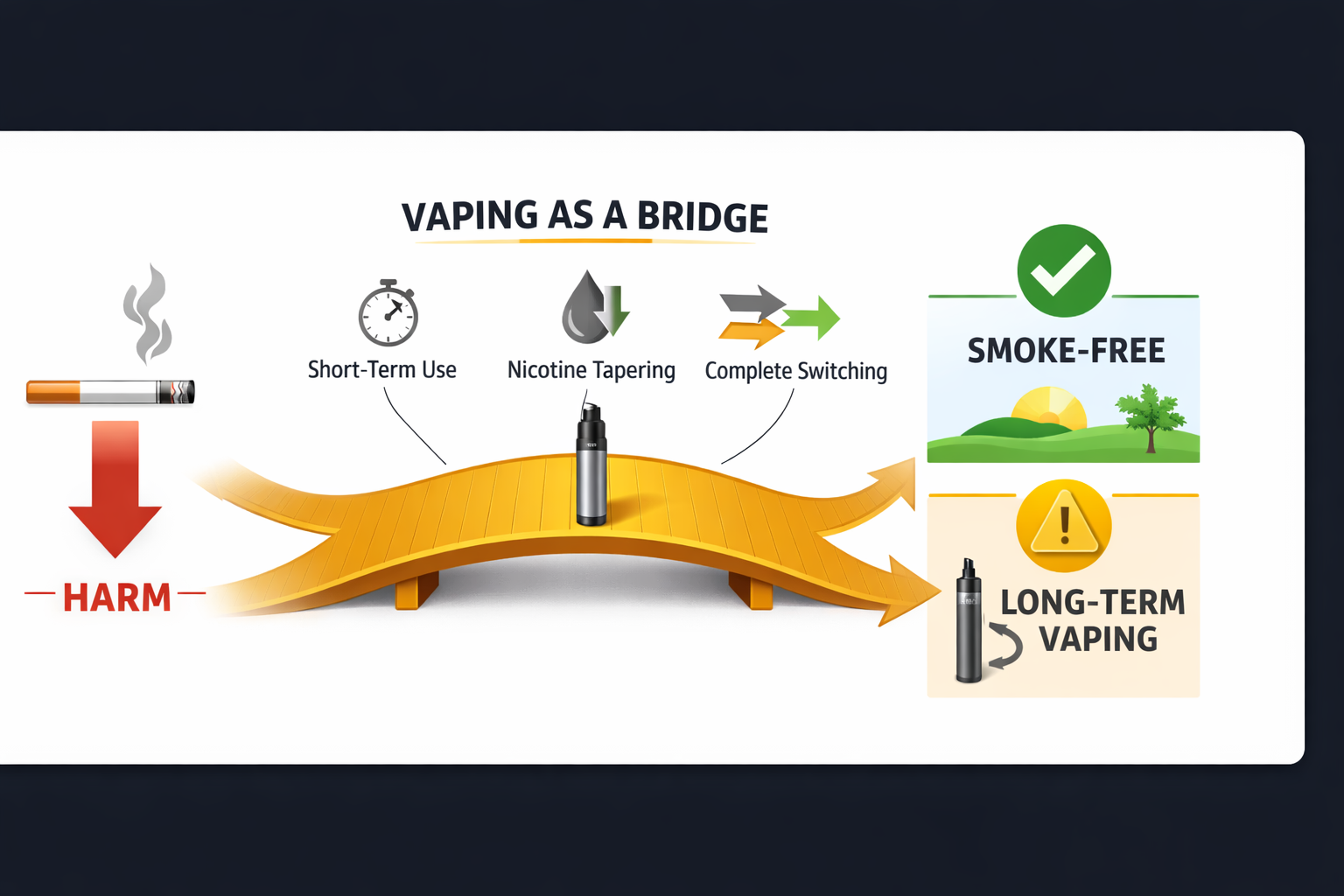
The evidence positions vaping primarily as a harm reduction tool and transitional aid, not as a permanent solution or a consumer product for non-smokers when considering vaping vs NRT.
Harm Reduction Framework
- Complete switching is key: Health benefits require completely replacing smoking with vaping, not dual use. The Cochrane review emphasizes that health risks are reduced when people completely switch.
- Nicotine tapering approach: The Ge-Bu review suggests that under medical supervision, vaping could be part of a nicotine tapering strategy, eventually reducing nicotine intake over time.
- Short-term use evidence: Most studies focus on 6-12 month outcomes. Longer-term data on sustained vaping after smoking cessation remains limited.
Side Effects and Safety Considerations
- Common side effects: Throat/mouth irritation, headache, cough, nausea. These tend to diminish with continued use.
- Serious adverse events: Rare in studies, but longer-term safety data is needed. The 2025 PubMed review notes e-cigarettes are potentially carcinogenic and may confer cardiopulmonary risks.
- Addiction potential: Some studies suggest newer e-cigarettes may have higher nicotine delivery and addiction potential.
Cochrane Review Authors
"There is high-certainty evidence that ECs with nicotine increase quit rates compared to NRT... We did not detect evidence of serious harm from nicotine EC, but longer, larger studies are needed to fully evaluate EC safety."
Why Some Sources Advise Caution
Not all health authorities agree on recommending vaping for cessation. Understanding conflicting perspectives is important for a balanced view on Can Vaping Help You Quit Smoking.
🇳🇱 Ge-Bu (Netherlands) 2025
"Vapes should not be recommended as a method to assist smoking cessation" because people are more likely to continue vaping than quit entirely, and long-term effects are unknown.
🇺🇸 PubMed 2025 Review
"Smoking cessation results are equivocal and the long-term safety and addictive nature of nicotine-containing e-cigarettes remain concerning."
🇬🇧 UK vs 🇦🇺 Australian Approaches
The UK actively promotes Swap to Stop programs, while Australia maintains a prescription-only medical model. These differing policy approaches reflect varying interpretations of the same evidence.
Reconciling the views: The Cochrane review (highest evidence standard) shows effectiveness, but also acknowledges limitations: "The main limitation of the evidence base remains imprecision due to the small number of RCTs, often with low event rates." The Ge-Bu review emphasizes that effectiveness numbers are modest (8-11 per 100 quit) and must be balanced against the risk of long-term vaping.
Evidence Summary — March 2026
Based on current evidence as of March 2026:
- Nicotine vaping can be effective for some smokers trying to quit, particularly those who have failed other methods.
- It is not a guaranteed solution — only 8-11 per 100 succeed with vaping.
- Who should consider: Long-term smokers under medical guidance who have tried other methods.
- Who should avoid: Non-smokers, youth, pregnant women, those with cardiovascular conditions.
- Role: A transitional harm reduction tool, not a permanent lifestyle product.
📖 Further Reading on Vaping Science
Conclusion: Evidence-Based Perspective
The question Can Vaping Help You Quit Smoking has a nuanced answer: yes, for some smokers under specific circumstances, but with important caveats. The Cochrane Review provides high-certainty evidence that nicotine vaping is more effective than NRT for smoking cessation, with 8-11% quit rates compared to 6%.
However, effectiveness is modest, long-term safety data is limited, and vaping is not risk-free. The evidence supports considering vaping as a transitional tool for smokers who have failed other methods, under medical guidance, while strongly advising non-smokers, youth, and certain populations to avoid it entirely.
🇦🇺 G'DayVape perspective: We believe in providing clear, evidence-based information to help Australian adults make informed decisions. Understanding the science behind vaping for smoking cessation allows smokers to weigh potential benefits against risks. Always consult healthcare professionals for personal medical advice.
📚 Scientific Sources & References
- Lindson N, et al. (2025). Electronic cigarettes for smoking cessation. Cochrane Database of Systematic Reviews. DOI: 10.1002/14651858.CD010216.pub9. cochranelibrary.com
- Courtney R, et al. (2025). Vaporized nicotine products versus nicotine replacement therapy for smoking cessation in socially disadvantaged smokers. Annals of Internal Medicine. acpjournals.org
- van Dijk WJ. (2025). Vaping to quit smoking. Ge-Bu Bulletin. DOI: 10.35351/gebu.2025.2.4. ge-bu.nl
- Micha JP, et al. (2025). Vaping and Smoking Cessation. Substance Use & Misuse. PMID: 40200569. pubmed.ncbi.nlm.nih.gov
- Therapeutic Goods Administration (TGA). (2026). Nicotine Vaping Products: Health Information. Australian Government. tga.gov.au
All external sources are peer-reviewed journals, government, or academic institutions. Links are dofollow and open in new tabs. Information current as of March 2026.
© 2026 G'DayVape — Australian vape knowledge, grounded in clarity. Always adult-only. This analysis is for informational purposes only and does not constitute medical advice. Always consult healthcare professionals for personal health decisions.
 RELX Pod