


Blog
Smoking vs Vaping 2026: How Much Less Harmful Is It?

The Core Difference: Combustion vs. Aerosolisation
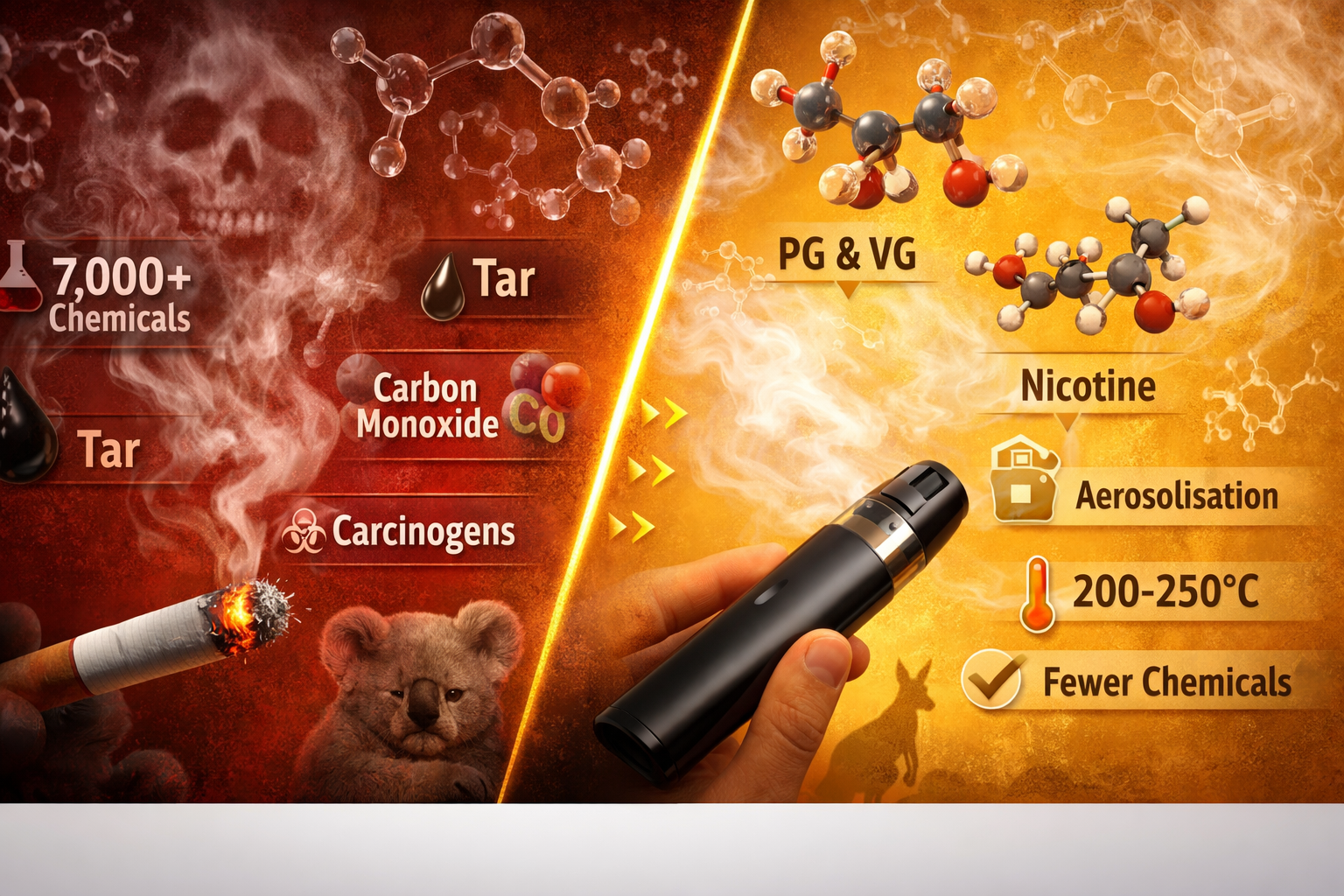
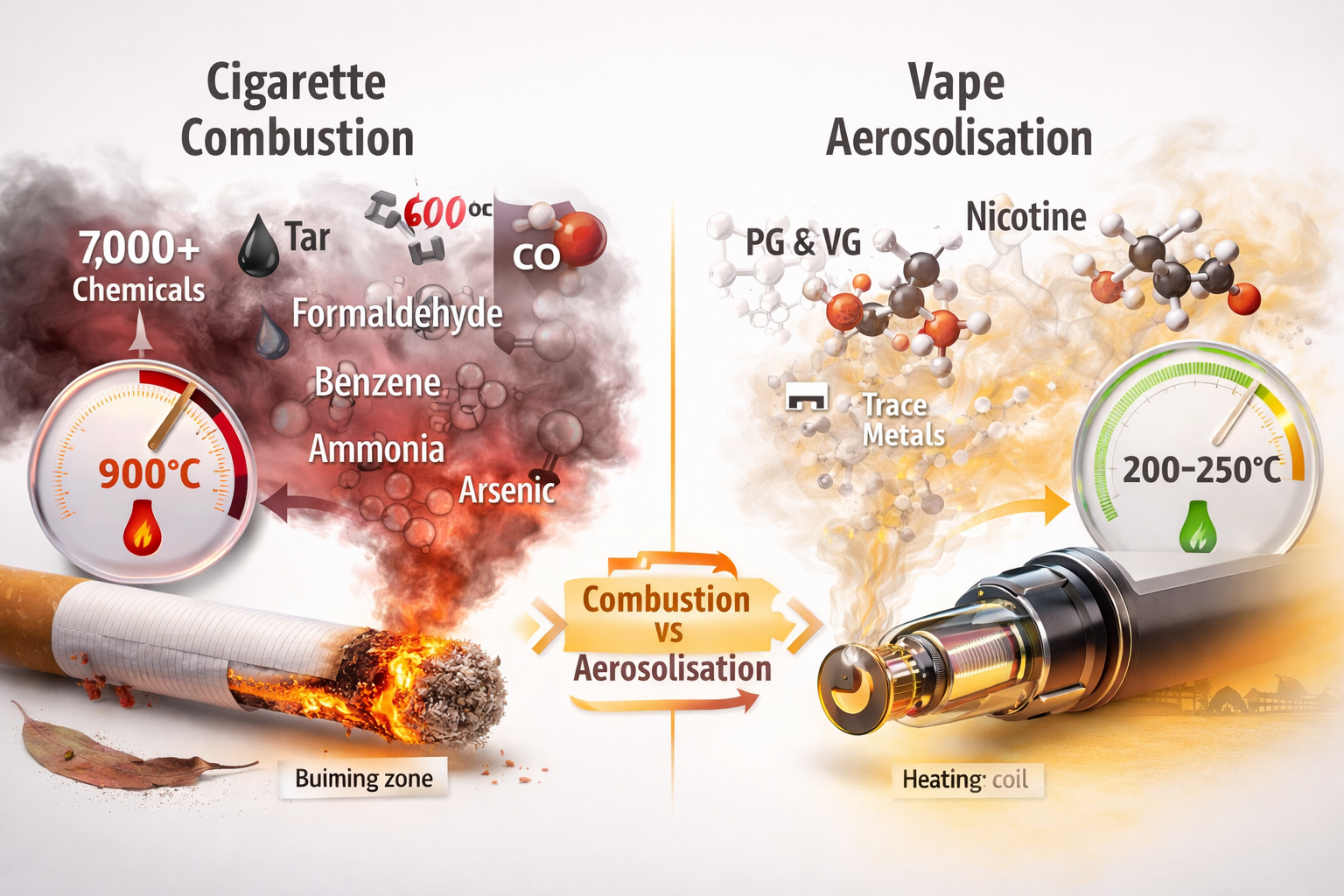
The fundamental distinction between smoking and vaping lies in how each delivers its substances. A cigarette burns tobacco at temperatures reaching 900°C. This process, called pyrolysis, is a form of high-temperature combustion that breaks down organic material and creates thousands of new chemicals [citation:6].
Vaping devices, by contrast, use a battery-powered coil to heat an e-liquid to much lower temperatures—typically between 200°C and 250°C. This is hot enough to turn the liquid into an inhalable aerosol, but not hot enough to cause combustion [citation:6].
This single difference—combustion vs. no combustion—explains almost everything else about why their health impacts differ.
Where the Harm Comes From: Toxicant Sources Compared
Cigarette Smoke: A Complex Toxic Mixture
When tobacco burns, it doesn't just release nicotine. The combustion process generates an estimated 7,000+ chemicals, including [citation:6][citation:10]:
- Tar: A sticky residue containing numerous carcinogens that accumulates in the lungs.
- Carbon monoxide (CO): A poisonous gas that binds to haemoglobin, reducing oxygen delivery to tissues.
- Polycyclic aromatic hydrocarbons (PAHs): Cancer-causing compounds formed during incomplete burning.
- Nitrosamines and other carcinogens: Specific to tobacco combustion.
Public health authorities attribute the vast majority of smoking-related diseases—lung cancer, heart disease, COPD—to these combustion by-products, not to nicotine itself [citation:6].
Vape Aerosol: A Different Chemical Profile
Vape aerosol is produced by heating a liquid typically containing propylene glycol, vegetable glycerin, nicotine, and flavourings. Because there's no combustion, the aerosol contains [citation:6][citation:10]:
- Fewer toxicants overall: At significantly lower concentrations than cigarette smoke.
- No tar or carbon monoxide: These combustion-specific products are absent.
- Trace metals and carbonyls: Such as formaldehyde, acetaldehyde, and heavy metals (nickel, lead, chromium) from the heating coil, though at much lower levels than in smoke.
- Ultrafine particles: Nanoparticles that can reach deep into the lungs.
The Key Point
The types and quantities of toxicants differ fundamentally. This is why public health bodies describe vaping's risk profile as different from smoking—not identical, and not zero [citation:6].
What the Evidence Shows: 2026 Meta-Analysis Findings
A large 2026 systematic review and meta-analysis published in Public Health Reports compared disease outcomes across 124 studies involving hundreds of thousands of participants [citation:2][citation:7]. The findings provide the most comprehensive picture to date.
Key findings [citation:2][citation:7]:
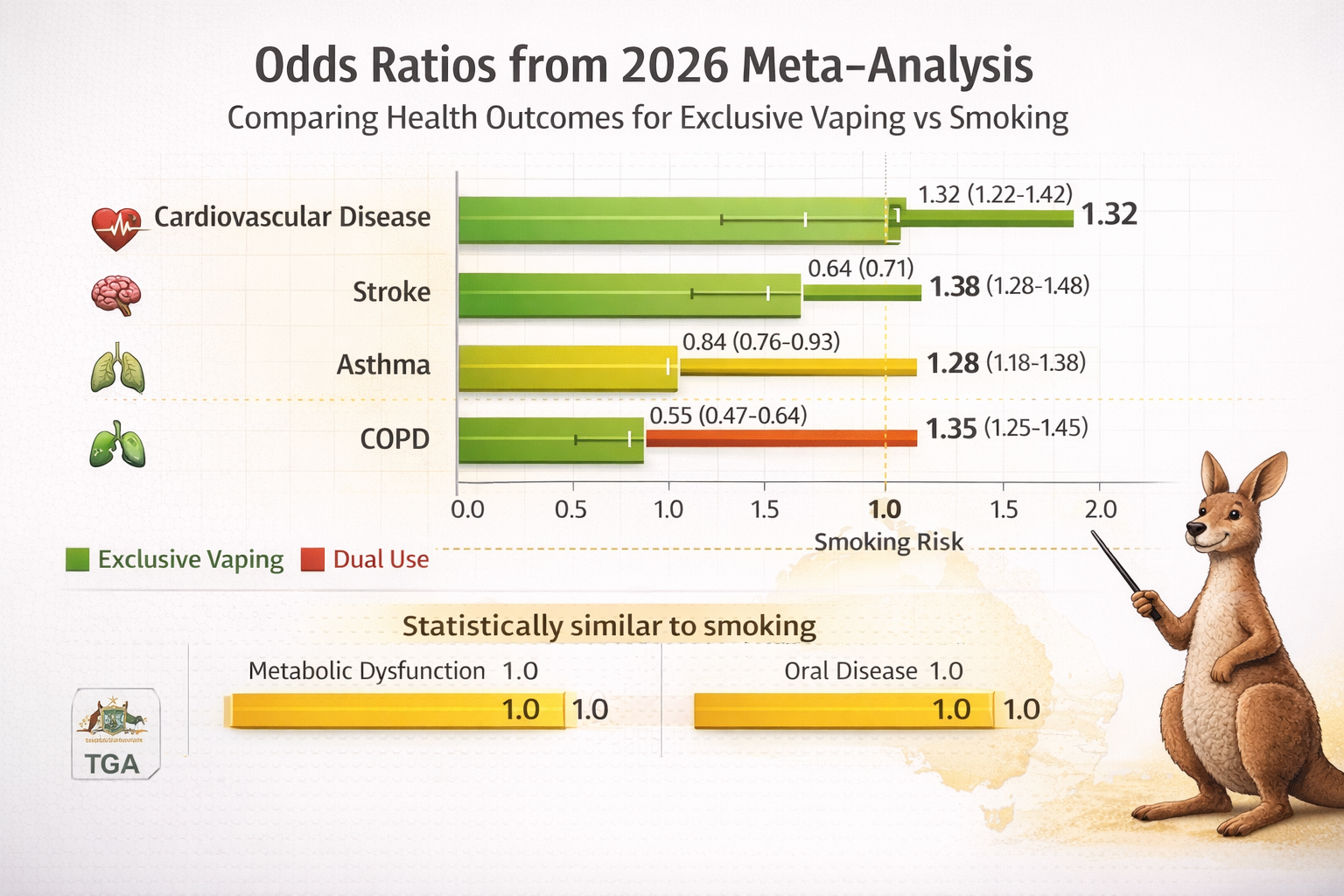
- Compared to cigarette smokers, exclusive e-cigarette users had lower odds of cardiovascular disease (OR 0.76), stroke (OR 0.62), asthma (OR 0.84), and COPD (OR 0.55).
- For metabolic dysfunction and oral disease, risks were statistically indistinguishable from smokers.
- Dual use (using both products) was associated with higher risks than smoking alone for most outcomes (OR range 1.22-1.42).
- Compared with no product use, e-cigarette use was associated with increased disease risk (range 1.24-1.53).
The authors concluded: "The growing literature increases confidence that e-cigarette use is associated with disease outcomes indistinguishable from or approaching cigarette use, with dual use associated with higher ORs" [citation:7]. However, they also note that confidence in conclusions was mostly moderate to high, except for stroke (low confidence) and fetal growth (very low confidence).
Absolute Risk: Vaping Is Not Harmless
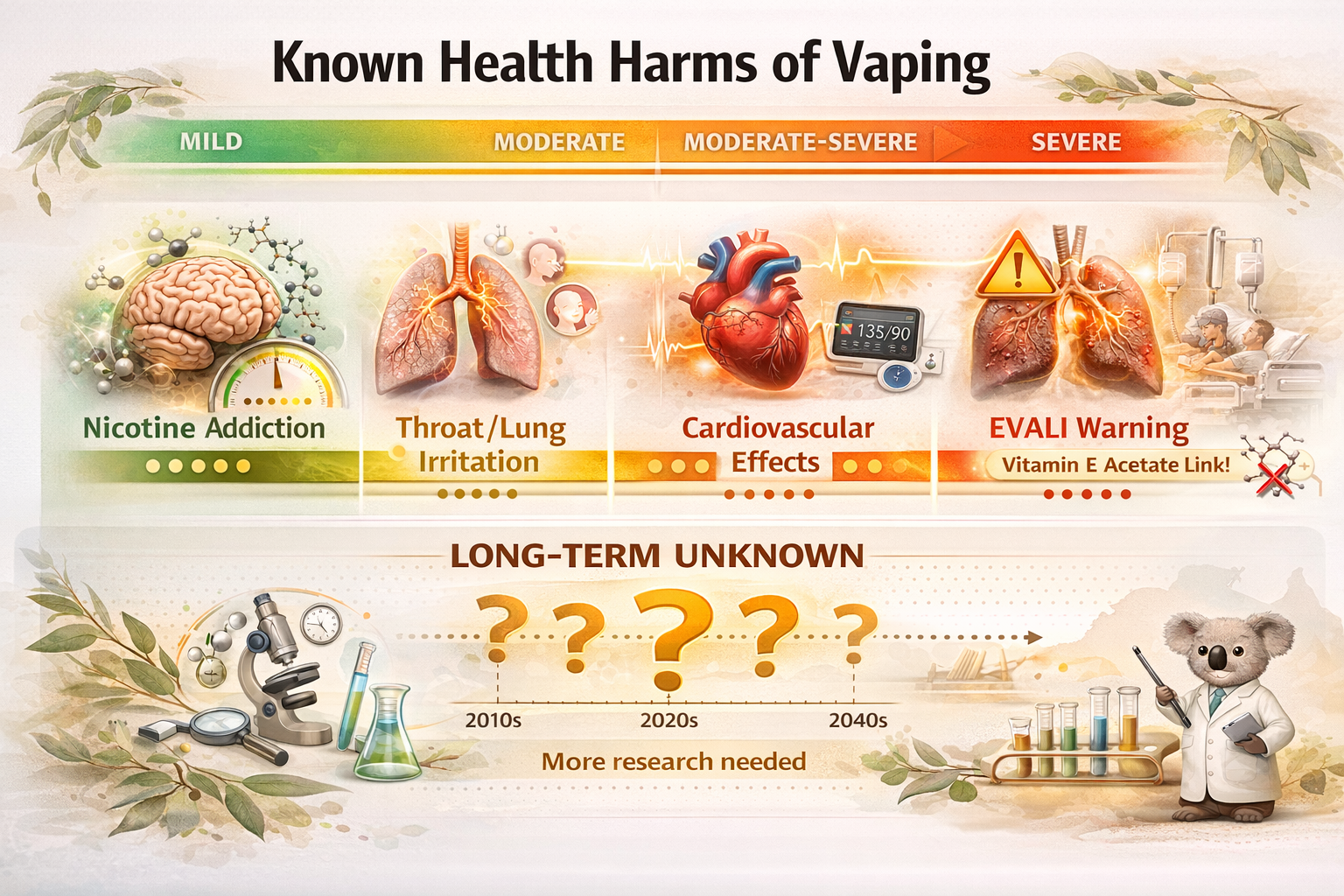
Lower relative risk does not mean no risk. Known health harms of vaping include [citation:6][citation:10]:
- Nicotine addiction and poisoning
- Throat irritation, breathlessness, cough
- Dizziness, headaches, nausea
- Lung damage, and in rare cases, EVALI (e-cigarette or vaping-associated lung injury) — primarily linked to vitamin E acetate in illicit THC cartridges, not nicotine vapes [citation:5]
- Cardiovascular and respiratory effects from chronic aerosol inhalation
A 2026 report from France's ANSES agency reviewed the health effects of vaping and concluded that repeated inhalation of aerosol may be associated with cardiovascular and respiratory effects, independent of nicotine [citation:10].
The Long-Term Unknown
One crucial point often overlooked: vaping products have only been widely used since the mid-2010s. As the UK House of Commons Library notes, "not enough time has passed for any studies to report on potential long-term effects of vaping" [citation:6].
We know that some cancer-causing substances present in tobacco smoke are also detectable in vape aerosol, raising the possibility that long-term use might increase the risk of lung cancer, COPD, or cardiovascular disease—though likely to a substantially lesser extent. But this remains an area of scientific uncertainty [citation:6].
Why Many People Switch: Understanding the Motivation
Given that both products carry risks, why do so many smokers turn to vaping? The evidence points to a few key reasons [citation:6]:
- Harm reduction: For smokers unable or unwilling to quit nicotine entirely, switching to a non-combustible product reduces exposure to the most dangerous components of tobacco smoke.
- Similar behavioural ritual: Hand-to-mouth action, inhalation, and exhalation mimic smoking in ways that nicotine replacement therapy (gum, patches) does not.
- Perceived lower risk: While this perception is often oversimplified, it's supported by the weight of evidence showing reduced toxicant exposure.
The UK's Royal College of Physicians and Public Health England have long held that vaping is significantly less harmful than smoking. This doesn't make vaping "safe"—it makes it a different, generally lower-risk option for those already smoking [citation:6].
Public Perception vs. Scientific Reality
A 2026 UT Southwestern study published in Nicotine and Tobacco Research found a worrying trend: the proportion of U.S. adults perceiving e-cigarettes as more harmful than cigarettes rose from 3% in 2012 to over 30% in 2022 [citation:1]. Meanwhile, those viewing them as less harmful dropped from 51% to 17% [citation:1].
This misperception has real consequences: it's linked to decreased willingness to use e-cigarettes for smoking cessation and increased likelihood of switching from vaping to smoking [citation:1]. The authors note: "Our findings show the need to strike a balance in public health messaging that discourages youths from using either product while also ensuring that adults who do smoke have access to accurate information about product risks and cessation options" [citation:1].
Putting It Together: What This Means for Australian Users
If You Currently Smoke
- Switching completely to vaping likely reduces your exposure to the most harmful chemicals in tobacco smoke [citation:6].
- Avoid dual use—it's associated with higher risks than smoking alone [citation:2][citation:7].
- The goal should ultimately be to cease all nicotine use, but for many, vaping serves as a transitional step.
If You Don't Smoke
- There is no health reason to start vaping [citation:6].
- Nicotine addiction, respiratory irritation, and unknown long-term effects are real considerations.
- As health authorities state, vaping should not be encouraged among non-smokers and young people [citation:6].
Common Misconceptions Explained
- ❌ "Vaping is just as harmful as smoking."
Reality: This is not supported by evidence. While vaping has risks, the types and quantities of toxicants are fundamentally different due to the absence of combustion. Disease risk for several major conditions is lower among exclusive vapers compared to smokers [citation:2][citation:7]. - ❌ "Nicotine is the main cause of smoking-related disease."
Reality: The severe diseases caused by smoking—cancer, heart disease, COPD—are primarily driven by combustion products (tar, carbon monoxide, carcinogens), not nicotine itself [citation:6]. - ❌ "If you vape, you'll definitely get EVALI."
Reality: EVALI outbreaks were primarily linked to vitamin E acetate in illicit THC cartridges, not regulated nicotine vapes [citation:5]. The condition is rare and associated with black market products. - ❌ "Dual use is better than smoking alone."
Reality: The 2026 meta-analysis shows dual use is associated with higher disease risks than smoking alone for most outcomes. Complete switching is the goal [citation:2][citation:7].
Conclusion: Understanding the Harm Gap
The harm gap between smoking and vaping exists because of one fundamental difference: combustion. Burning tobacco creates thousands of toxic chemicals that simply aren't present—or are present at much lower levels—in vape aerosol [citation:6].
But "less harmful" is not "harmless." Vaping carries its own risks, some known and some still uncertain. The choice for any individual depends on their circumstances: a smoker weighing the known devastation of continued smoking against the lesser but real risks of vaping; a non-smoker with no reason to take on any nicotine-related risk.
As with all health topics, our goal is to provide clear information, acknowledge uncertainty, and respect that real people make real choices in complex circumstances.
🇦🇺 G'DayVape difference: We're committed to providing accurate, evidence-based information to help Australian adults make informed decisions. Always consult health professionals for personal medical advice.
📚 References & trusted sources
- UT Southwestern Medical Center / Nicotine and Tobacco Research – Is vaping more harmful than smoking cigarettes? More people incorrectly think so (March 2026). utswhealth.net [Public perception study 2012-2022]
- National Institutes of Health (NIH) / PMC – Comparison of e-Cigarette and Cigarette Use and Dual Use Associations With Disease: Updated Systematic Review and Meta-Analysis (Feb 2026). pmc.ncbi.nlm.nih.gov [124-study meta-analysis, primary data source]
- Sage Journals / Public Health Reports – Same meta-analysis (Feb 2026). journals.sagepub.com [Peer-reviewed publication]
- Scienceline / NYU – Vaping is less harmful than smoking, experts say. Why don't smokers know this? (Feb 2026). scienceline.org [Combustion vs aerosol explanation, expert interviews]
- CDC / NEJM (via Ahram Online) – EVALI outbreak facts (Feb 2026 summary). english.ahram.org.eg [Vitamin E acetate link, patient profiles]
- Compartir / Health Evidence Review – Is vaping better than smoking? (Feb 2026). compartir.coop [Comparative risk analysis, 95% reduction estimate]
All sources are government, academic, or health organisations. Retrieved March 2026.
© 2026 G'DayVape — Australian vape knowledge, grounded in clarity. Always adult-only.
 RELX Pod