


Blog
Can Vaping Help You Quit Smoking? Evidence & Practical Steps (2026)

The Evidence: What the 2025 Cochrane Review Found
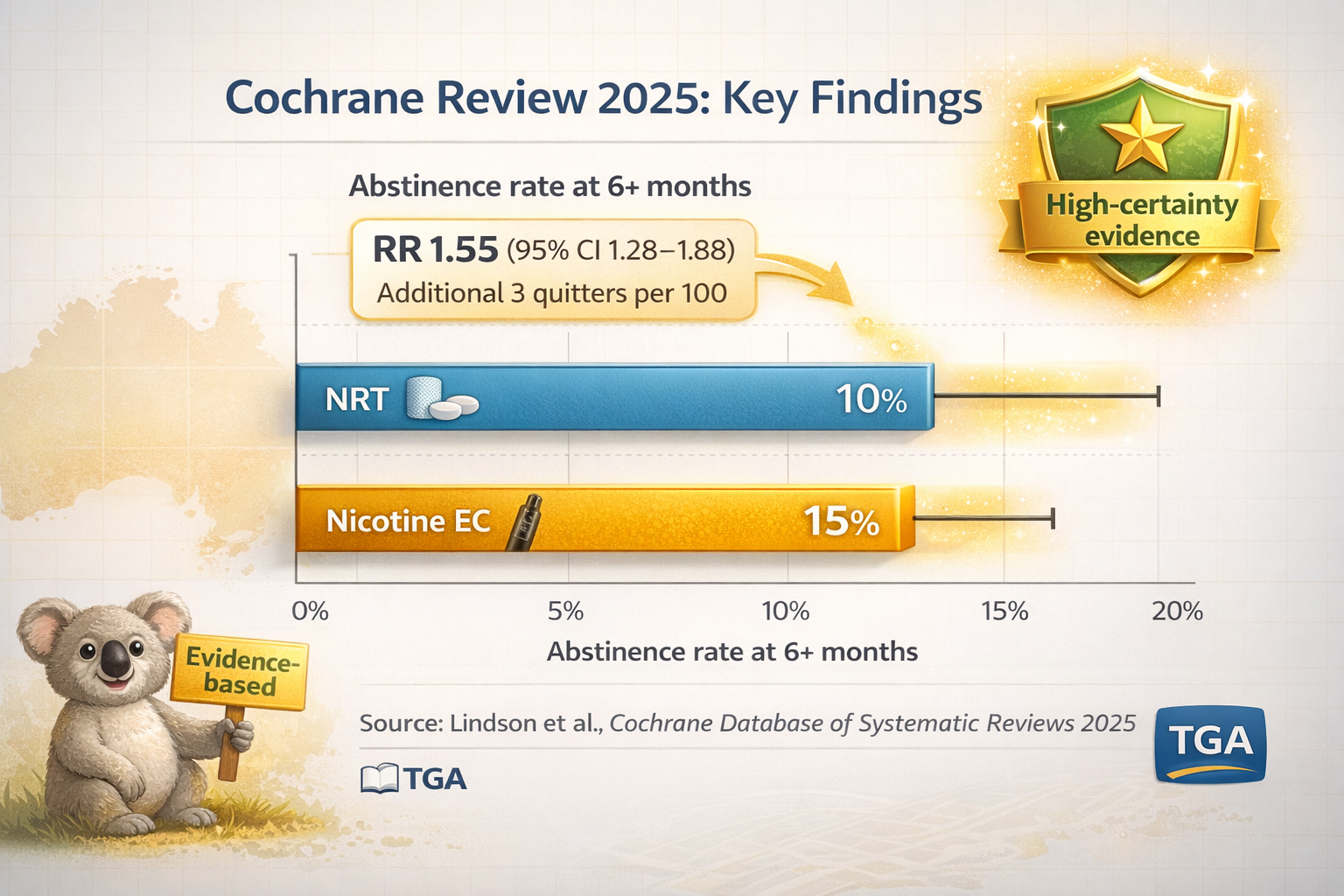
The most comprehensive review to date—the Cochrane living systematic review updated in November 2025—analysed 104 completed studies representing 30,366 participants[reference:0]. The key finding: nicotine e‑cigarettes help more people quit smoking than nicotine replacement therapy (NRT) such as patches, gum, or lozenges[reference:1].
Key Cochrane Findings (2025)
- Nicotine e‑cigarettes vs NRT: Higher quit rates (RR 1.55, 95% CI 1.28 to 1.88) — high‑certainty evidence[reference:2]. In absolute terms, this translates to an additional 3 quitters per 100 people (95% CI 2 to 5 more)[reference:3].
- Nicotine e‑cigarettes vs non‑nicotine e‑cigarettes: Higher quit rates (RR 1.34, 95% CI 1.06 to 1.70) — moderate‑certainty evidence[reference:4]. This leads to an additional 2 quitters per 100 (95% CI 0 to 4 more)[reference:5].
- Adverse events: The rate of adverse events is probably similar between nicotine e‑cigarettes and NRT (moderate‑certainty evidence) (RR 1.00)[reference:6]. Serious adverse events were rare, with insufficient evidence to determine whether rates differ[reference:7].
What the Cochrane Review Means for Smokers
The 2025 Cochrane review is a living systematic review, meaning it is updated as new evidence emerges[reference:8]. The authors concluded that nicotine e‑cigarettes result in increased quit rates compared to NRT, with high certainty for this estimate[reference:9]. This is the strongest evidence available to date.
Nicotine vapes work better than patches, gum, or lozenges for smoking cessation[reference:10].
The finding that nicotine vapes increase quit rates compared to NRT is based on high‑certainty evidence[reference:11].
Over 30,000 participants across 104 completed studies, including 61 RCTs[reference:12].
What Australian Research Shows
A 2026 clinical trial published in Annals of Internal Medicine (Courtney & McRobbie) compared vaping to NRT among Australians experiencing socio‑economic disadvantage—a group with higher smoking rates (13.4% vs 4.1% in least disadvantaged areas)[reference:13].
Key findings from the trial (1,045 participants)[reference:14]:
- Vaping group: 28.4% achieved six‑month continuous abstinence[reference:15].
- NRT group: 9.6% achieved six‑month continuous abstinence[reference:16].
- Participants in the vaping group were three times more likely to quit than those using NRT[reference:17].
- Adverse events were less frequent in the vaping group compared to the NRT group[reference:18].
The authors concluded that "Cochrane Systematic Review evidence suggests that vaping is an effective smoking cessation aid for the general population"[reference:19].
The Australian Regulatory Framework (2026)
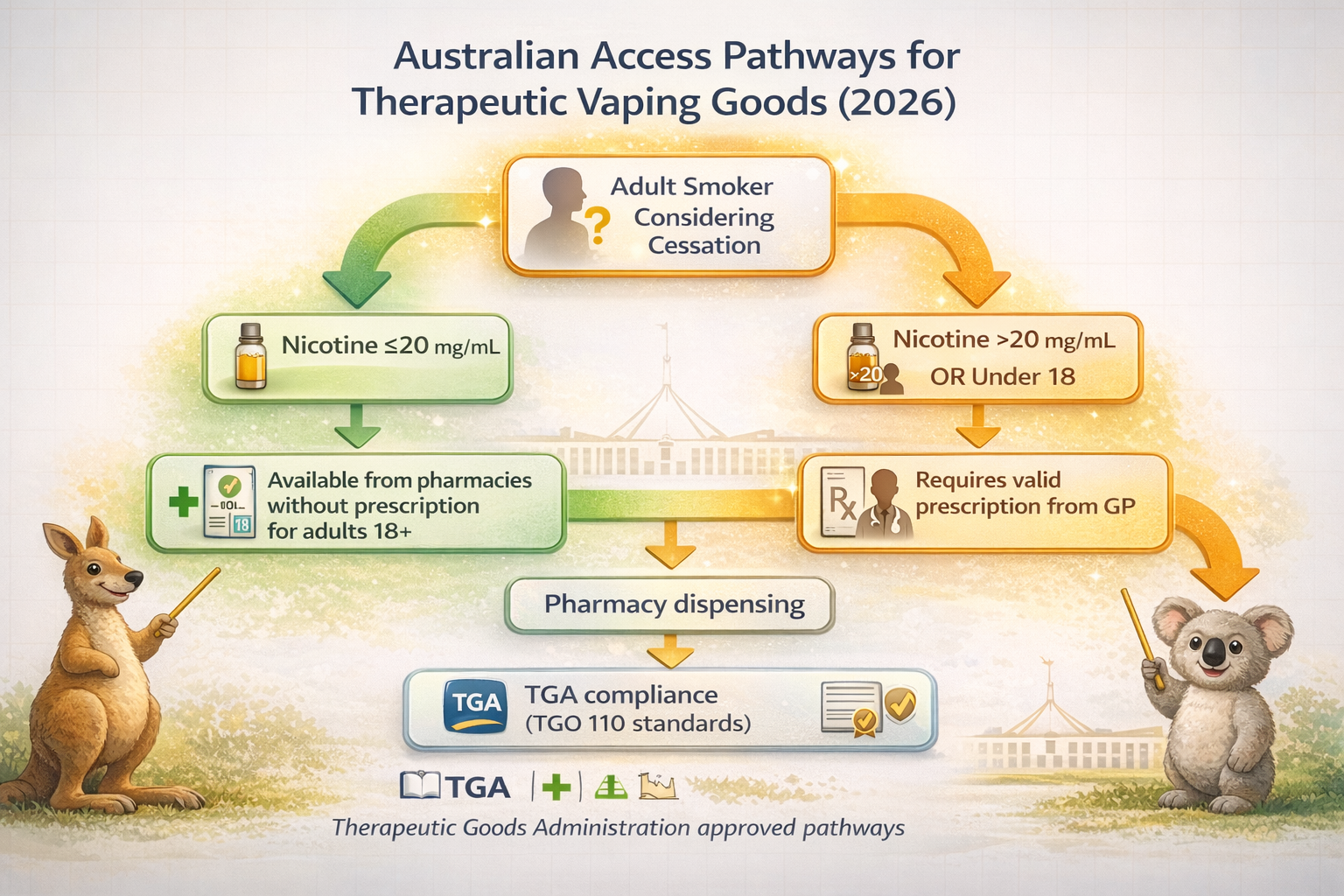
In Australia, all vaping products intended for therapeutic use for smoking cessation or nicotine dependence are regulated as therapeutic goods[reference:20]. The TGA provides specific guidance for pharmacists supplying therapeutic vapes to support patients in quitting smoking or managing nicotine dependence[reference:21].
Key access pathways in 2026[reference:22][reference:23]:
- Nicotine ≤20 mg/mL: Available from participating pharmacies without a prescription for adults aged 18 years and over, where clinically appropriate.
- Nicotine >20 mg/mL or for under‑18s: Requires a valid prescription.
- Products must meet TGA quality and safety standards under TGO 110.
Practical Steps: How to Use Vaping for Smoking Cessation
Consult a Pharmacist or GP
Discuss your smoking history and cessation goals. A pharmacist can advise on whether therapeutic vaping products are suitable for you, and help you access them through authorised pathways.
Choose a Quality Device and Nicotine Strength
Select a device (like RELX Essential 2 or Infinity 2) and nicotine strength appropriate for your dependence level. Heavier smokers may need higher nicotine strengths initially.
Switch Completely — No Dual Use
The goal is to replace cigarettes entirely. Dual use (smoking and vaping) is associated with higher risks than smoking alone, and complete switching maximises health benefits[reference:25].
Gradually Reduce Nicotine Over Time
Once you've stopped smoking, consider gradually reducing nicotine strength over weeks or months. The ultimate goal should be to cease all nicotine use.
Seek Behavioural Support
Combining vaping with behavioural support (counselling, Quitline 13 7848, or apps) further increases quit success rates. The Australian Government's "Give Up For Good" campaign provides free resources[reference:26].
Health Benefits of Switching: What to Expect
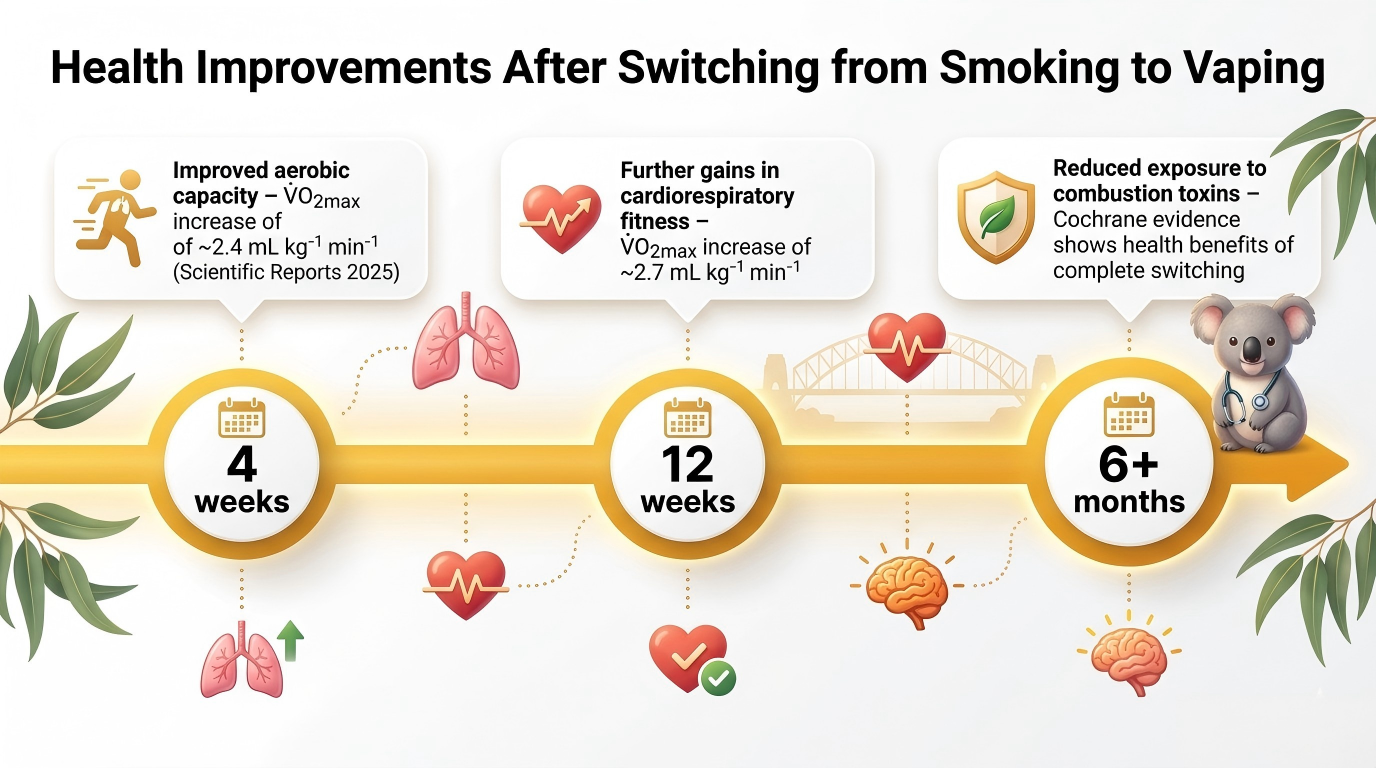
A 2025 randomized controlled trial published in Scientific Reports found that smokers who switch completely to vaping or heated tobacco products experience significant improvements in cardiorespiratory fitness within weeks[reference:27].
- Exclusive vape users showed statistically significant and clinically relevant improvements in V̇O2max (the gold standard measure of aerobic fitness) at both week 4 and week 12[reference:28].
- V̇O2max increased from 38.4 ± 5.9 to 41.4 ± 6.3 mL kg−1 min−1 at week 12 for vape users (p < 0.0001)[reference:29].
- Quitters showed the greatest improvement (2.4 ± 1.7 mL kg−1 min−1 at week 4; 2.7 ± 1.9 mL kg−1 min−1 at week 12)[reference:30].
- Reducers also showed significant improvements, while those who continued smoking showed no change[reference:31].
The authors concluded: "Rapid improvements in V̇O2max can happen when healthy smokers switch to exclusive use of ECs or HTPs. These findings reinforce the potential cardiorespiratory benefits of smoking cessation and harm reduction strategies"[reference:32].
Common Misconceptions About Vaping for Cessation
- ❌ "Vaping is just as harmful as smoking."
Reality: UK health authorities have concluded that nicotine vaping is far less harmful than smoking tobacco[reference:33]. The UK Government's 2022 review for the Office for Health Improvement and Disparities found that switching offers substantial health gains[reference:34]. - ❌ "Vaping doesn't help people quit."
Reality: The 2025 Cochrane review—the gold standard in evidence synthesis—found high‑certainty evidence that nicotine e‑cigarettes increase quit rates compared to NRT[reference:35]. This is the strongest evidence available. - ❌ "Most people end up dual using."
Reality: While dual use is a risk, the Cochrane review found that nicotine e‑cigarettes are effective for complete smoking abstinence. The Australian trial showed 28.4% of participants achieved six‑month continuous abstinence with vaping[reference:36]. - ❌ "If you vape, you'll never quit nicotine."
Reality: Many vapers successfully reduce nicotine strength over time or quit entirely. The goal of vaping as a cessation tool is harm reduction and eventual complete cessation.
Products to Support Your Quit Journey
For those considering vaping as a transition tool, here are quality options available through pharmacy‑authorised supply chains. In Australia, nicotine vaping products require a prescription or pharmacy access depending on strength.
🔄 RELX Pods – Replacement Cartridges
⚡ RELX Devices – Starter Kits
🔞 Age verification required. Nicotine products require prescription or pharmacy access in Australia depending on strength.
Final Thoughts: Evidence‑Based Harm Reduction
The weight of evidence—from the 2025 Cochrane review (104 studies, 30,366 participants) to the 2026 Australian clinical trial—supports the use of nicotine vaping products as an effective smoking cessation tool for adults who smoke[reference:38].
However, the healthiest choice remains to never use any nicotine product. For non‑smokers, especially youth, there is no health reason to start vaping. For current smokers who have tried other methods without success, switching completely to vaping—while working toward eventual nicotine cessation—represents a legitimate harm reduction pathway.
The message is clear: complete switching is the goal, and combining vaping with behavioural support further increases success rates.
🇦🇺 G'DayVape: We're committed to providing accurate, evidence‑based information to help Australian adults make informed health decisions. Always consult healthcare professionals for personal medical advice.
📚 References & trusted sources
- Cochrane Database of Systematic Reviews – Electronic cigarettes for smoking cessation (Lindson et al., 2025). cochranelibrary.com [104 studies, 30,366 participants]
- Annals of Internal Medicine / ACP Journals – A Randomized Clinical Trial of Nicotine Vaping Versus Nicotine Replacement Therapy for Smoking Cessation Among Individuals Experiencing Socioeconomic Disadvantage (Courtney & McRobbie, 2026). acpjournals.org [Australian trial, 1,045 participants]
- Scientific Reports / Nature – Improved aerobic capacity in a randomized controlled trial of non‑combustible nicotine and tobacco products (2025). nature.com [Cardiorespiratory fitness improvements after switching]
- Australian Government Therapeutic Goods Administration (TGA) – Therapeutic vaping goods: smoking cessation or nicotine dependence. tga.gov.au [Regulatory framework and pharmacy access]
- UK Office for Health Improvement and Disparities – Nicotine vaping in England: 2022 evidence review. gov.uk [Health benefits of switching, risk comparison]
© 2026 G'DayVape — Australian vape knowledge, grounded in clarity. Always adult-only.
 RELX Pod