


Blog
Best Ways to Quit Smoking or Vaping: Methods Compared (2026)


Finding Your Path to Quitting
If you've decided to quit smoking or vaping, the next question is: how? There are multiple pathways, each with its own evidence base, success rates, and suitability for different types of users. This guide compares the most common methods objectively, without medical promises, to help you find the approach that fits your situation.
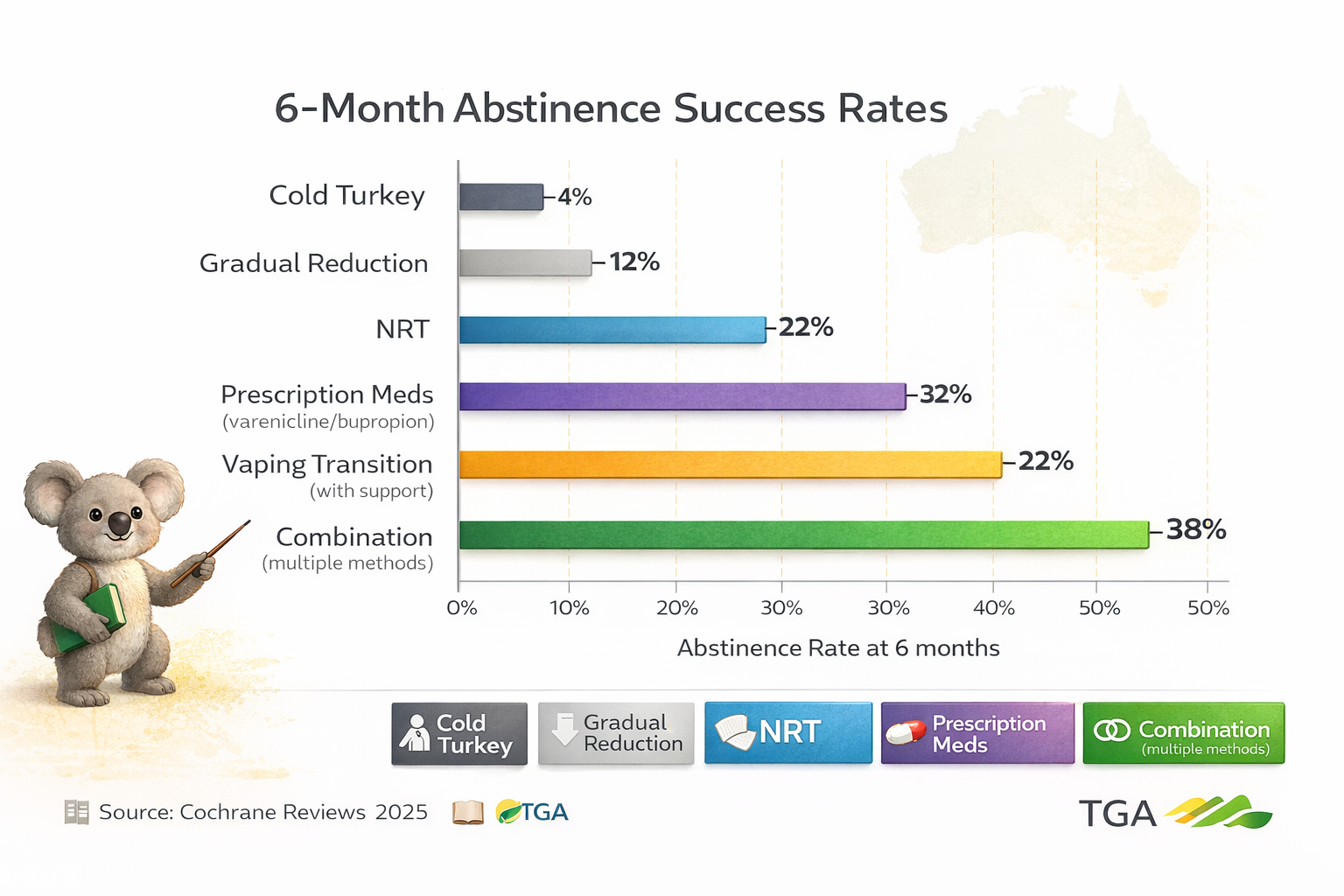
✅ Pros
- Simple and immediate
- No ongoing costs
- 100% nicotine‑free from day one
❌ Cons
- Very low success rate
- Intense withdrawal symptoms
- High relapse risk
Who it suits: Light smokers or those with very low nicotine dependence. Heavy dependent users typically find this approach extremely difficult due to physical adaptation of the brain.
✅ Pros
- More manageable withdrawal
- Allows body to adjust slowly
- Can be self‑directed
❌ Cons
- Requires strong self‑discipline
- Prolongs the quitting process
- Easy to stall or backslide
Who it suits: Moderate smokers who prefer a slower, step‑by‑step approach. Works well for habitual users who need time to break automatic routines.
✅ Pros
- Clinically proven and widely available
- Reduces withdrawal symptoms
- Multiple forms (patch, gum, lozenge)
- Can be combined (patch + gum)
❌ Cons
- Ongoing cost
- Requires following a regimen
- Some find it unsatisfying
Who it suits: Moderate to heavy smokers. Particularly effective when combined with behavioural support. Available over the counter or through pharmacies in Australia.
✅ Pros
- Can double or triple quit success
- Reduces cravings and reward from smoking
- Doctor‑supervised and monitored
❌ Cons
- Potential side effects
- Requires medical consultation
- Not suitable for everyone
- Prescription costs apply
Who it suits: Heavy smokers who have tried other methods without success. Particularly helpful for those with high dependence scores. Discuss with your GP.
✅ Pros
- Replicates smoking experience
- Allows stepwise nicotine reduction
- Eliminates combustion toxins
- Can be satisfying for former smokers
❌ Cons
- Long‑term health effects unknown
- Still need to quit entirely eventually
- Risk of dual use (both smoking and vaping)
- Quality varies by product
Who it suits: Heavy smokers who have struggled with other methods. Many UK health authorities endorse vaping as a cessation tool. In Australia, nicotine vaping products require a prescription and are accessed through pharmacies.
✅ Pros
- Addresses psychological and habitual aspects
- Teaches urge surfing and trigger management
- No side effects
- Often free (Quitline, apps)
❌ Cons
- Requires active effort
- May not be sufficient alone for heavy users
Who it suits: Everyone. Behavioural support enhances any quit method and is particularly crucial for those with strong emotional or habitual drivers.
✅ Pros
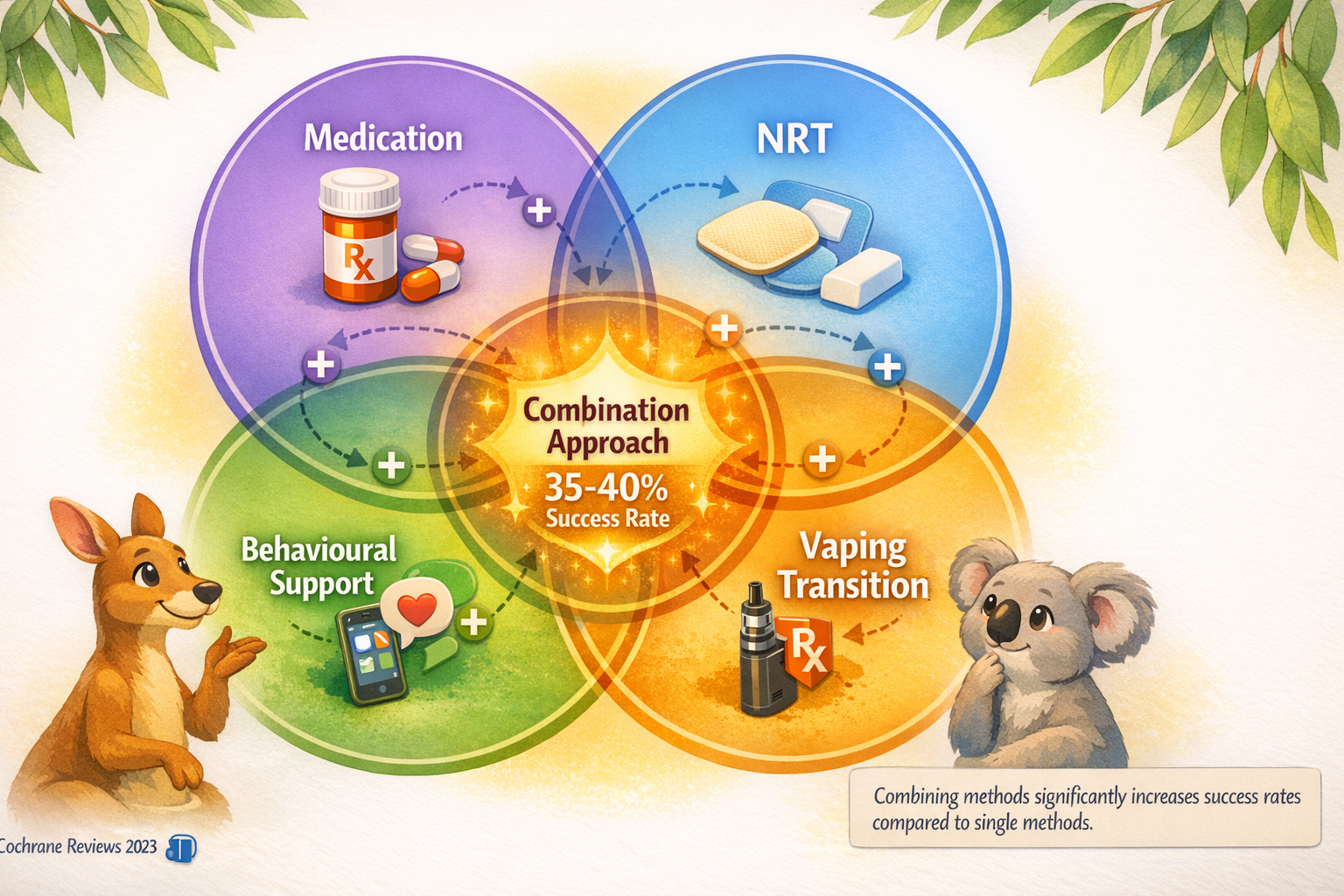
- Highest proven success rates
- Addresses both physical and psychological aspects
- Tailored to individual needs
❌ Cons
- More complex to coordinate
- Higher upfront cost
- Requires commitment to multiple strategies
Examples: Patch + gum + quitline counselling; prescription medication + app‑based support; vaping + behavioural therapy.
Choosing What's Right for You
Light, moderate, or heavy? Emotional, habitual, or social? Match the method to your dependence level.
What has worked or not worked before? Each attempt teaches you something.
Do you prefer abrupt or gradual? Medical support or self‑directed?
What's available and affordable for you? Many supports are subsidised.
Products That May Support Your Journey (Vaping Transition)
For those considering vaping as a transition tool, here are quality options available through pharmacy‑authorised supply chains. In Australia, nicotine vaping products require a prescription.
🔄 RELX Pods – Replacement Cartridges
⚡ RELX Devices – Starter Kits
🔞 Age verification required. All products require a valid prescription for nicotine-containing items in Australia.
Final Thoughts
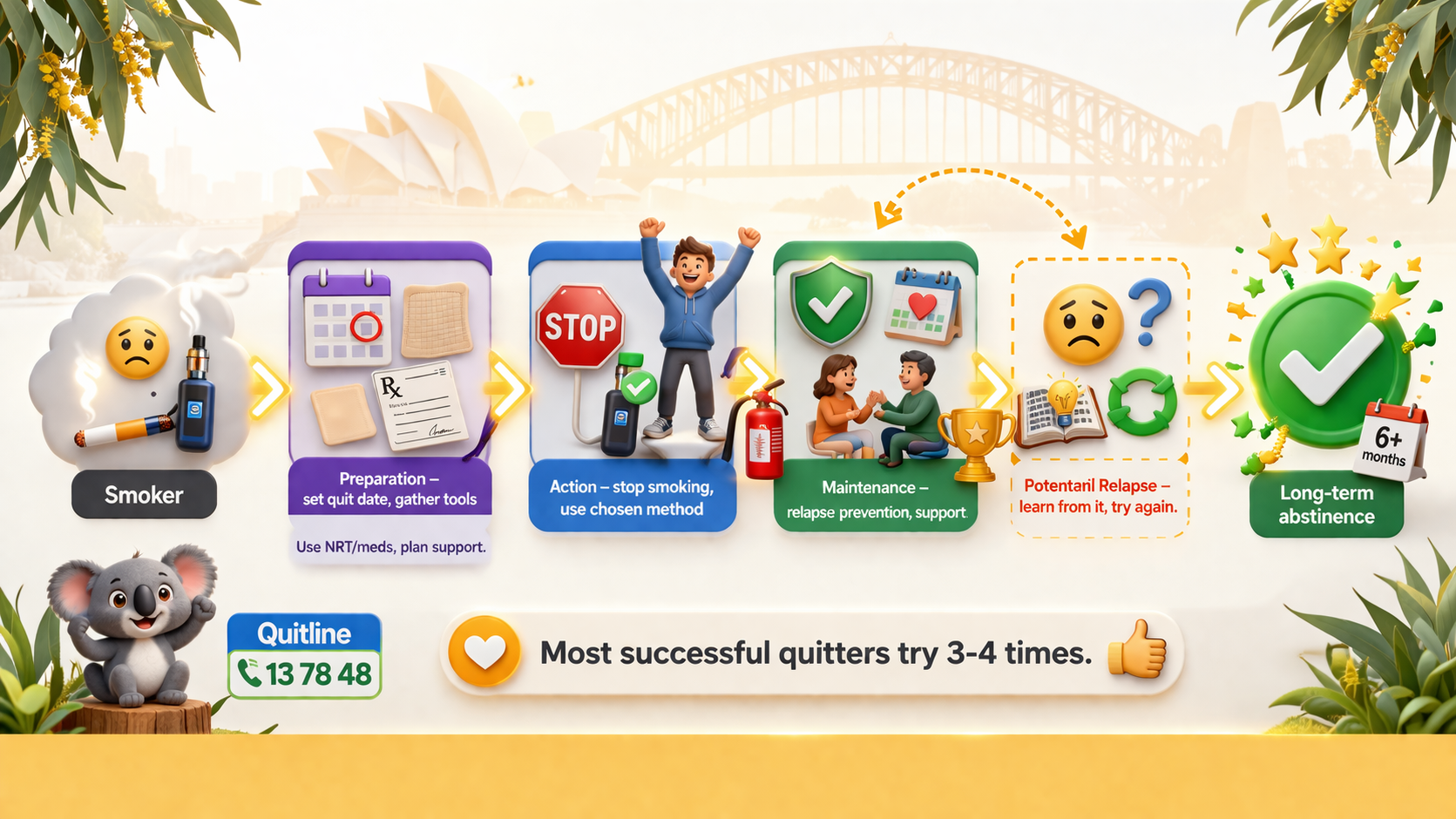
There's no universal "best" method—only the best method for you. Consider your smoker type, previous attempts, personal preferences, and access to support. Remember that most successful quitters try multiple times before succeeding. Each attempt teaches you something about what works for you.
🇦🇺 G'DayVape: We're committed to providing accurate information to help Australian adults make informed health decisions. Always consult healthcare professionals for personal medical advice.
📚 References & trusted sources
- Cochrane Database of Systematic Reviews – Nicotine replacement therapy versus control for smoking cessation (2025). cochranelibrary.com
- Cochrane Database – Varenicline for smoking cessation (2023). cochranelibrary.com
- Cochrane Database – Electronic cigarettes for smoking cessation (2025). cochranelibrary.com
- Australian Government Department of Health – Smoking cessation resources. health.gov.au
- Centers for Disease Control and Prevention (CDC) – Quitting Smoking. cdc.gov
© 2026 G'DayVape — Australian vape knowledge, grounded in clarity. Always adult-only.
 RELX Pod