

Blog
What Type of Vaper Are You? A Simple Self-Assessment Guide

📑 In this guide
🔗 Related Guides from G'DayVape
Vaper Type Self-Assessment: First, a Quick Check-In
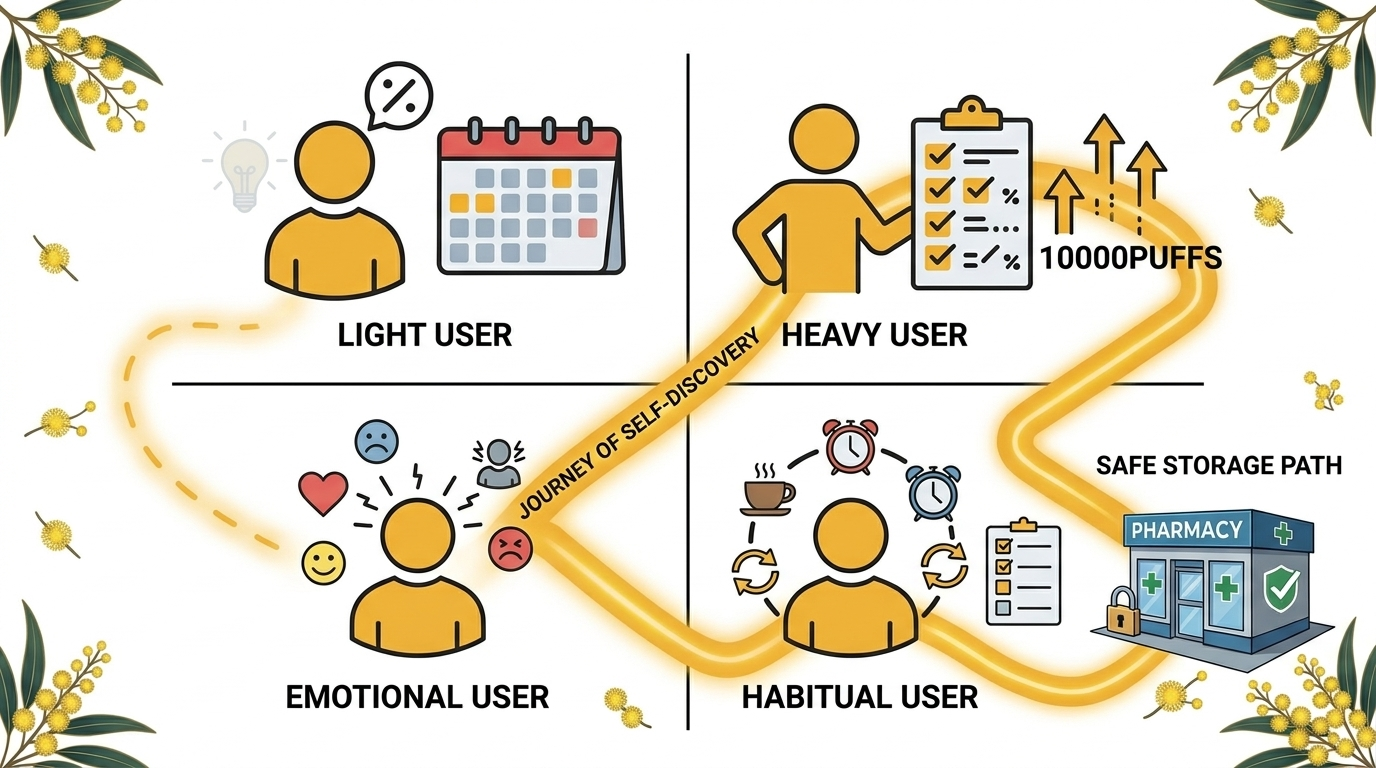
Before diving into categories, take a moment to notice your own experience—without judgment. This vaper type self-assessment starts with honest reflection.
❓ Ask yourself:
- How often do I usually use? (times per day/week)
- What situations trigger the urge? (after meals, with coffee, when stressed)
- How does it feel when I can't use? (mildly uncomfortable? genuinely agitated?)
- What purpose does it serve? (relaxation, focus, habit, social bonding)
Vaper Type Self-Assessment: Light vs Heavy Frequency Spectrum
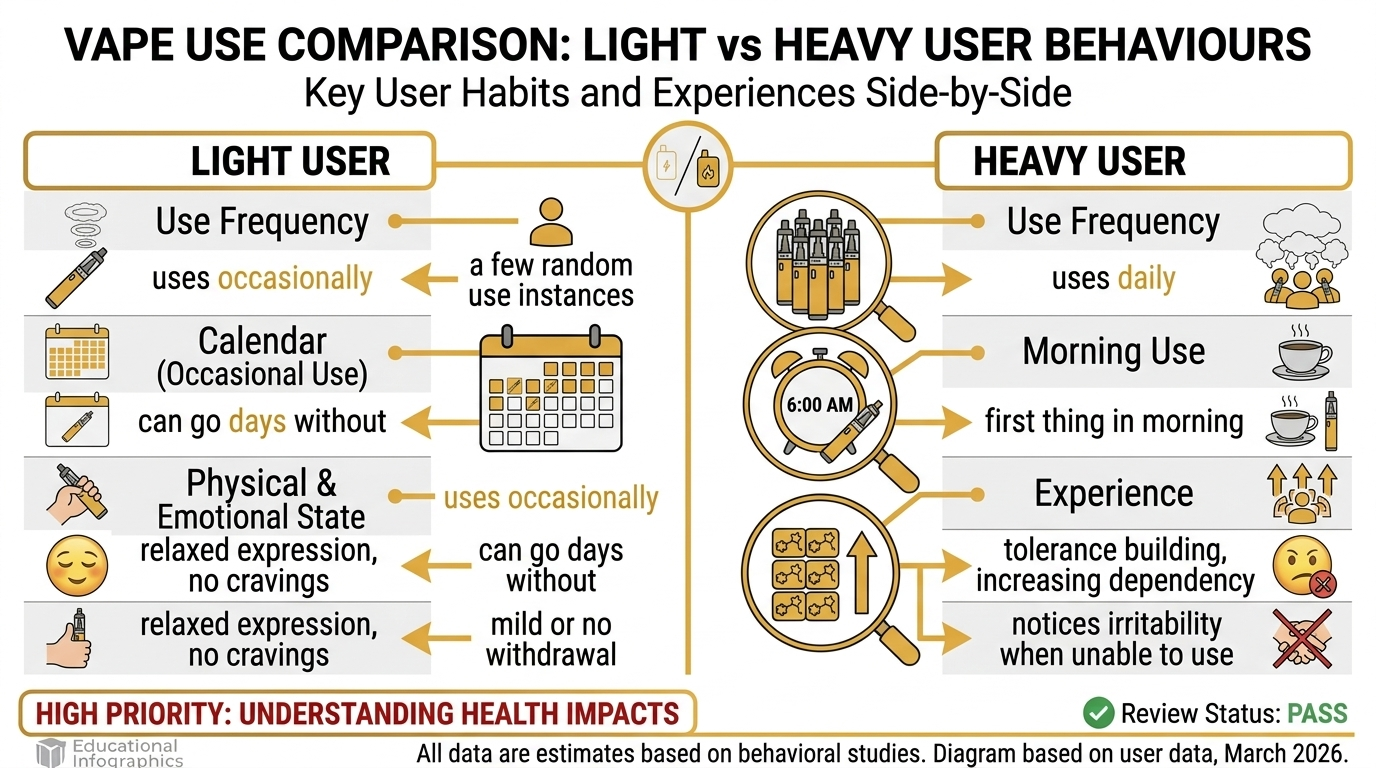
The first dimension of our vaper type self-assessment examines frequency. One of the most basic distinctions is how often nicotine enters your system. The brain adapts to regular nicotine use by growing more receptors, which drives higher consumption.
🪶 Light / Occasional User
- May go days without using
- Typically uses in specific social settings
- Doesn't experience strong withdrawal when stopping
- Often can take it or leave it
🔥 Regular / Heavy User
- Uses daily, often multiple times
- May use first thing in the morning
- Notices irritability or cravings when unable to use
- Has built tolerance—needs more to get the same effect
Vaper Type Self-Assessment: Emotional vs Habitual Triggers
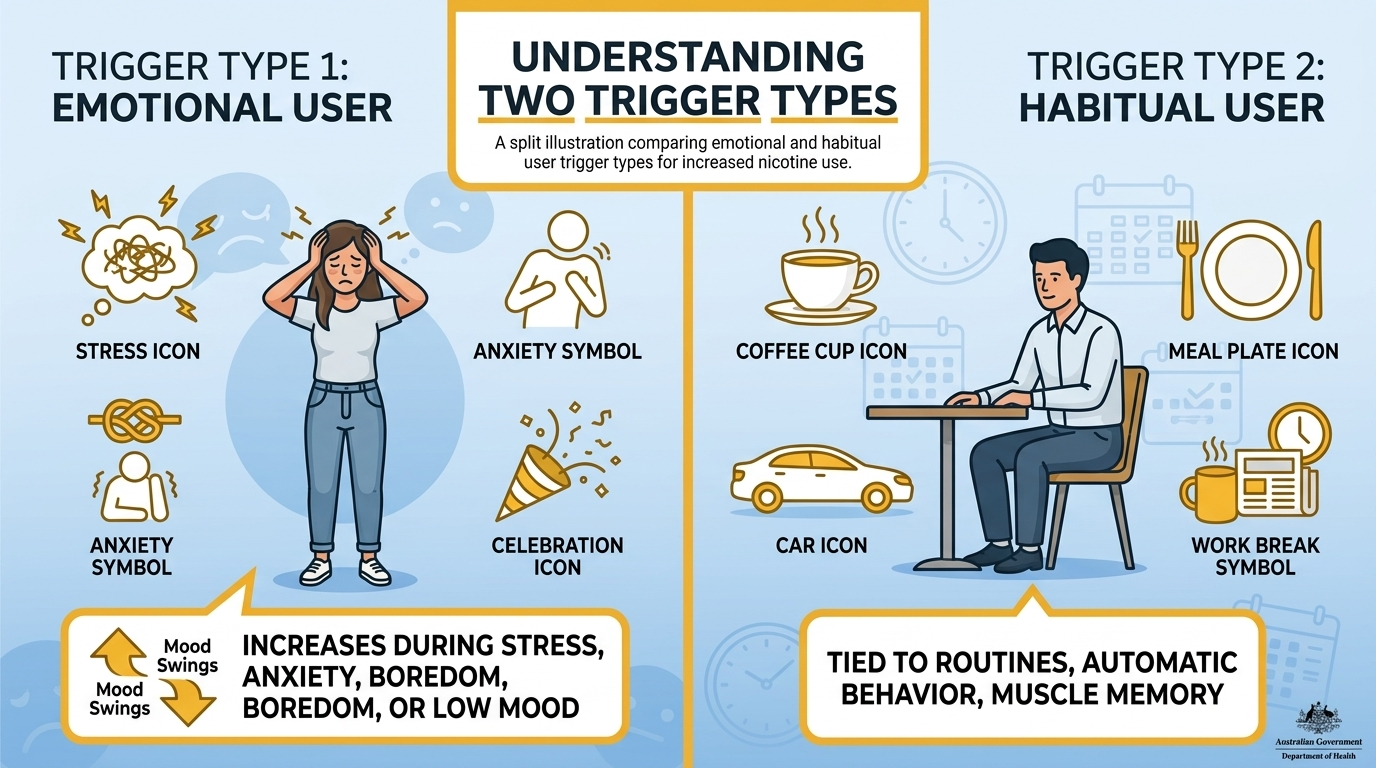
The second dimension of our vaper type self-assessment examines what sparks the desire. Many people are a mix of both, but one side often dominates.
😢 Emotional / Mood-Driven
- Use increases during stress, anxiety, boredom
- Nicotine feels like a way to cope or self-soothe
- May also use to celebrate or enhance good feelings
- The emotional state itself becomes a trigger
🔄 Habitual / Automatic
- Use is tied to routines: with coffee, after meals, during breaks
- Often happens almost without conscious thought
- The cue (situation) triggers the behaviour automatically
- May feel like "muscle memory" rather than a conscious choice
Vaper Type Self-Assessment: Social vs Dependent Context
The third dimension of our vaper type self-assessment looks at when and with whom you use.

👥 Social / Situational User
- Primarily uses around others who also vape
- At parties, pubs, gatherings, or with specific friends
- May not think about it when alone
- The social setting is the main trigger
🏠 Dependent / Solo User
- Uses regularly whether alone or with others
- Nicotine is integrated into daily life regardless of social context
- May hide use or feel it's a private ritual
- The dependency exists independent of social cues
A Simple Self-Assessment Exercise
This isn't a scientific test—just a tool to help you reflect. Read each statement and notice how strongly it resonates (1 = not me, 5 = very much me). This vaper type self-assessment exercise helps identify your dominant patterns.
📋 Self-Assessment Statements
- ___ I use most days, often multiple times.
- ___ I could easily go a few days without using.
- ___ My use spikes when I'm stressed or upset.
- ___ I automatically reach for it during certain routines (e.g., with coffee).
- ___ I mainly use when I'm socialising with others who use.
- ___ I've tried to cut down and found it harder than expected.
- ___ I don't really think about it—it's just part of my day.
- ___ It helps me manage my mood or relax.
Look for patterns. If you scored high on "multiple times daily" and "tried to cut down," you might be in the heavier/dependent category. If "stressed" and "relax" were high, emotional drivers are strong. If "automatic" and "don't think about it" resonated, habitual patterns are at play. Most people will see a mix—that's completely normal.
Vaper Type Self-Assessment: Why Your Type Matters for Quitting
There's no one-size-fits-all approach to changing nicotine use. Different patterns call for different strategies. This vaper type self-assessment helps you identify which approach might work best for you.
🪶 Light/Social User
You might simply decide to stop and find it relatively straightforward. The key is having a plan for those social situations—maybe a clear "I'm not using tonight" boundary.
🔥 Heavy/Dependent User
Going "cold turkey" can be brutally hard because your brain has physically adapted. Nicotine replacement therapy, gradual reduction, or switching to a lower-nicotine product can ease the transition.
😢 Emotional Triggers
Finding other ways to cope with stress, anxiety, or boredom is crucial. This might be exercise, talking to someone, breathing exercises, or simply giving yourself permission to pause differently.
🔄 Habitual Patterns
Disrupting routines helps. Take a different route to work, change your morning order, keep your hands busy with something else during breaks. The habit loop needs to be interrupted.
Four Facts We Hold at the Centre of This Discussion
- Nicotine is addictive — in all forms.
- Vaping is not without health risks.
- Compared to smoking, the risk profile of vaping is different and generally lower.
- For many, vaping serves as a transition or alternative, not a "health product."
Conclusion: Knowing Yourself Is the First Step
Whether you're a light social user, a heavy dependent user, or somewhere in between, understanding your own pattern isn't about fitting into a box. This vaper type self-assessment is about seeing yourself clearly—without shame, without judgement.
From that clear seeing, any decision you make about your nicotine use becomes more grounded, more realistic, and more likely to work for you. If you're considering a change, the strategies above tailored to your type can help. If you're not considering a change, that's your choice too. The information is here when you need it.
🇦🇺 Shop RELX HERC 12000 at G'DayVape
If you understand your pattern and choose to vape, here's a premium option available with fast delivery:
RELX HERC 12000 Specifications
- Brand: RELX
- Model: HERC 12000
- Puff Count: Up to 12,000 per device
- Nicotine Strength: 5% (50 mg/ml)
- E-Liquid Capacity: 18 ml per device
- Battery Capacity: 2600 mAh (Charge-Free)
- Power System: Auto-Tuned Power Technology
- Activation: Draw-activated with consecutive-draw power adjustment
- Coil Type: Mesh Coil
- Body Material: Aluminum
- Display: Smart side display for usage tracking
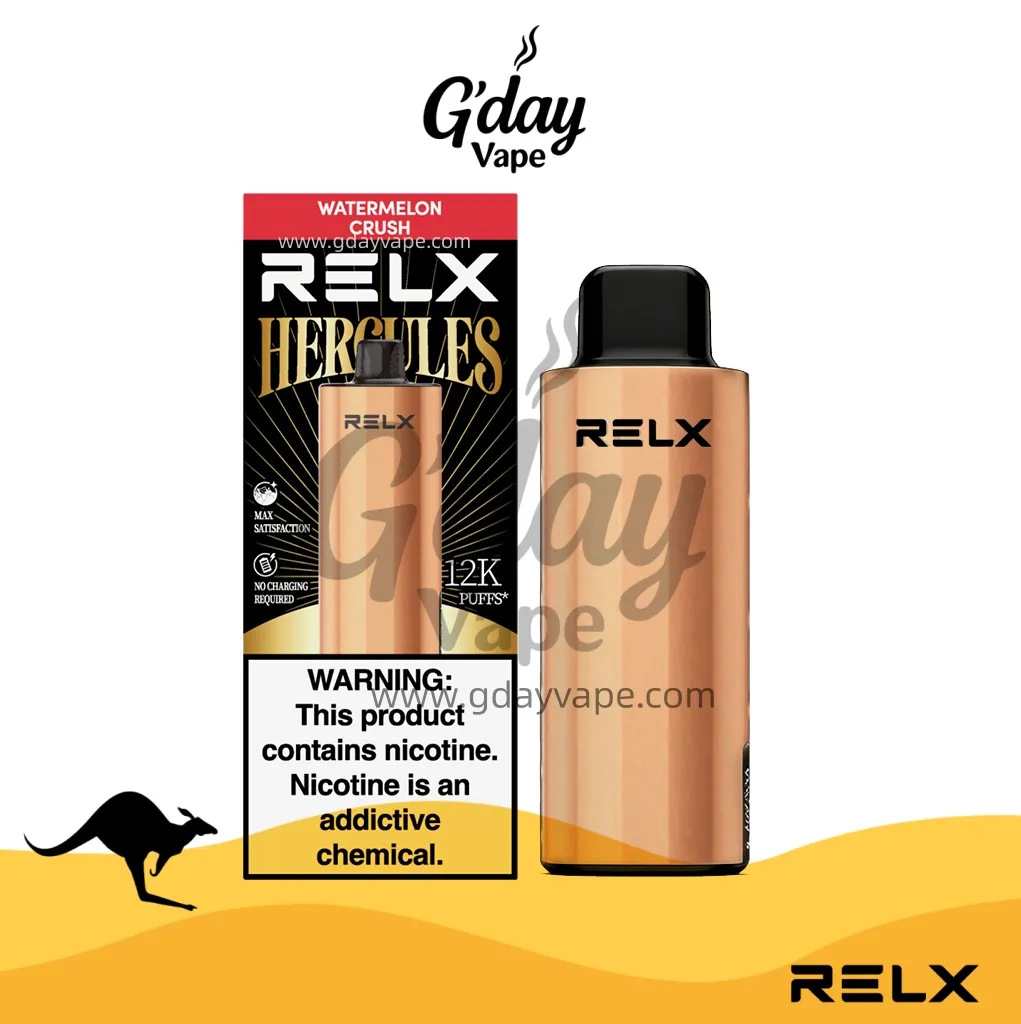
12,000 Puffs


📖 Explore More Guides from G'DayVape
📚 References & Authoritative Sources
- Therapeutic Goods Administration (TGA). (2026). Nicotine Vaping Products: Information for Consumers. tga.gov.au
- Australian Government Department of Health. (2026). About vaping and e-cigarettes. health.gov.au
- Cancer Council Australia. (2025). Position Statement: Electronic Cigarettes. cancer.org.au
- National Institute on Drug Abuse (NIDA). (2025). Tobacco, Nicotine, and E-Cigarettes. nida.nih.gov
- Australian Institute of Health and Welfare (AIHW). (2025). National Drug Strategy Household Survey. aihw.gov.au
All external sources are government or official health institutions. Links are dofollow and open in new tabs. Information current as of April 2026.
© 2026 G'DayVape — Australian vape knowledge, grounded in clarity. Always adult-only. This vaper type self-assessment guide is for informational purposes only and does not constitute medical advice. Always consult healthcare professionals for personal health decisions.
 RELX Pod