

Blog
Vape Waste in Australia 2026: Scale, Hazards & Recycling Solutions

The Scale of Australia's Vape Waste Problem
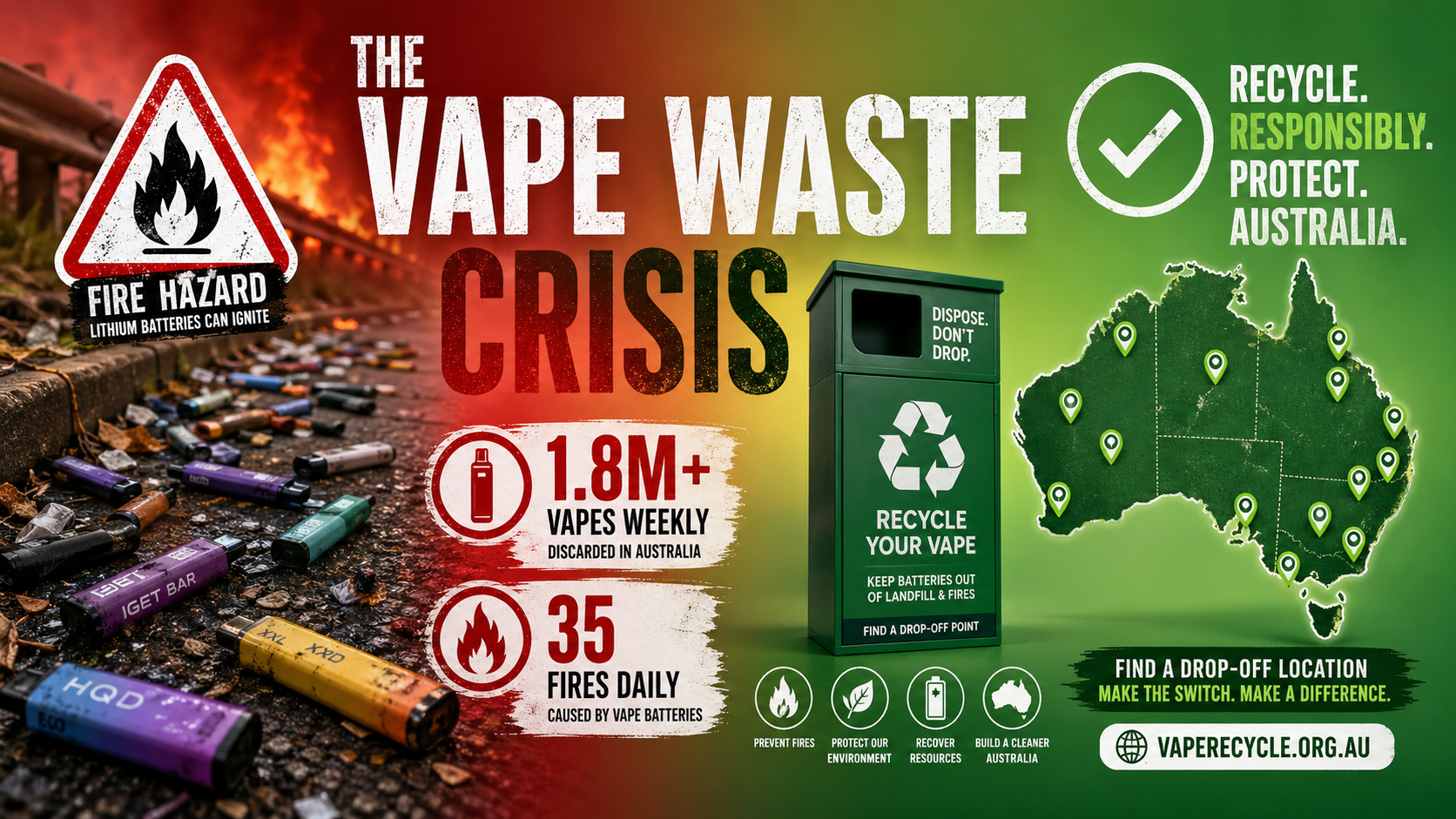
Australia's vape waste crisis has reached alarming levels. Industry experts report that over 1.8 million vapes are thrown into general waste each week—and each one contains a fixed lithium‑ion battery that poses a serious fire hazard when crushed or damaged in waste facilities[reference:0].
What's Inside a Single Vape?
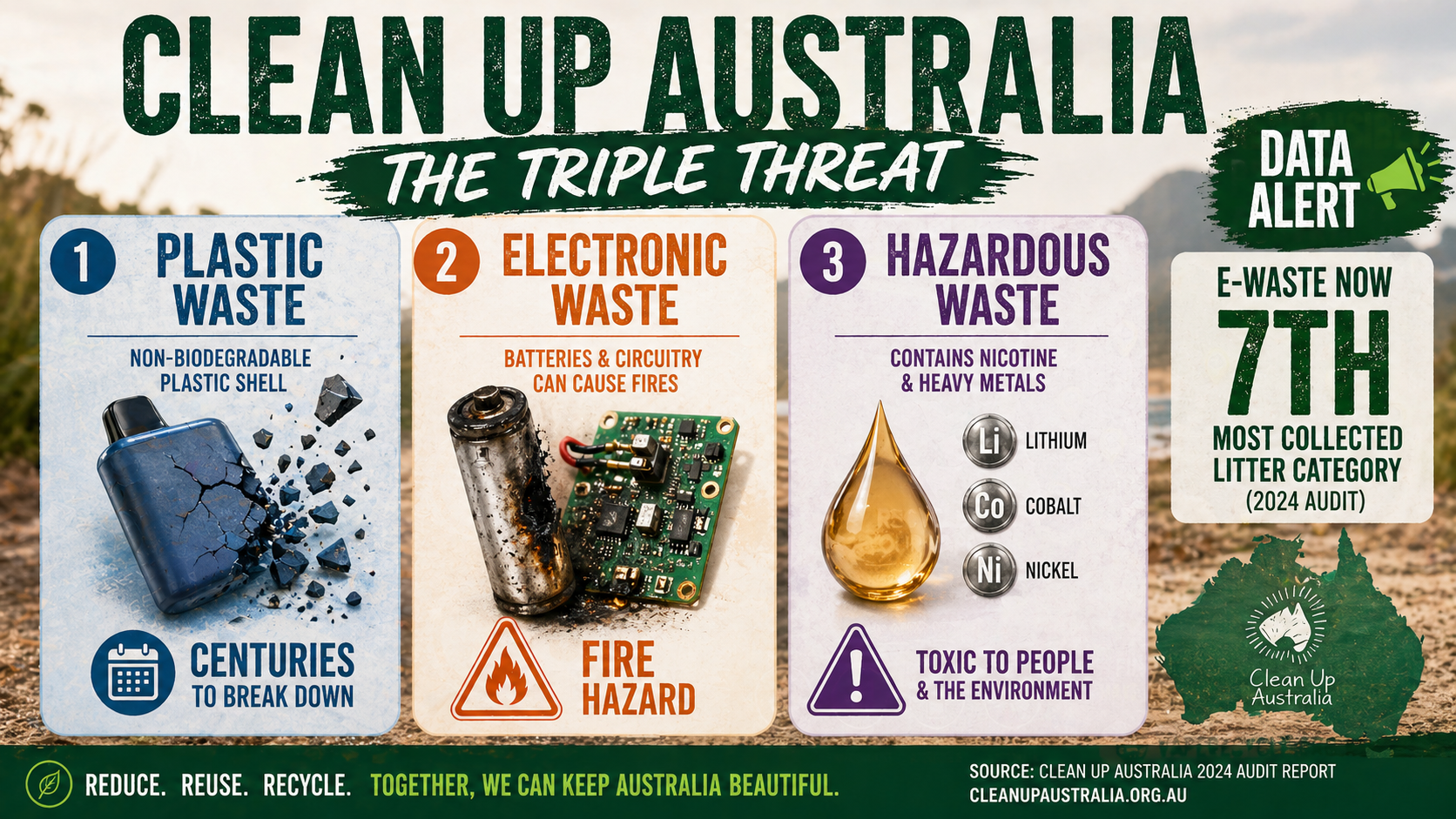
According to Clean Up Australia, vapes are a "triple threat" to the environment: plastic waste (non‑biodegradable shells that take centuries to break down), electronic waste (lithium‑ion batteries and circuit boards), and hazardous waste (nicotine residues, heavy metals, and toxic chemicals)[reference:5][reference:6]. When disposed of in household bins, these devices pose a serious risk of fires in waste trucks and landfills[reference:7].
The Lithium‑Ion Battery Fire Crisis
Improperly discarded vapes are causing hundreds of preventable fires across Australia each year. When a lithium‑ion battery is crushed in a garbage truck or at a waste facility, it can enter a state called thermal runaway—a chemical chain reaction that leads to explosion and fire[reference:8].
Fire and Rescue NSW recorded 332 lithium‑ion battery incidents in 2025. In the first months of 2026 alone, there have been 62 community fires, 12 in garbage trucks, and at least 103 waste industry fires suspected to involve batteries[reference:9].
Queensland recorded more than 200 battery‑sparked fires in the first 11 months of 2025—one fire every two days. Nationally, at least 35 battery fires occur in recycling facilities every single day[reference:10][reference:11].
Environmental Contamination: From Landfill to Waterway
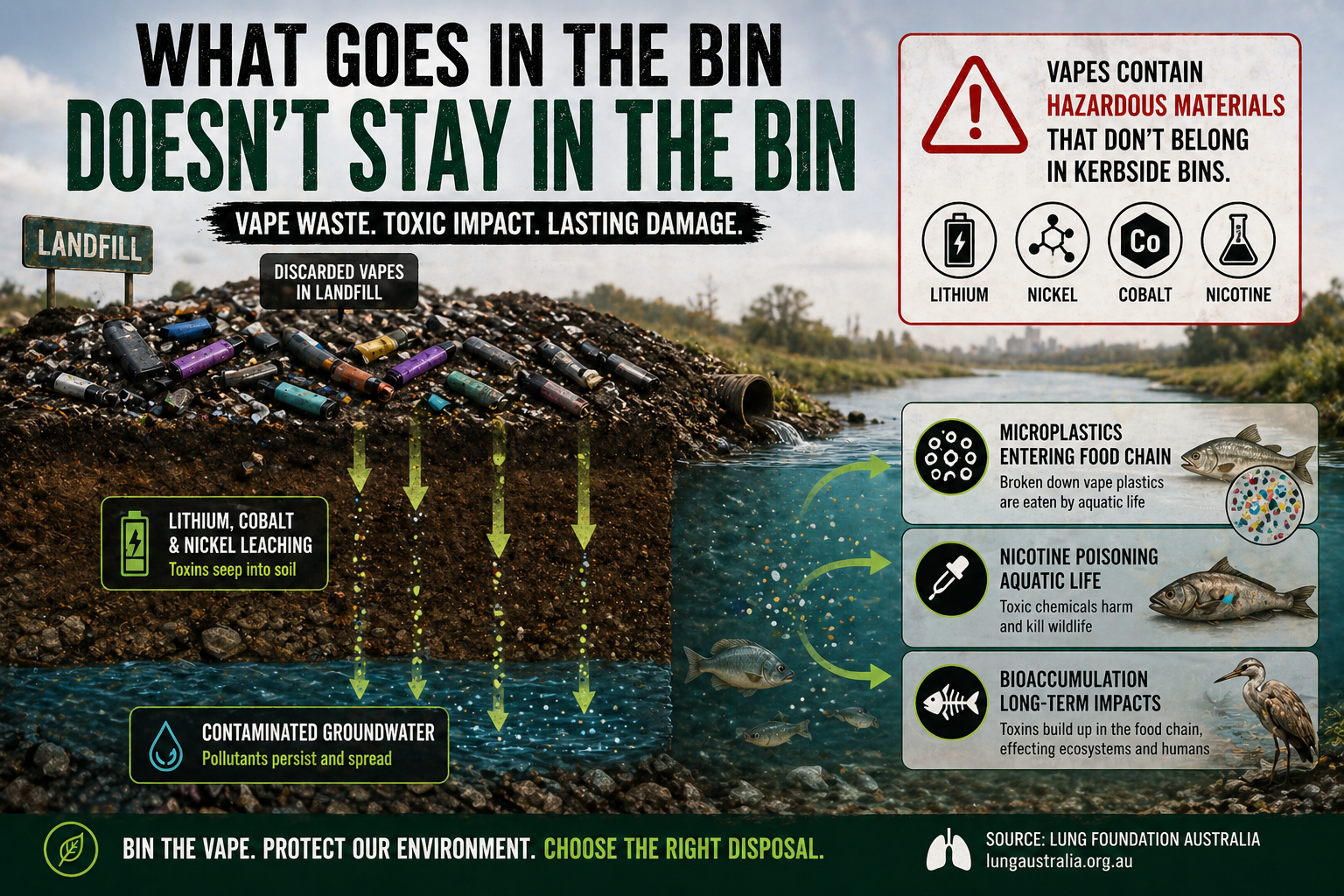
When vapes end up in landfill—as millions do each year—their toxic contents slowly leach into soil and groundwater. The Lung Foundation Australia warns that vapes pollute our land and waterways with toxic chemicals, heavy metals, and microplastics[reference:12].
Key Environmental Hazards
- 🌿 Lithium, cobalt & nickel toxicity: These heavy metals can leach from batteries into soil and water sources, contaminating ecosystems and potentially entering the food chain[reference:13].
- 💧 Microplastic pollution: Vape shells are made from plastic that does not biodegrade, taking hundreds of years to break down. Over time, they release microplastics consumed by marine animals and found in the food we eat and water we drink[reference:14].
- 🧪 Nicotine contamination: Nicotine residues are poisonous to fish and other aquatic life and can contaminate drinking water supplies[reference:15].
- ⚡ Electronic waste: Circuit boards and wiring add to the growing e‑waste problem, releasing hazardous substances as they degrade[reference:16].
Vape Litter: From Streets to National Parks
Single‑use vapes have become a prominent source of visible litter across Australia, despite a federal ban on their importation since mid‑2024[reference:17]. Clean Up Australia's annual litter audit found electronic waste is now the seventh most collected category of litter nationwide, and single‑use vapes were found at nearly a third of all audit sites between mid‑2023 and mid‑2024[reference:18].
In 2025, volunteers removed more than 7 tonnes of rubbish in a single clean‑up effort across Moreton Bay, Queensland—with vapes among the most common items collected[reference:19]. Clean Up Australia chair Pip Kiernan has called for a nationally‑consistent vape disposal and recycling scheme to keep vapes out of streets, parks, and general waste streams[reference:20].
The "E‑cigarette Wall" Incident
In 2024, a photo of dozens of discarded plastic vape devices scattered on a roadside barrier in Melbourne went viral, sparking public outrage. Citizens described the behavior as "barbaric" and expressed deep concern about the environmental risks posed by the plastic shells and lithium batteries[reference:21].
Policy Responses: Bans, Regulations & New Laws
Federal Disposable Vape Ban (2024–2026)
From 1 January 2024, the Australian Federal Government banned the importation of disposable single‑use vapes. The regulations also restricted vape sales to pharmacies, required pharmaceutical‑type packaging, and limited nicotine levels for therapeutic use[reference:22][reference:23].
Despite these measures, the TGA continues to seize large quantities of illegal vapes. In April 2026, a single raid in south‑west Sydney netted over 30,000 illegal vaping goods with an estimated street value of $1.8 million[reference:24].
NSW Mandatory Battery Regulation (Starting 1 October 2026)
NSW has become the first state in Australia to implement mandatory battery regulation, recently passed by Parliament. The new laws will require battery brand owners to fund safe collection, processing, and recycling of batteries reaching end‑of‑life. Penalties for non‑compliance can reach $880,000[reference:25][reference:26].
The regulation applies to small and removable batteries under 5 kilograms (including AA, AAA, power banks, and batteries used in e‑bikes and e‑scooters) and may serve as a model for specialised vape waste schemes in the future[reference:27].
State‑Led Recycling Initiatives
Several states have launched dedicated vape recycling programs:
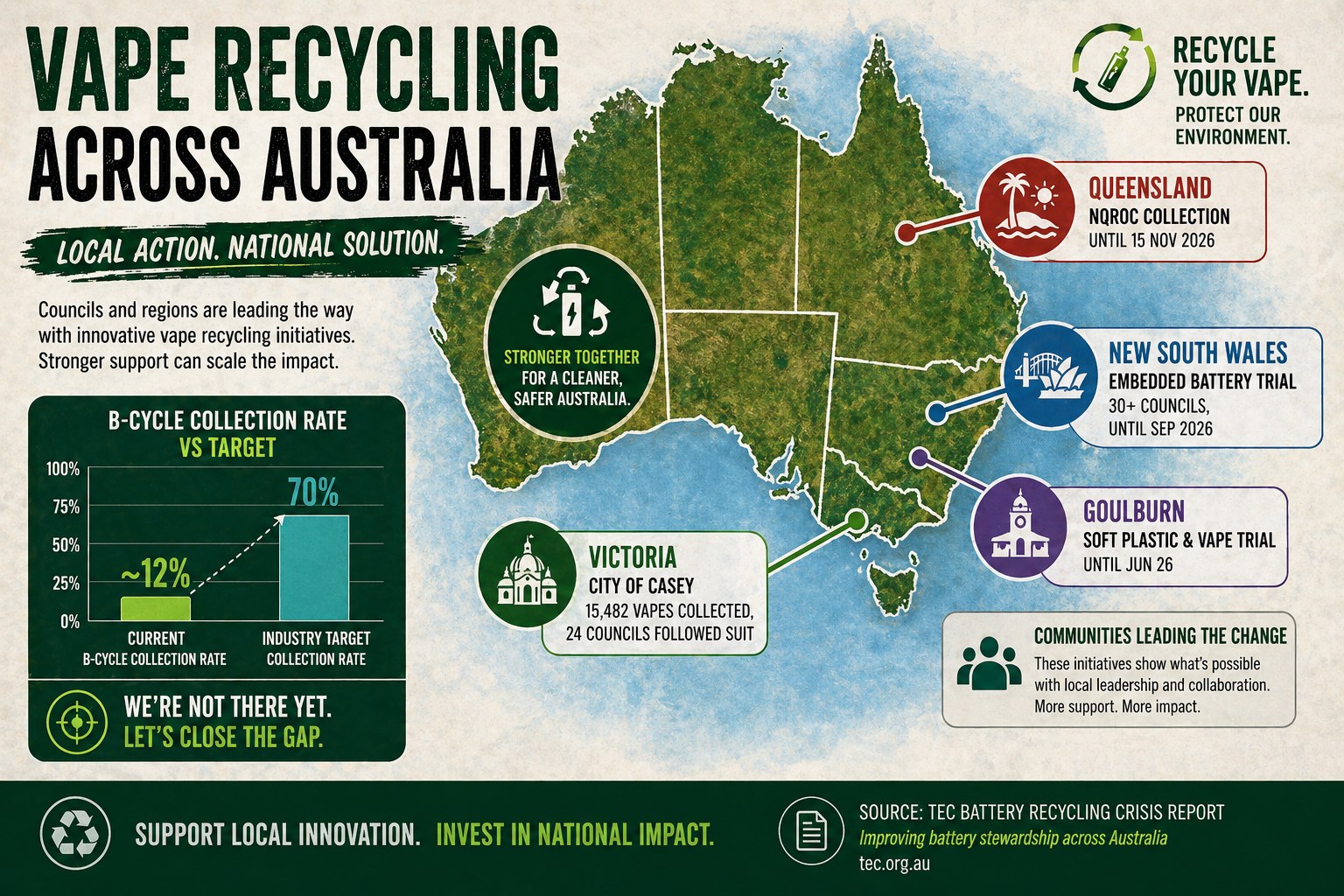
- Victoria – City of Casey: Became the first Victorian council to establish free vape disposal points in November 2023, collecting 15,482 vape units across five drop‑off locations to date. Approximately 24 additional councils have since followed suit[reference:28].
- NSW Embedded Battery Trial: Over 30 councils now accept vapes at Community Recycling Centres, with the trial running until September 2026[reference:29].
- Queensland – NQROC Collection: The North Queensland Regional Organisation of Councils runs a free embedded battery collection program until 15 November 2026, accepting vapes at waste facilities[reference:30].
- Goulburn Mulwaree Council: Launched a free trial recycling service for vapes and soft plastics, running until June 2026[reference:31].
Recycling Challenges: Why Vapes Are Hard to Process
Voluntary battery recycling schemes like B‑cycle and MobileMuster have "dismally low collection rates" (~12%), and do not cover the majority of hazardous batteries on the market—including those embedded in vapes, e‑bikes, and EVs[reference:32]. The Total Environment Centre has called for urgent regulation to establish an effective, mandatory product stewardship scheme to safely collect and recycle all battery types in Australia.
Currently, over 200,000 tonnes of batteries reach end‑of‑life each year in Australia, and the CSIRO has noted an urgent need to enhance collection rates to capture embedded value and minimise hazardous waste and fire risks[reference:33][reference:34].
What You Can Do: Responsible Disposal Options
Never place vapes in household kerbside bins. Instead, use these free drop‑off options:
Product Recommendations: Reduce Waste with Reusable Systems
The most effective way to reduce vape waste is to choose reusable pod systems over disposables. A single RELX device can last 1–2 years, dramatically reducing plastic and battery waste compared to single‑use alternatives.
🔄 RELX Devices – Built to Last
🔄 RELX Pods – Only the Pods Are Replaced
🔞 Age verification required. Under Australian law, nicotine vaping products are therapeutic goods. Adults 18+ may purchase ≤20mg/mL from pharmacies without a prescription; higher strengths require a prescription.
🇦🇺 G'DayVape: We support responsible vaping practices, including proper end‑of‑life disposal. All products are 100% authentic. For disposal guidance, always use official council resources.
📚 References & trusted sources
- 2FIRSTS / ABC News – "E-cigarette Wall" Sparks Outrage in Australia (2024). 2firsts.com [1.8 million vapes weekly, 35 daily waste facility fires, import ban details]
- Clean Up Australia – Vapes and the environment. cleanup.org.au [Triple threat definition, e‑waste top 10 litter category]
- NSW Government (Ministerial Release) – NSW leads the country in battery reform (April 2026). nsw.gov.au [332 incidents 2025, 62 fires 2026, mandatory regulation starting 1 Oct 2026, $880k penalties]
- Lung Foundation Australia – Vaping and the environment. lungfoundation.com.au [Microplastics, heavy metals, nicotine contamination, fire hazards]
- Total Environment Centre (TEC) – Battery Recycling Crisis Report. tec.org.au [12% collection rate, mandatory product stewardship needed, 200,000 tonnes end‑of‑life batteries annually]
- Australian Associated Press / NVI – 'Triple threat' vapes littering streets and parks (February 2025). nvi.com.au [E‑waste now 7th most littered category, 7.7% increase, vapes at 1/3 of audit sites]
- TGA / Mirage News – 30,000 Illegal Vapes Seized in TGA Sydney Raid (April 2026). miragenews.com [SEZE operations, penalties up to 7 years imprisonment or $2.31M fines]
- Inside Local Government – City of Casey vape recycling (April 2026). insidelocalgovernment.com.au [15,482 vapes collected, 24 councils followed]
- Queensland Fire Department / PerthNow – Battery fire statistics (2025). perthnow.com.au [200+ battery fires in Queensland in first 11 months of 2025]
© 2026 G'DayVape — Australian vape knowledge, grounded in clarity. Always adult-only.
 RELX Pod