

Blog
Smoking vs Vaping: Essential 2026 Harm Reduction Guide

📑 In this guide
🔗 Related Guides from G'DayVape
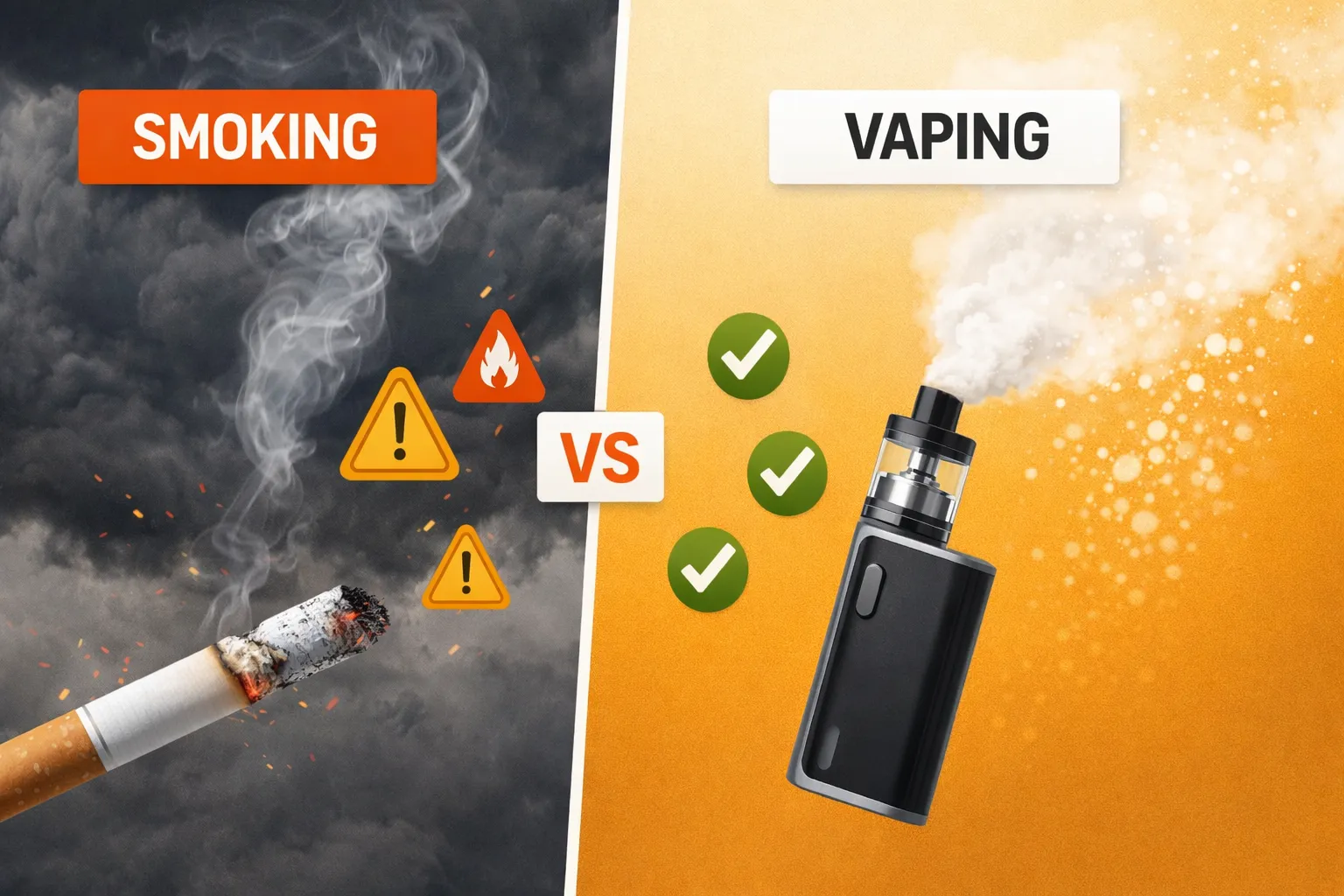
Smoking vs Vaping Harm Reduction: The Core Difference
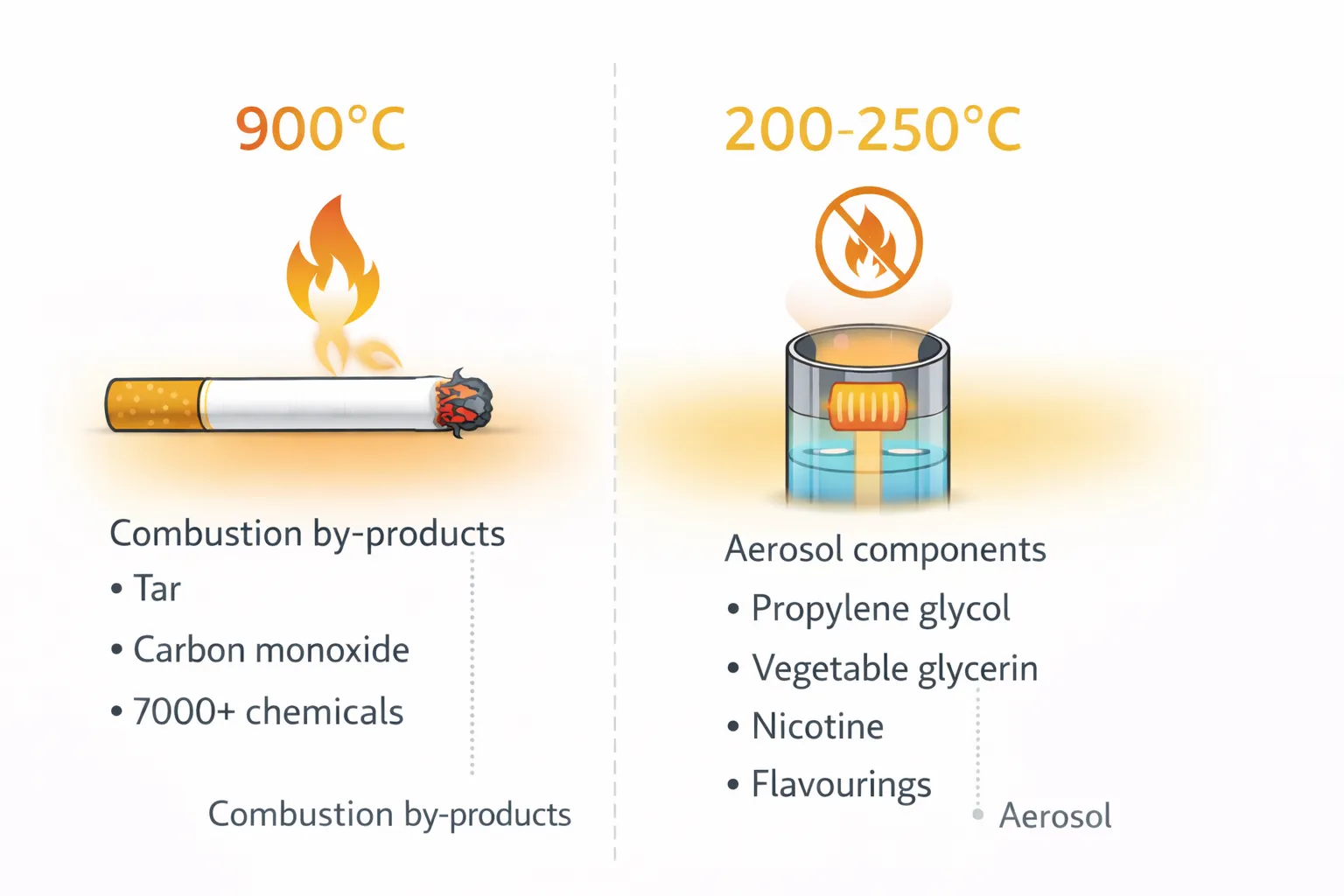
The fundamental distinction in smoking vs vaping harm reduction lies in how each delivers its substances. A cigarette burns tobacco at temperatures reaching 900°C. This process, called pyrolysis, is a form of high-temperature combustion that breaks down organic material and creates thousands of new chemicals.
Vaping devices, by contrast, use a battery-powered coil to heat an e-liquid to much lower temperatures—typically between 200°C and 250°C. This is hot enough to turn the liquid into an inhalable aerosol, but not hot enough to cause combustion.
This single difference—combustion vs. no combustion—explains almost everything else about why their health impacts differ. Understanding smoking vs vaping harm reduction starts with this fundamental principle.
Smoking vs Vaping Harm Reduction: Toxicant Sources Compared
Cigarette Smoke: A Complex Toxic Mixture
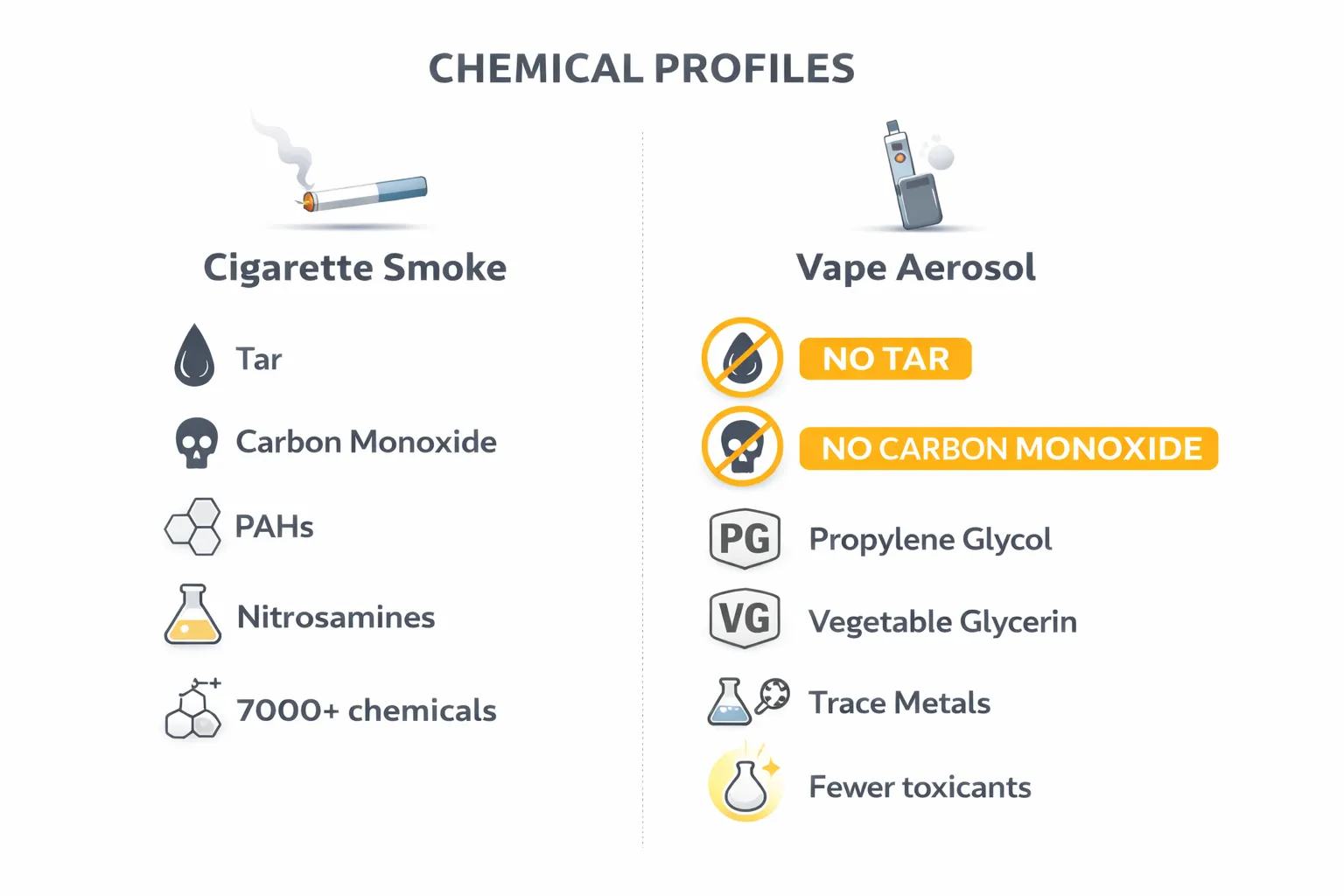
When tobacco burns, it doesn't just release nicotine. The combustion process generates an estimated 7,000+ chemicals, including tar, carbon monoxide, polycyclic aromatic hydrocarbons (PAHs), and nitrosamines. Public health authorities attribute the vast majority of smoking-related diseases—lung cancer, heart disease, COPD—to these combustion by-products, not to nicotine itself.
Vape Aerosol: A Different Chemical Profile
Vape aerosol is produced by heating a liquid typically containing propylene glycol, vegetable glycerin, nicotine, and flavourings. Because there's no combustion, the aerosol contains fewer toxicants overall at significantly lower concentrations than cigarette smoke. Notably, there is no tar or carbon monoxide—these combustion-specific products are absent.
The evidence on smoking vs vaping harm reduction clearly shows that the types and quantities of toxicants differ fundamentally. This is why public health bodies describe vaping's risk profile as different from smoking—not identical, and not zero.
Smoking vs Vaping Harm Reduction: What the Evidence Shows
A large 2026 meta-analysis published in Public Health Reports compared disease outcomes across 124 studies. The findings showed that compared to cigarette smokers, exclusive e-cigarette users had lower odds of cardiovascular disease, stroke, asthma, and COPD.
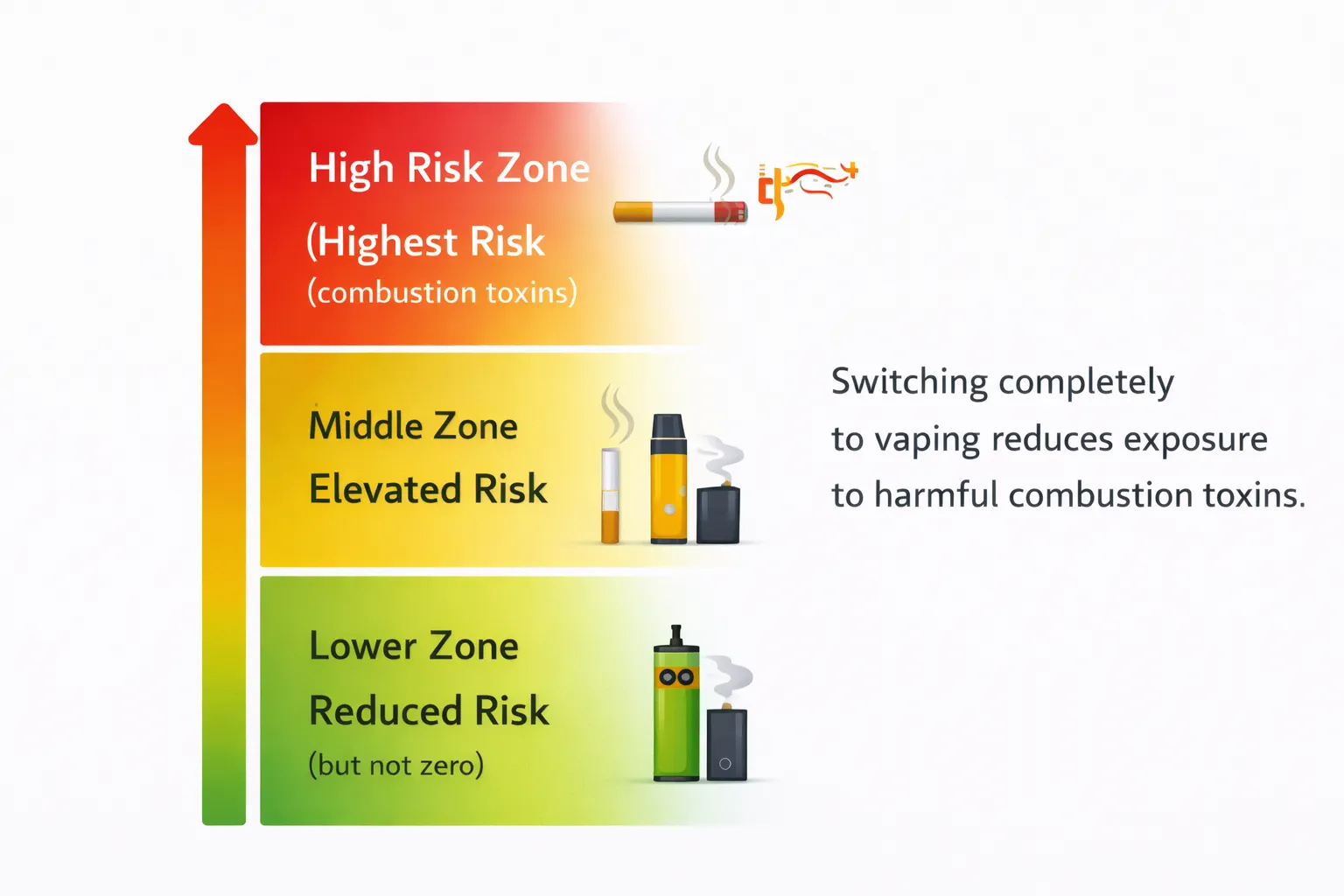
For a smoker who switches completely to vaping, the evidence on smoking vs vaping harm reduction suggests a reduction in exposure to many harmful chemicals. But "reduced exposure" is not "no exposure."
Key Takeaway
For a smoker who switches completely to vaping, the evidence suggests a reduction in exposure to many harmful chemicals. But "reduced exposure" is not "no exposure." Avoid dual use—it's associated with higher risks than smoking alone.
Smoking vs Vaping Harm Reduction: The Long-Term Unknown
One crucial point often overlooked: vaping products have only been widely used since the mid-2010s. As the UK House of Commons Library notes, not enough time has passed for any studies to report on potential long-term effects of vaping.
We know that some cancer-causing substances present in tobacco smoke are also detectable in vape aerosol, raising the possibility that long-term use might increase the risk of lung cancer, COPD, or cardiovascular disease—though likely to a substantially lesser extent. But this remains an area of scientific uncertainty in smoking vs vaping harm reduction research.
A 2026 report from France's ANSES agency reviewed the health effects of vaping and concluded that repeated inhalation of aerosol may be associated with cardiovascular and respiratory effects, independent of nicotine.
Smoking vs Vaping Harm Reduction: Why Many People Switch
Given that both products carry risks, why do so many smokers turn to vaping? The evidence on smoking vs vaping harm reduction points to a few key reasons:
- Harm reduction: For smokers unable or unwilling to quit nicotine entirely, switching to a non-combustible product reduces exposure to the most dangerous components of tobacco smoke.
- Similar behavioural ritual: Hand-to-mouth action, inhalation, and exhalation mimic smoking in ways that nicotine replacement therapy (gum, patches) does not.
- Perceived lower risk: While this perception is often oversimplified, it's supported by the weight of evidence showing reduced toxicant exposure.
Smoking vs Vaping Harm Reduction: What This Means for Australian Users
For Australian adults considering their options, a few clear points emerge from the evidence on smoking vs vaping harm reduction:
If You Currently Smoke
Switching completely to vaping likely reduces your exposure to the most harmful chemicals in tobacco smoke. Avoid dual use—it's associated with higher risks than smoking alone. The goal should ultimately be to cease all nicotine use, but for many, vaping serves as a transitional step.
If You Don't Smoke
There is no health reason to start vaping. Nicotine addiction, respiratory irritation, and unknown long-term effects are real considerations. As NSW Health states, vaping should under no circumstances be encouraged among non-smokers and young people.
Four Facts We Hold at the Centre of This Discussion
- Nicotine is addictive — in both cigarettes and vapes.
- Vaping is not without health risks.
- Compared to smoking, the risk profile of vaping is different and generally lower.
- For many, vaping serves as a transition or alternative, not a "health product."
Conclusion: Understanding the Gap
The harm gap between smoking and vaping exists because of one fundamental difference: combustion. Burning tobacco creates thousands of toxic chemicals that simply aren't present—or are present at much lower levels—in vape aerosol.
But "less harmful" is not "harmless." Vaping carries its own risks, some known and some still uncertain. This smoking vs vaping harm reduction guide aims to provide clear information, acknowledge uncertainty, and help Australian adults make informed choices based on evidence.
🇦🇺 Shop IGET Bar Pro 10000 at G'DayVape
If you're considering switching from smoking, here's a popular option available with fast delivery:
IGET Bar Pro 10000 Specifications
- Brand: IGET
- Puff Count: Up to 10,000 puffs
- Nicotine Strength: 5% (50mg/ml)
- E-Liquid Capacity: 20ml
- Battery: 2000mAh Non-rechargeable
- Coil: 1.2Ω Mesh Coil
- Weight: 93 g
- Material: Aluminium

10,000 Puffs


📖 Explore More Guides from G'DayVape
📚 References & Authoritative Sources
- Therapeutic Goods Administration (TGA). (2026). Nicotine Vaping Products: Information for Consumers. Australian Government Department of Health. tga.gov.au
- Australian Government Department of Health and Aged Care. (2026). About vaping and e-cigarettes. health.gov.au
- Cancer Council Australia. (2025). Position Statement: Electronic Cigarettes. cancer.org.au
- National Academies of Sciences, Engineering, and Medicine. (2018). Public Health Consequences of E-Cigarettes. nap.edu
- Australian Border Force (ABF). (2026). Import Controls for Tobacco and Vaping Products. abf.gov.au
All external sources are Australian government or official health institutions. Links are dofollow and open in new tabs. Information current as of April 2026.
© 2026 G'DayVape — Australian vape knowledge, grounded in clarity. Always adult-only. This smoking vs vaping harm reduction guide is for informational purposes only and does not constitute medical advice. Always consult healthcare professionals for personal health decisions.
 RELX Pod