


Blog
Cold Turkey vs Gradual Reduction: Which Quitting Method Works Better

📖 More from this series:
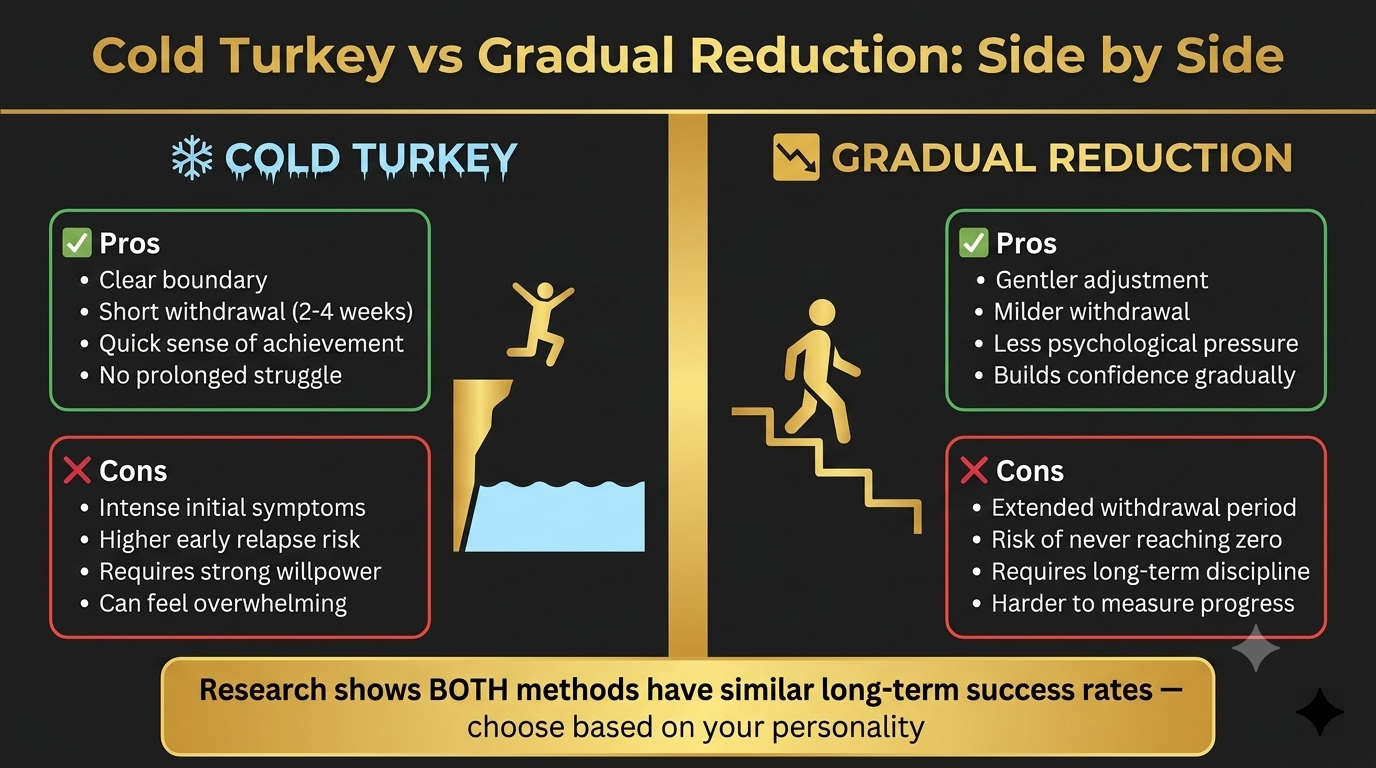
Cold Turkey vs Gradual Reduction: Side by Side
❄️ COLD TURKEY
How it works: Choose a quit date and stop smoking completely on that day. No tapering, no "last cigarette" exceptions.
- Clear, unambiguous boundary — you're either smoking or you're not
- Short withdrawal period (2-4 weeks of significant symptoms)
- No prolonged struggle with "just one more"
- Quick sense of achievement
- Intense withdrawal symptoms in the first week
- Higher early relapse risk (first 7-10 days)
- Requires strong initial willpower
- Can feel overwhelming for heavy smokers
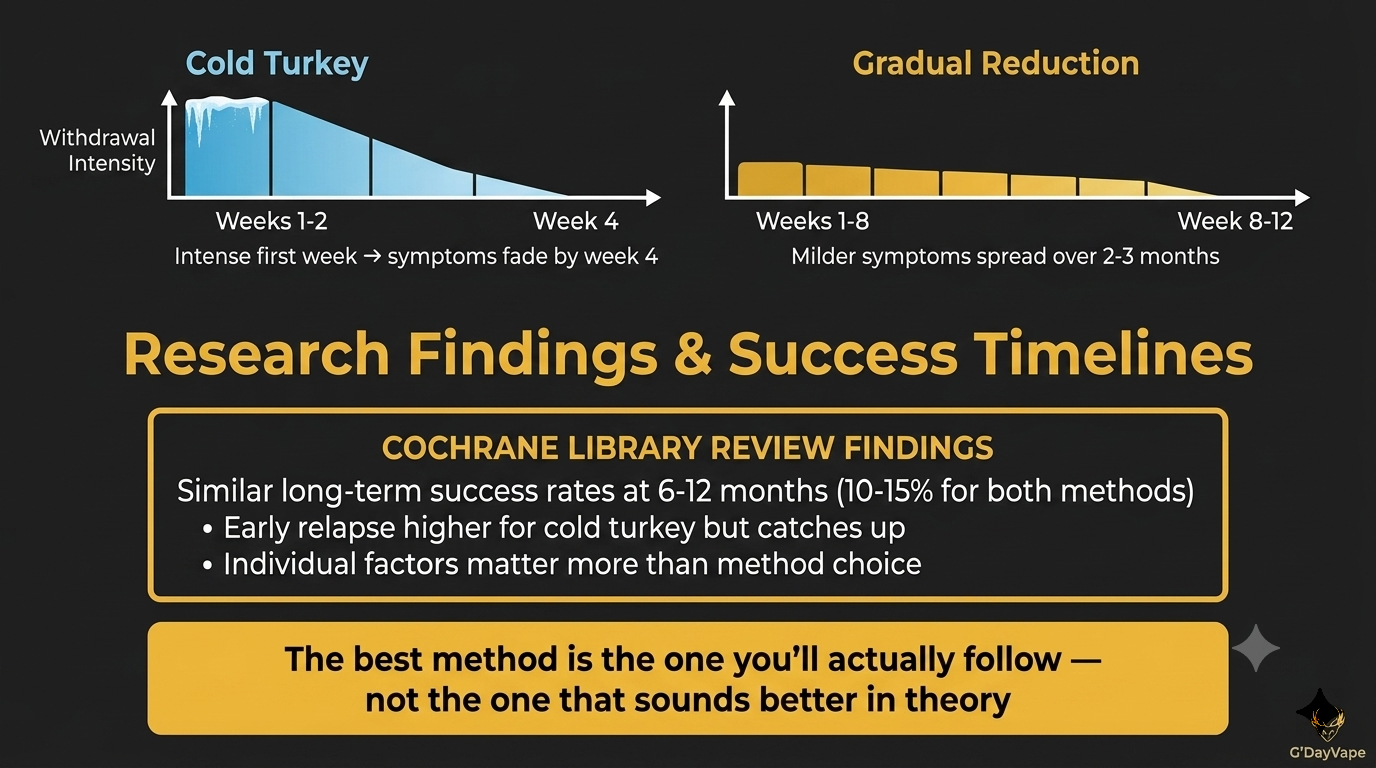
Withdrawal intensity: High first week → fades by week 4
📉 GRADUAL REDUCTION
How it works: Slowly decrease the number of cigarettes per day over weeks or months until you reach zero.
- Gentler physical adjustment — milder withdrawal
- Less psychological pressure — no "all or nothing" anxiety
- Builds confidence gradually
- May work better for long-term heavy smokers
- Extended withdrawal period (months of low-level symptoms)
- Risk of never reaching zero — "permanent reducing"
- Requires consistent self-discipline over a long period
- Can be harder to measure progress
Withdrawal intensity: Low-moderate over 2-3 months
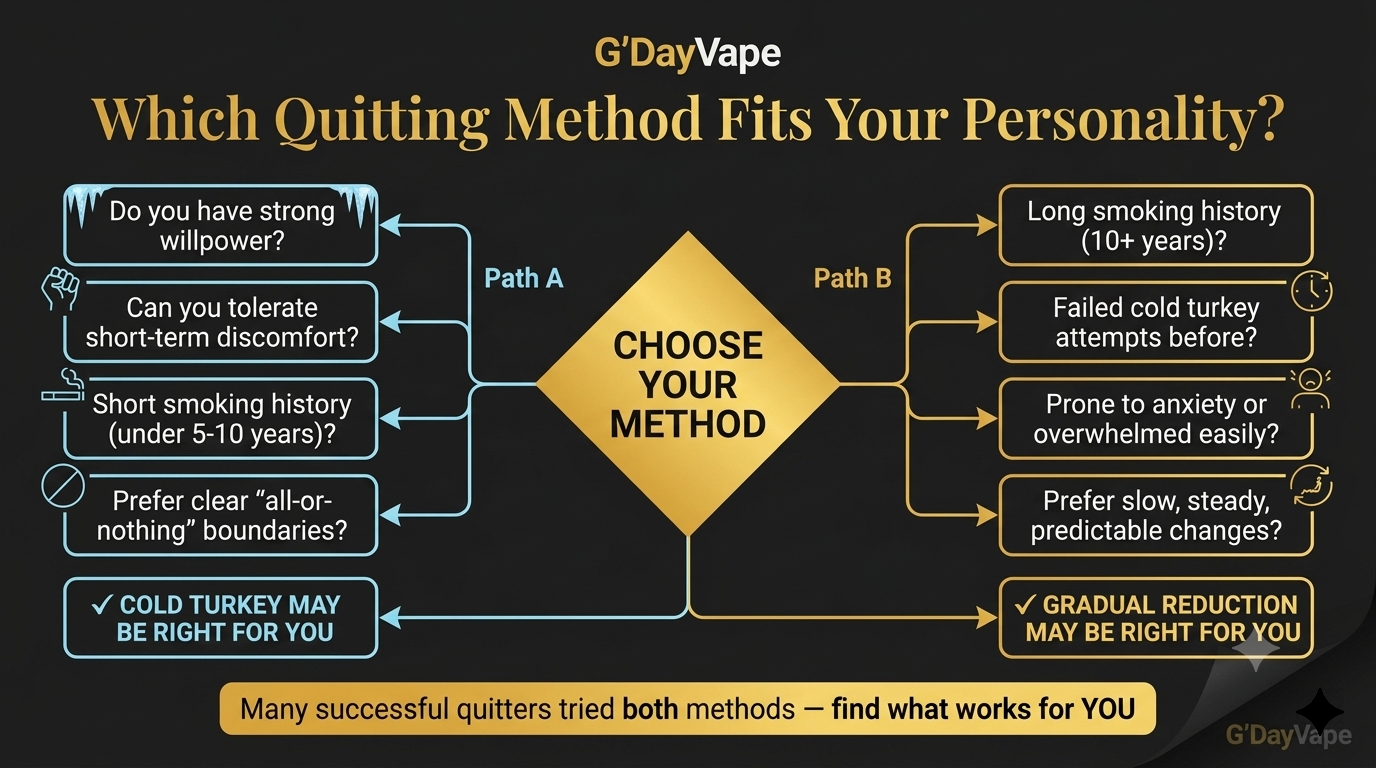
How to Choose: Which Method Fits Your Personality?
❄️ Cold Turkey may be right if:
- You have strong willpower and can tolerate short-term discomfort
- Your smoking history is relatively short (under 5-10 years)
- You're an "all-or-nothing" personality type
- You have a clear, compelling reason to quit (medical event, pregnancy, etc.)
- You prefer clear boundaries and don't do well with "grey areas"
- You've tried gradual reduction before and got stuck
📉 Gradual Reduction may be right if:
- You've smoked for many years (10+ years) and have high nicotine dependence
- You've tried cold turkey before and found the withdrawal unbearable
- You're prone to anxiety or get overwhelmed by intense symptoms
- You prefer slow, steady, predictable changes
- You have a structured plan (e.g., reduce by one cigarette every 3 days)
- You're using nicotine replacement therapy (patches/gum) to aid reduction
🤔 Still not sure? Try this:
If you're reading this and still uncertain — many successful quitters tried both methods before finding what worked. Start with the one that feels more natural. If you relapse, try the other approach. Every attempt teaches you something.
One person's experience: "The first few days after quitting — especially with cold turkey — can be brutal. But here's what happens if you push through: the worst of it passes within 7-10 days. By week four, most physical withdrawal is gone. And then something remarkable happens — you realize you've done something hard. That feeling of accomplishment starts to replace the cravings."
Can You Combine Both Methods?
Yes — many people do best with a hybrid approach. Set a quit date 2-4 weeks in the future and use that period to reduce gradually before stopping completely. For example:
- Week 1-2: Reduce from 20 to 10 cigarettes per day
- Week 3: Reduce from 10 to 5 cigarettes per day
- Week 4: Reduce from 5 to 2 cigarettes per day
- Quit day: Stop completely
This approach gives you the gentle adjustment of gradual reduction with the clear boundary of a quit date. Many find this balances the best of both methods.
What to Expect During Withdrawal
Cold Turkey Timeline
Days 1-3: Peak intensity — headaches, anxiety, irritability, intense cravings
Days 4-7: Symptoms begin decreasing but still significant
Weeks 2-4: Gradual improvement, cravings less frequent
Week 4+: Physical dependence largely gone — behavioral work begins
Gradual Reduction Timeline
Weeks 1-4: Mild symptoms as you reduce from high to medium intake
Weeks 5-8: Low-grade symptoms as you approach zero
Weeks 9-12: Minimal physical symptoms — focus shifts to behavior
Month 3+: Physical dependence ends — habits remain
Frequently Asked Questions
Is cold turkey dangerous?
Withdrawal symptoms are uncomfortable but not medically dangerous for otherwise healthy adults. However, people with certain medical conditions should consult a doctor before quitting abruptly.
Which method has higher success rates?
Research shows similar long-term success rates. One study found that 10-15% of people using either method were still smoke-free at 6 months. The key is finding the method you'll actually follow.
What if I try one method and fail?
That's not failure — it's information. Try the other method. Many successful quitters tried multiple approaches before finding what worked for them.
Should I use nicotine replacement therapy (NRT)?
NRT (patches, gum, lozenges) can help with both methods. For cold turkey, it can reduce withdrawal intensity. For gradual reduction, it can replace the cigarettes you're cutting out.
🔗 Continue learning:
Conclusion: The Best Method Is the One You'll Follow
There is no single "right" way to quit. The evidence supports both cold turkey and gradual reduction. Your job is to choose the one that fits your personality, your smoking history, and your life circumstances. If one doesn't work, try the other. Many successful quitters tried multiple times before finding their path.
Understanding cold turkey vs gradual reduction which quitting method works better empowers you to make an informed choice. The most important thing is not which method you pick — it's that you keep trying until you find what works for you.
For external research, consult the World Health Organization's tobacco control resources or the Cochrane Library for smoking cessation research.
🛒 Best Vape Bundle Deals at G'DayVape
View all bundle deals → Shop Bundle Sales
† This information is for educational purposes. Always consult healthcare professionals for personalized smoking cessation advice.
📖 External resources: World Health Organization - Tobacco | Cochrane Library | UK National Health Service
🔞 Must be of legal smoking/vaping age. Vaping products are intended for adult smokers seeking an alternative.
 RELX Pod