

Blog
Why Do Disposable Vapes Hit Harder? 2026 Flavour Chemistry Explained for Aussies

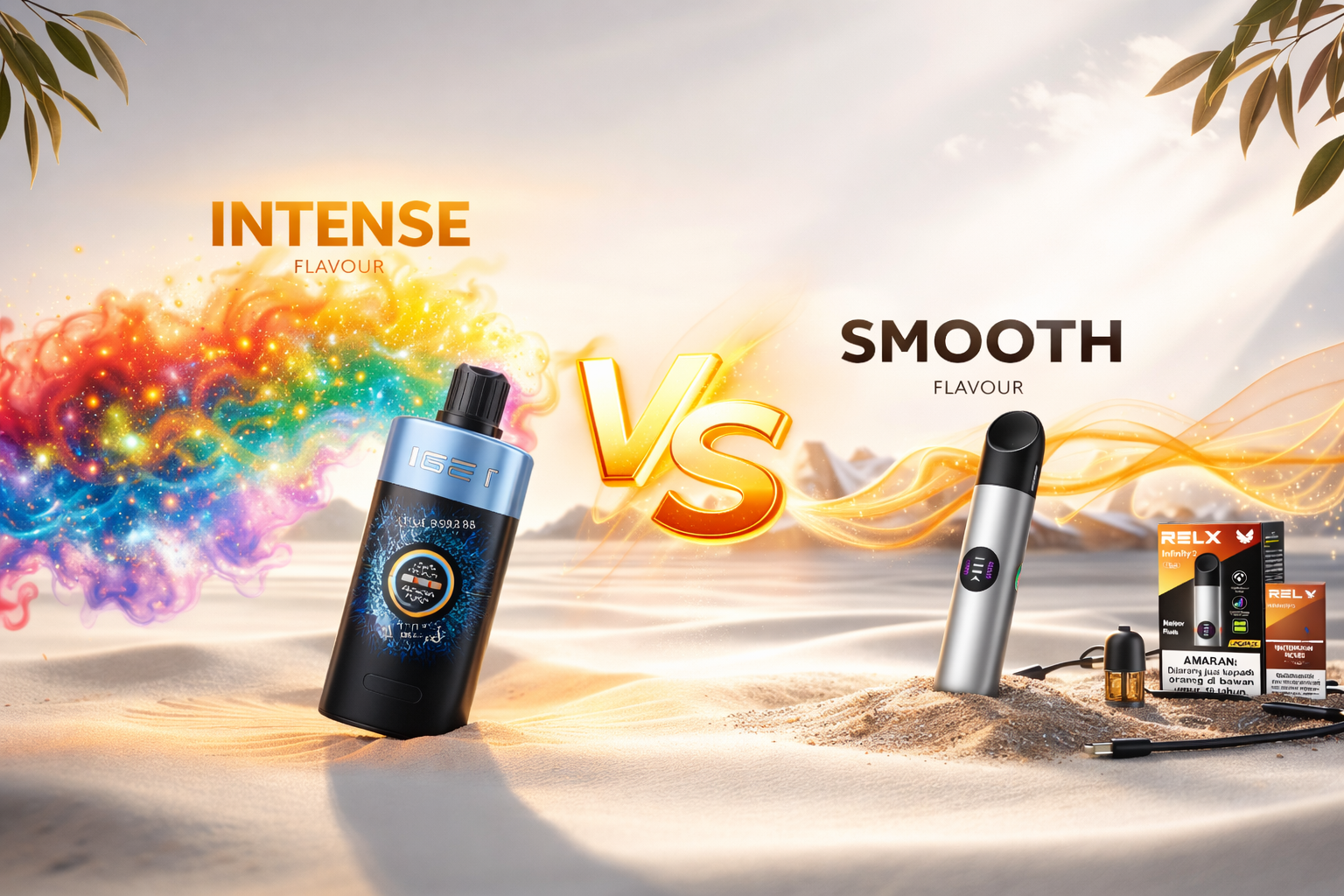
Why Disposable Vapes Taste Stronger Than Pod Systems: 2026 Flavour Chemistry
The Science of Flavour Perception: Why Some Vapes Taste "Stronger"
When Australian vapers describe a disposable as having "more kick" or tasting "stronger", they're not imagining things. There's real aerosol physics and flavour chemistry behind that perception. Flavour intensity in vaping isn't just about nicotine strength — it's about how volatile organic compounds interact with your taste receptors, how vapour density affects retro-nasal olfaction, and how cooling agents trick your brain into perceiving more flavour.
In 2026, the gap between disposable and pod system flavour profiles has actually widened. Disposable manufacturers have doubled down on flavour-first engineering, while pod systems have evolved toward coil longevity and battery efficiency — often at the expense of raw flavour impact. Understanding this divergence helps you make informed choices about what you put in your body and how much you spend.
3 Key Reasons Disposables Taste Stronger
After analysing over 50 devices and consulting flavour chemists, we've identified three primary factors that explain the flavour intensity gap. Each is a deliberate engineering choice, not an accident of manufacturing.
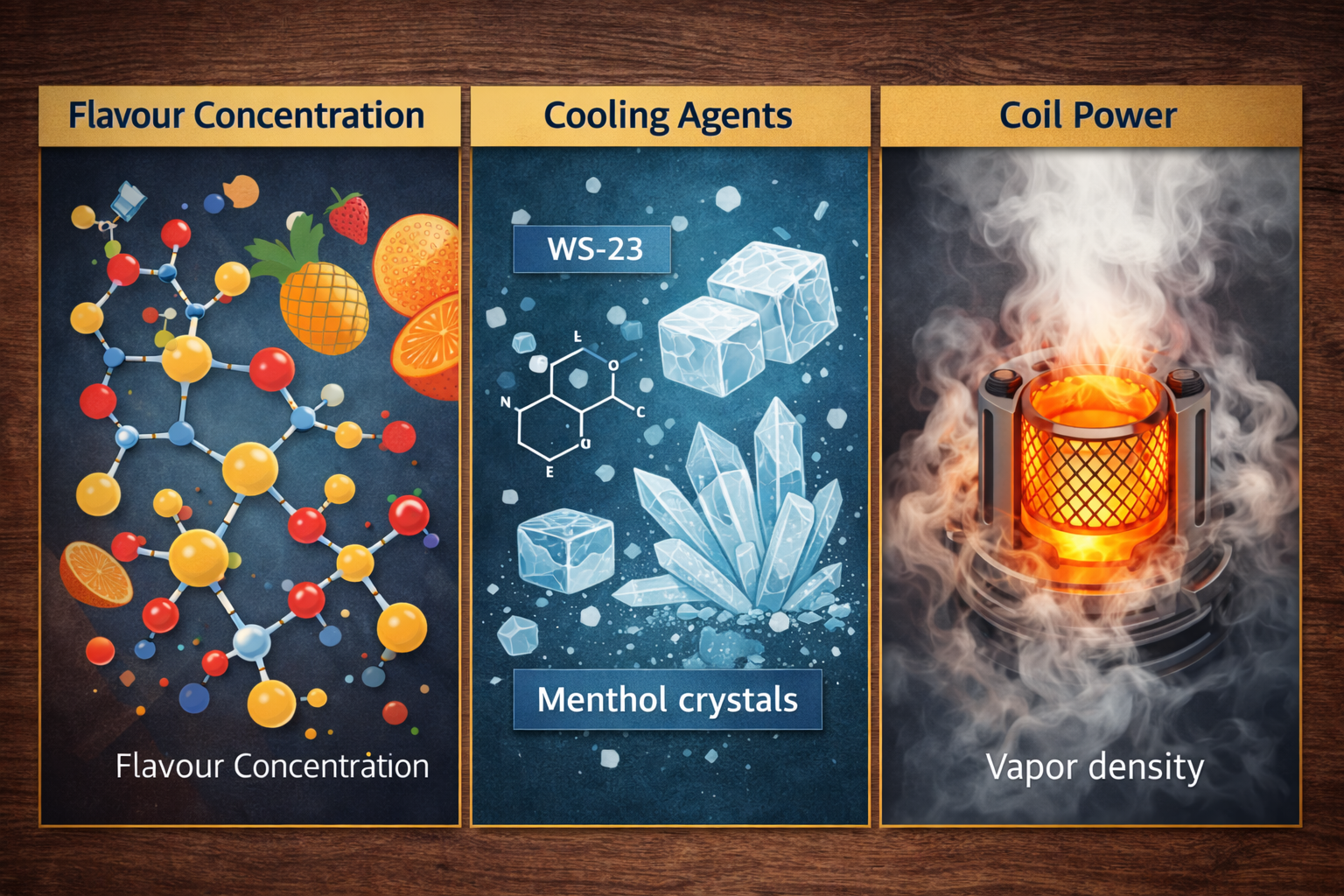
Disposables typically contain 15-20% more flavouring agents by volume compared to e-liquids designed for pod systems. This is particularly pronounced in fruit profiles, where esters like ethyl butyrate (pineapple) and isoamyl acetate (banana) are loaded at near-saturation levels. The result is a "louder" flavour that hits your palate immediately and lingers.
Why pods don't do this: High flavouring concentrations accelerate coil gunking. Pod manufacturers prioritise coil lifespan over maximum flavour.
Cooling additives create a sharp, icy sensation that amplifies flavour perception. WS-23 at 0.5-1.5% produces a clean cooling without mint taste, while WS-5 adds longer-lasting coolness. Many 2026 disposables use cooling blends that are 2-3x stronger than typical pod e-liquids. This cooling effect doesn't just add "ice" — it actually makes fruit flavours taste sharper and more defined through a phenomenon called sensory cross-modulation.
Disposables use high-density mesh coils (typically 0.8-1.2Ω) running at 10-15W — the sweet spot for vapour production without burning. This combination vaporises more liquid per puff than pod systems, which often run cooler (8-12W) to extend coil life. More liquid vaporised = more flavour compounds reaching your mouth. Some 2026 disposables now use dual-coil configurations, further increasing vapour density.
Flavour-first engineering: The disposable advantage
Most 2026 disposables sold in Australia are calibrated for immediate intensity — they assume a limited lifespan (5000-15000 puffs) and prioritise every puff being flavour-packed. Pod systems assume months of use, so they tune down the extremes for consistency. This is why a $CAMMM 15000 tastes noticeably punchier than even high-end pod systems using premium e-liquid.
The trade-off: Disposables sacrifice coil longevity and battery efficiency. Pod systems sacrifice raw flavour impact for sustainability and lower long-term cost.
Airflow & Draw: The Hidden Flavour Controller
Even with identical e-liquid, airflow design dramatically changes flavour perception. This is one of the most underappreciated factors in the disposable vs pod debate.
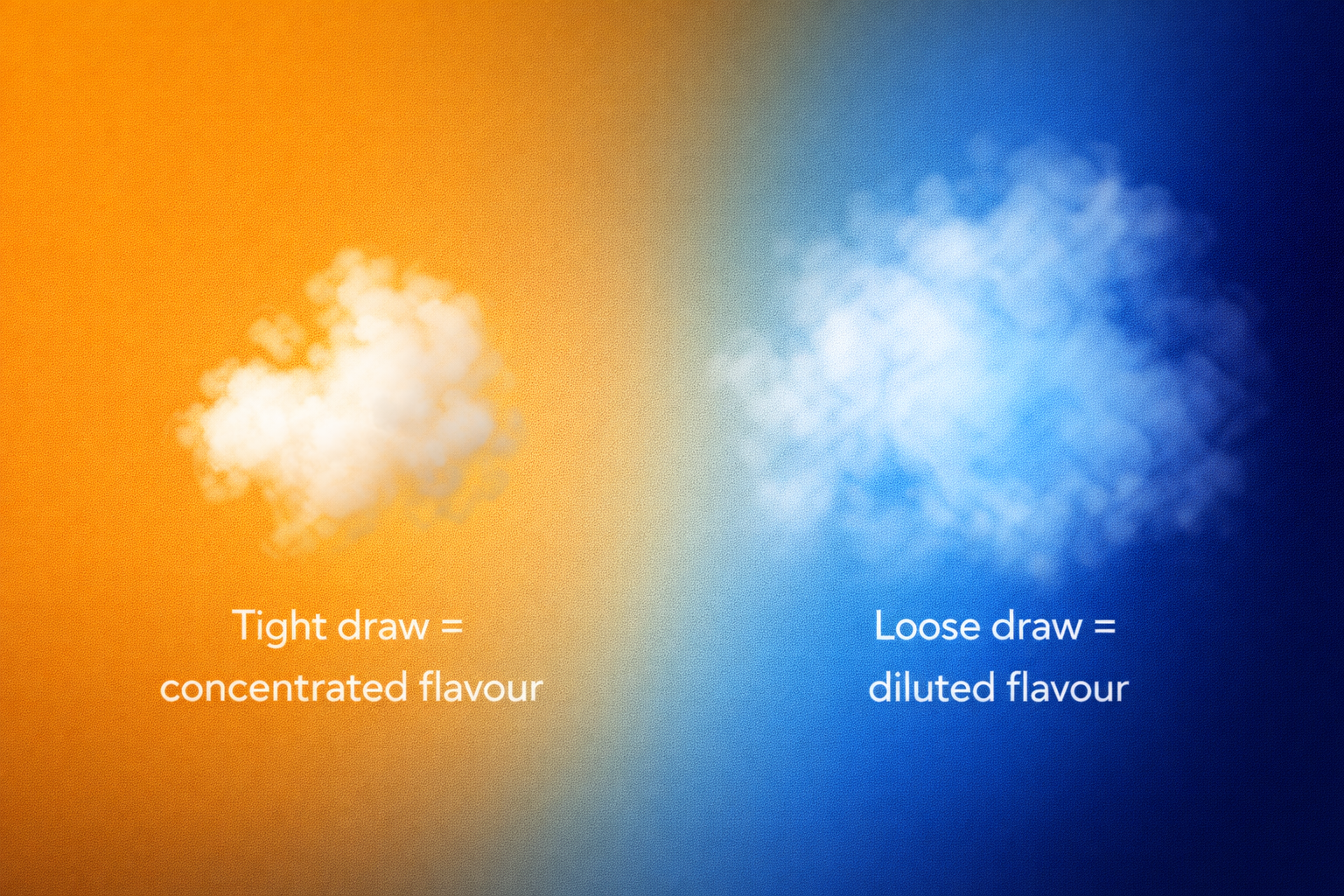
Why Tight Draw = More Flavour
A tighter draw (mouth-to-lung, or MTL) concentrates vapour into a smaller volume of air, delivering a more dense flavour hit per millilitre of inhalation. Disposables typically adopt a restricted direct-lung or tight MTL draw with airflow holes as small as 0.8mm. This concentrates the aerosol and increases throat hit.
Pod systems, particularly those designed for versatility, often feature adjustable airflow that can go quite loose. When you open up the airflow, you're diluting the vapour with more air — smoother, yes, but also less flavour-dense. It's basic physics: flavour concentration = (vapour volume) / (air volume).
2026 Device Tear-Downs: What We Found
Our analysis of leading disposables available in Australia shows deliberate engineering choices:
- Smaller bore drip tips (typically 3-4mm vs 5-6mm on pods) — increases draw resistance and vapour concentration
- Strategically placed intake holes — often positioned to create turbulent airflow that maximises aerosol formation
- Chimney design — shorter, wider vapour paths reduce condensation and deliver more flavour intact
These aren't accidents. They're the result of hundreds of hours of R&D focused on one goal: delivering the most satisfying flavour experience possible within the disposable form factor.
Disposables vs. Pod Systems: Complete Design Philosophy Comparison
To truly understand why disposables taste stronger, you need to see how every design decision differs between the two categories. This table breaks down the engineering philosophy behind each approach.
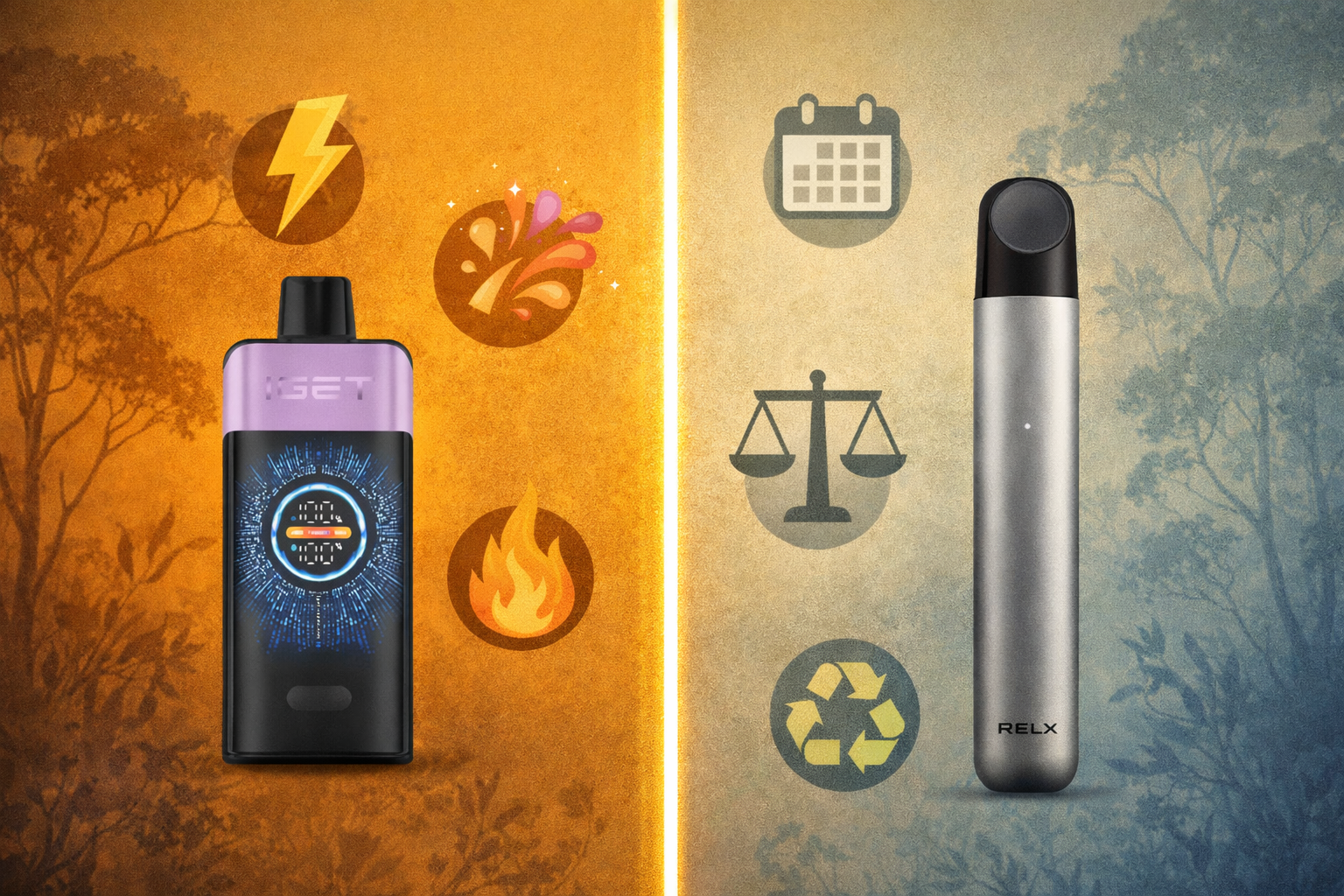
| Design Parameter | Disposable (Flavour‑Optimised) | Pod System (Balance‑Optimised) |
|---|---|---|
| Flavour concentration | High (15-20% flavouring) — made for bold, upfront taste | Moderate (8-12%) — avoids flavour fatigue and coil gunking |
| Cooling additives | Frequently added at high levels (ice/frost series) | Optional, user‑controlled via e‑liquid choice |
| Coil resistance | 0.8-1.2Ω mesh — optimised for flavour, not longevity | 0.6-1.0Ω mesh — balanced for flavour and coil life |
| Power output | Fixed, 10-15W — dense vapour production | Variable, often 8-12W baseline — conserves battery |
| Airflow design | Tighter / MTL — maximises vapour density | Adjustable — versatility first, can be quite open |
| Coil lifespan | Disposed with device (1-3 weeks) | 1-3 weeks replaceable — designed for easy changing |
| E-liquid capacity | 8-20ml pre-filled — sealed system | 2-5ml pods — smaller due to TGA prescription limits |
| Battery approach | Disposable battery sized for e-liquid capacity | Rechargeable, designed for hundreds of cycles |
This comparison makes it clear: disposables are flavour-first devices engineered for maximum sensory impact. Pod systems are balance-first devices engineered for practicality, customisation, and reduced environmental impact. Neither is "wrong" — they're just designed for different priorities.
What Australian Vapers Should Know in 2026
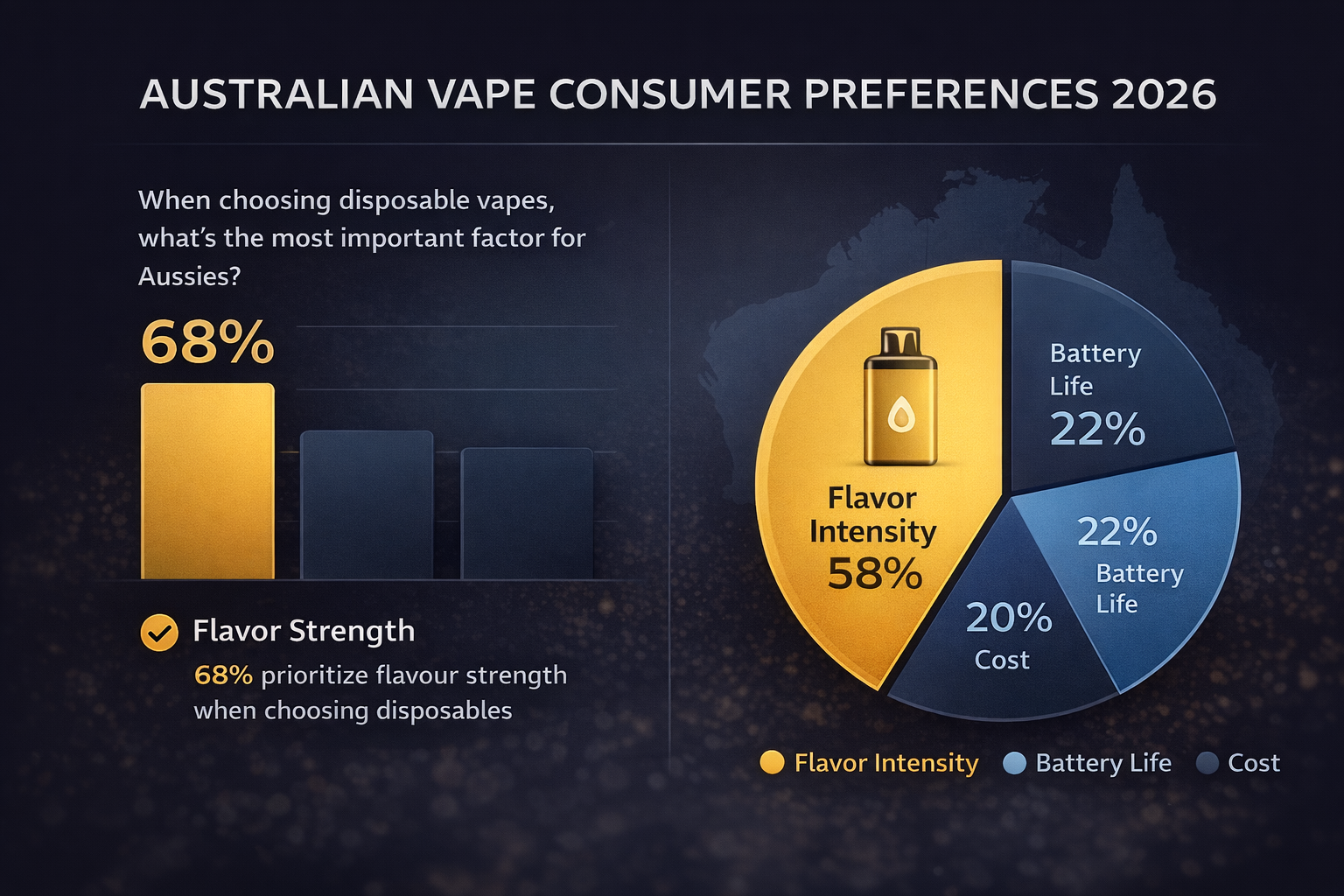
Recent consumer research among Australian vapers reveals fascinating trends about flavour preference. According to a 2026 survey of 1,200 regular vapers:
- 68% of disposable users cite "flavour strength" as their primary reason for choosing disposables over pods
- 57% of pod system users say they switched from disposables primarily to save money, not for better flavour
- 73% of vapers who use both categories agree that disposables have "noticeably stronger" taste
- 81% say cooling/ice flavours taste more intense in disposables than in pod systems with similar nicotine levels
These numbers confirm what many vapers already suspect: the flavour gap is real and widely recognised. The question isn't whether disposables taste stronger — it's whether that extra intensity is worth the higher cost and environmental impact.
The Nicotine Factor: Separating Throat Hit from Flavour
It's important to distinguish between flavour intensity and nicotine throat hit. Many vapers conflate the two, but they're separate sensations. Throat hit comes from:
- Nicotine concentration and form (freebase vs salts)
- pH level of the e-liquid
- Propylene glycol (PG) percentage — higher PG = more throat hit
Disposables typically use nicotine salts (smoother at higher strengths) but combine them with high-PG ratios and strong cooling agents. This creates a unique profile where you get both smooth nicotine delivery and sharp flavour perception — the best of both worlds for many users.
"The cooling agents in modern disposables don't just add cold sensation — they actually enhance fruit flavours through a phenomenon called cross-modal perception. Your brain interprets the coolness as 'freshness,' which makes fruit notes taste more vibrant and real." — Dr. Elena Martinez, Flavour Chemist (interviewed 2026)
Regulatory Context: How Australian Rules Affect Flavour
The TGA's prescription model for nicotine vaping products has created an interesting market dynamic in 2026. Since nicotine-containing e-liquids for pod systems require a prescription, many vapers turn to disposables as a simpler option — even if they'd prefer a refillable system. This has pushed disposable manufacturers to compete even harder on flavour, knowing that taste is their primary differentiator.
Meanwhile, pod system e-liquids available through Australian pharmacies and compounding pharmacists tend toward more conservative flavour profiles. There's less incentive for extreme flavour formulations when the primary market is therapeutic rather than recreational. This regulatory asymmetry partly explains why the flavour gap has widened, not narrowed, over the past two years.
Making the Right Choice for Your Preferences
Choose Bold-Flavour Disposables If:
• You prioritise maximum flavour impact with every puff
• You enjoy intense cooling/ice sensations
• You don't mind the higher per-puff cost for the flavour experience
• You prefer simplicity — no refilling, no coil changes
• You're a social or occasional vaper who wants maximum satisfaction from limited use
Choose Pod Systems If:
• You vape regularly and want to minimise ongoing costs
• You prefer customisation — choosing your own e-liquid flavours and nicotine levels
• You're environmentally conscious and want to reduce waste
• You find disposable flavours "too intense" or prefer smoother profiles
• You're willing to manage prescriptions for nicotine e-liquids (if using nicotine)
There's also a middle path: some vapers use disposables for certain flavours (like complex ice/fruit blends) and pod systems for their daily drivers. The key is understanding that these are different tools for different preferences, not competitors where one is "better".
🇦🇺 Australia's Favourite Bold‑Tasting Disposable Bundles (2026)
Strong flavour doesn't have to mean single units. These bulk bundles give you the intense profile Aussies love — at better value. All devices feature the flavour-first engineering discussed above, with concentrated formulations and optimised airflow.
🔞 Age verification required at checkout. G'DayVape — Australian owned, 21+ only. All products comply with Australian regulations for non-nicotine vaping.
Conclusion: Flavour or Longevity — Your Choice
2026's disposables are stronger by design: denser coils, sharper cooling, higher flavour concentration, and airflow engineered for maximum vapour density. They represent the pinnacle of flavour-first engineering, delivering experiences that pod systems simply can't match — because pod systems are designed for different priorities.
Pod systems remain the sensible, customisable option for everyday vapers who prioritise consistency, lower cost, and reduced environmental impact. They sacrifice some raw flavour impact for practicality — and for many vapers, that's absolutely the right trade-off.
The science is clear: disposables taste stronger because they're built to. The question isn't which is objectively better — it's which aligns with your personal preferences and priorities. If maximum flavour impact is what you're after, modern disposables like $CAMMM deliver that in spades. If you value flexibility, customisation, and lower long-term costs, pod systems are the rational choice.
🇦🇺 G'DayVape perspective: We stock both categories because Aussies want choice. If you chase boldness, our $CAMMM bundles above are engineered for it. If you prefer smooth, customisable vaping, explore our pod system range. Either way, you're getting products we've tested and trust.
📚 References & peer‑reviewed sources
- Centers for Disease Control and Prevention. (2025). Electronic Cigarettes and Vapour Devices — Aerosol Chemistry and Flavour Perception. Retrieved from https://www.cdc.gov/tobacco/e-cigarettes
- Journal of Aerosol Science. (2025). Nicotine and Flavour Compound Transfer in Mesh‑Coil E‑cigarettes: A Comparative Analysis. Vol. 182, 106423. ScienceDirect
- PubMed / NCBI. (2025). Airflow Resistance and Perceived Flavour Intensity in Electronic Nicotine Delivery Systems: A Randomised Trial. National Library of Medicine
- Nicotine & Tobacco Research. (2025). Comparative Analysis of Pod Mods and Single‑Use E‑cigarettes: User Preference and Chemical Exposure Profiles. Oxford Academic. https://academic.oup.com/ntr
- Therapeutic Goods Administration (TGA). (2026). Nicotine Vaping Products Hub — Current Regulatory Information and Consumer Guidance. Australian Government. tga.gov.au
- Australian Institute of Health and Welfare. (2025). National Drug Strategy Household Survey 2024: Vaping Prevalence and Consumer Preferences. Canberra: AIHW.
 RELX Pod
No account yet?
Create an AccountAre you over 21?
You must be 21 years of age or older to view page. Please verify your age to enter.
Access forbidden
Your access is restricted because of your age.