

Blog
Vape Battery Reuse in Australia: Safety & Recycling Options 2026

Why Vape Batteries Are Different from Standard Batteries
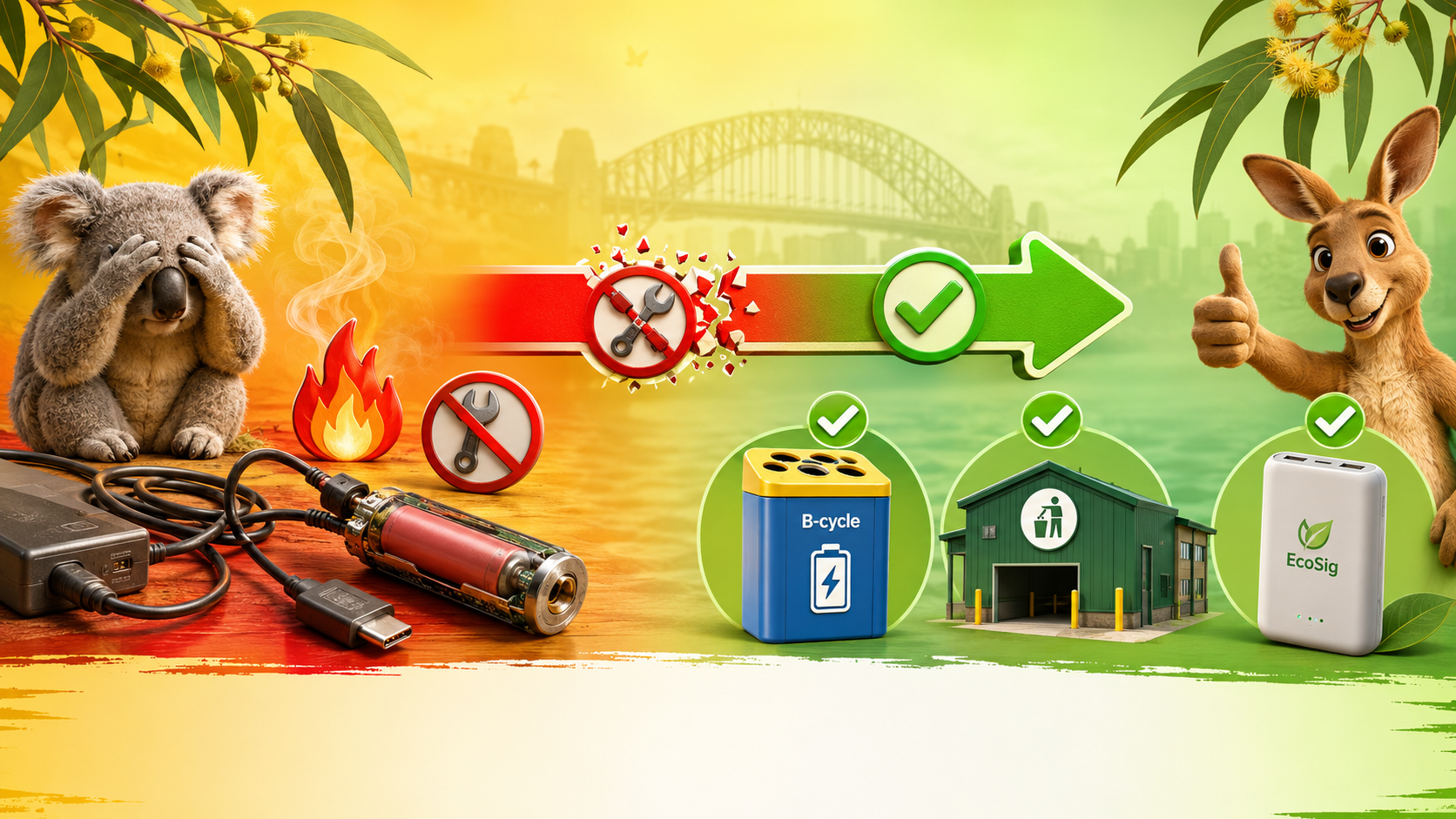
Vapes contain lithium‑ion batteries that are lightweight, energy dense and highly volatile, especially when damaged or crushed. In cities like Port Phillip, authorities warn that “lithium batteries sit alongside flammable liquids, making these items particularly risky if not disposed of safely” [1].
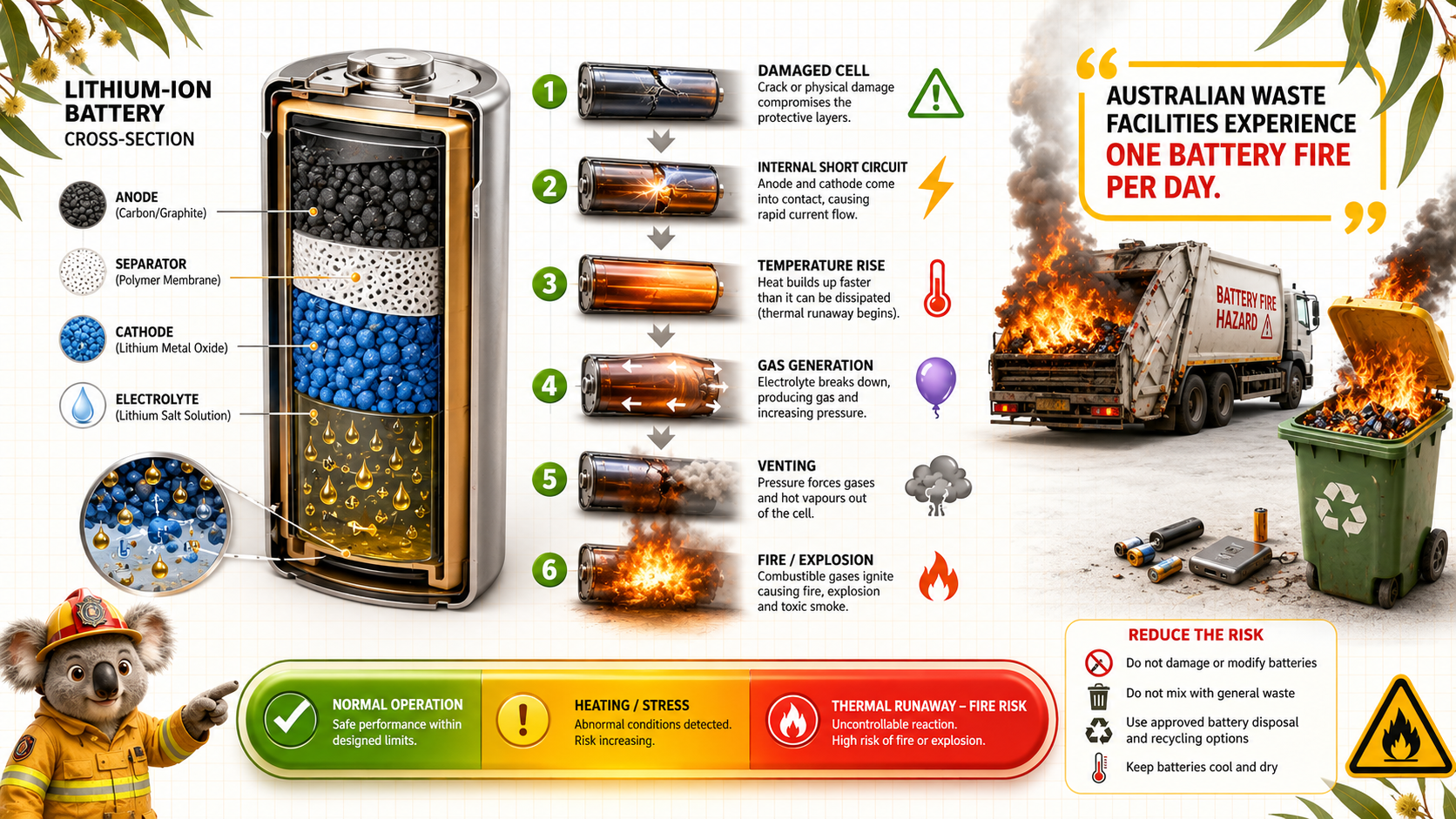
When a lithium‑ion battery is crushed, overcharged, or exposed to high temperatures, it can trigger a chain reaction called thermal runaway. The battery releases flammable and toxic gases, leading to fire or explosion. This danger is why vapes should never be placed in kerbside household bins [3].
DIY Reuse of Vape Batteries: A Dangerous Myth
Online tutorials tempt users to extract batteries from used vapes and repurpose them for power banks or flashlights. However, these DIY projects carry severe risks. In 2023, a national safety warning was issued after vape users followed do‑it‑yourself recharging videos, risking fire or electrocution for just a few extra puffs [2]. An expert with WorkSafe stated, “I would strongly warn anyone doing this that it is a dangerous practice,” adding that it could cause the vape to melt or a computer to be damaged if the charging cord is connected improperly [2].
DIY removed batteries often lack protection circuits. If short‑circuited by coins, keys or metallic objects, they can overheat and explode instantly.
Hand‑soldering lithium cells without proper training increases the risk of shock and accidental puncture of the cell casing.
Damaged lithium batteries can release corrosive, flammable gases that irritate the lungs and eyes. Inhaling these gases can cause serious injury.
Second‑Life Vape Battery Projects: What’s Happening in Australia?
While consumers cannot safely repurpose lithium cells, some Australian startups and research institutes are piloting industrial second‑life programs using advanced technology.
This Australian recycling startup uses its EcoSig initiative to extract nearly‑new batteries from discarded disposables and repurpose them into rechargeable powerbanks, keeping the cells out of landfill [4].
A government‑funded project found that discarded lithium‑ion cells have “great potential” to be reused in low‑demand applications, shifting them down the energy chain before final recycling [5].
Overseas, creative DIYers have built portable chargers from dozens of old vape batteries, but these projects remain unsafe without industrial testing and thermal management.
However, industrial reuse still requires rigorous sorting, electrical testing, and battery‑management systems — steps impossible for an ordinary user. For households, the safest and only recommended action is to dispose of used vape batteries through formal recycling networks.
Safe Recycling: What Australia Offers in 2026
Australia now has several dedicated channels for discarding both removable and embedded vape batteries.
♻️ B‑cycle – National battery stewardship scheme
B‑cycle is the Australian government’s official battery recycling network. For loose batteries (AA, AAA, rechargeable packs) that can be easily removed from devices, you can drop them off at over 4,000 collection points — including Coles, Woolworths, Aldi, Bunnings, and JB Hi‑Fi. “Loose batteries up to 5kg collected under the B‑cycle scheme” are accepted free of charge for households [6].
🏢 NSW Embedded Battery Trial (Until September 2026)
New South Wales launched a trial to collect vapes and other wireless household items with built‑in batteries at Community Recycling Centres. The trial runs until September 2026. Over 9,000 kg of embedded battery waste has already been collected since the program began [6].
🌏 NQROC Program – Queensland (Until November 2026)
The North Queensland Regional Organisation of Councils (NQROC) offers free disposal of vapes and other embedded‑battery devices at five council waste facilities. The program runs until 15 November 2026. “The Household Embedded Battery Collection will run until 15 November 2026“ [6].
What Happens After You Recycle?
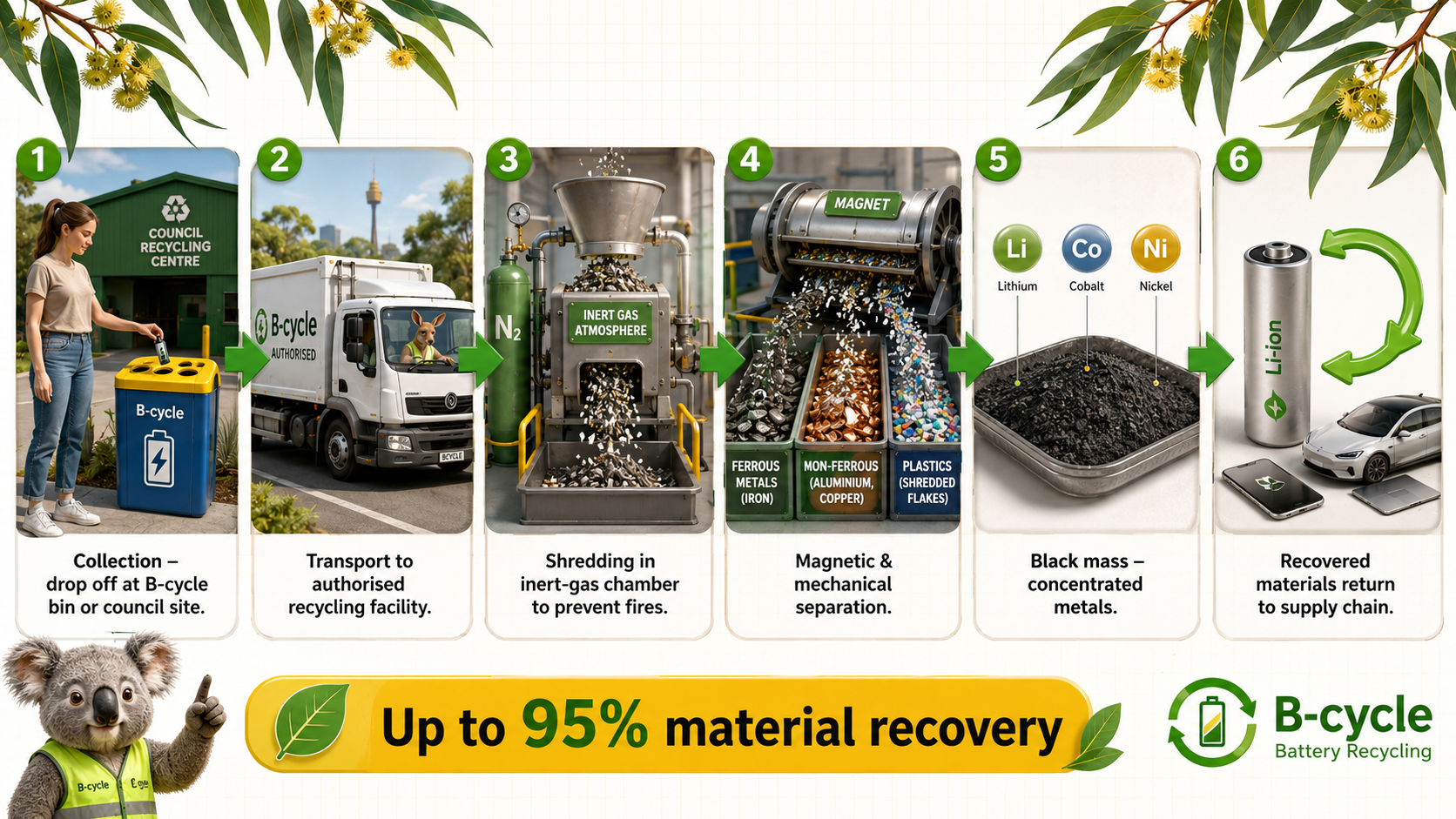
Once collected, batteries are processed in specialised facilities. They are shredded in an inert atmosphere (nitrogen or carbon dioxide) to prevent fire. Then magnets and eddy current separators separate steel, copper, plastics, and the “black mass” — a powder containing lithium, cobalt and nickel. Up to 95 % of the battery’s weight can be turned into new batteries or industrial materials. Currently Australia exports most black mass for refining, but new local processing plants (e.g. EcoBatt in Victoria) are beginning to change that picture.
NSW Mandatory Battery Stewardship (1 October 2026)
New South Wales has passed Australia’s first compulsory battery regulation. From 1 October 2026, brand owners will be required to fund safe collection, recycling and public education programs. Non‑compliance can attract penalties up to $880,000. Expect an expanded network of drop‑off points and stricter controls on how vapes and batteries are recovered [7].
Product Recommendations: Choose Devices That Last Longer
One of the most effective ways to reduce vape battery waste is to switch from single‑use disposables to a rechargeable pod system. A quality RELX device can last 1–2 years, meaning far fewer batteries end up in the waste stream.
RELX Devices – Reliable, Rechargeable & Reusable
RELX Pods – Less Waste Per Puff
🔞 Age verification required. Under Australian law, adults 18+ may purchase ≤20 mg/mL nicotine from pharmacies without a prescription; higher strengths require a prescription.

🇦🇺 G'DayVape: We support responsible vaping and battery recycling. All products are 100 % authentic. For end‑of‑life disposal, always use B‑cycle channels or council waste facilities.
📚 References & trusted sources
- Port Phillip Council / City of Port Phillip – Never bin a battery (April 2026). portphillip.vic.gov.au [Lithium‑ion batteries in vapes are volatile; never place in household bins]
- InDaily / WorkSafe SA – Dangerous DIY vape recharge warning (February 2023). indailysa.com.au [DIY battery extraction risks overheating, fire, electrocution]
- NSW EPA / Fire and Rescue NSW – Thermal runaway hazard (April 2026). epa.nsw.gov.au [Damaged Li‑ion batteries release flammable/toxic gases, cause 30 battery fires daily in Aust waste sector]
- Getting Ecological / StartUp to Follow – CasuallyLoaded & EcoSig (June 2024). gettingecological.com [Australian recycling startup repurposes vape batteries into powerbanks]
- Sustainability Victoria – Sequence Digital 2nd‑life project (August 2024). sustainability.vic.gov.au [Government‑funded research finding “great potential” for reusing discarded Li‑ion cells in less demanding applications]
- Hinchinbrook Shire Council / NQROC – Household Embedded Battery Collection (2026). hinchinbrook.qld.gov.au [Free disposal at five councils, program until 15 November 2026]
- Hamilton Locke / NSW Government – Mandatory battery stewardship (October 2026). hamiltonlocke.com.au [Australia’s first mandatory battery regulation, penalties up to $880,000, expanded collection points]
© 2026 G'DayVape — Australian vape knowledge, grounded in clarity. Always adult-only.
 RELX Pod