
Blog
Responsible Vaping in Australia 2026: A Practical Guide for Adults

Beyond "Is It Safe?" — The Responsible Framework
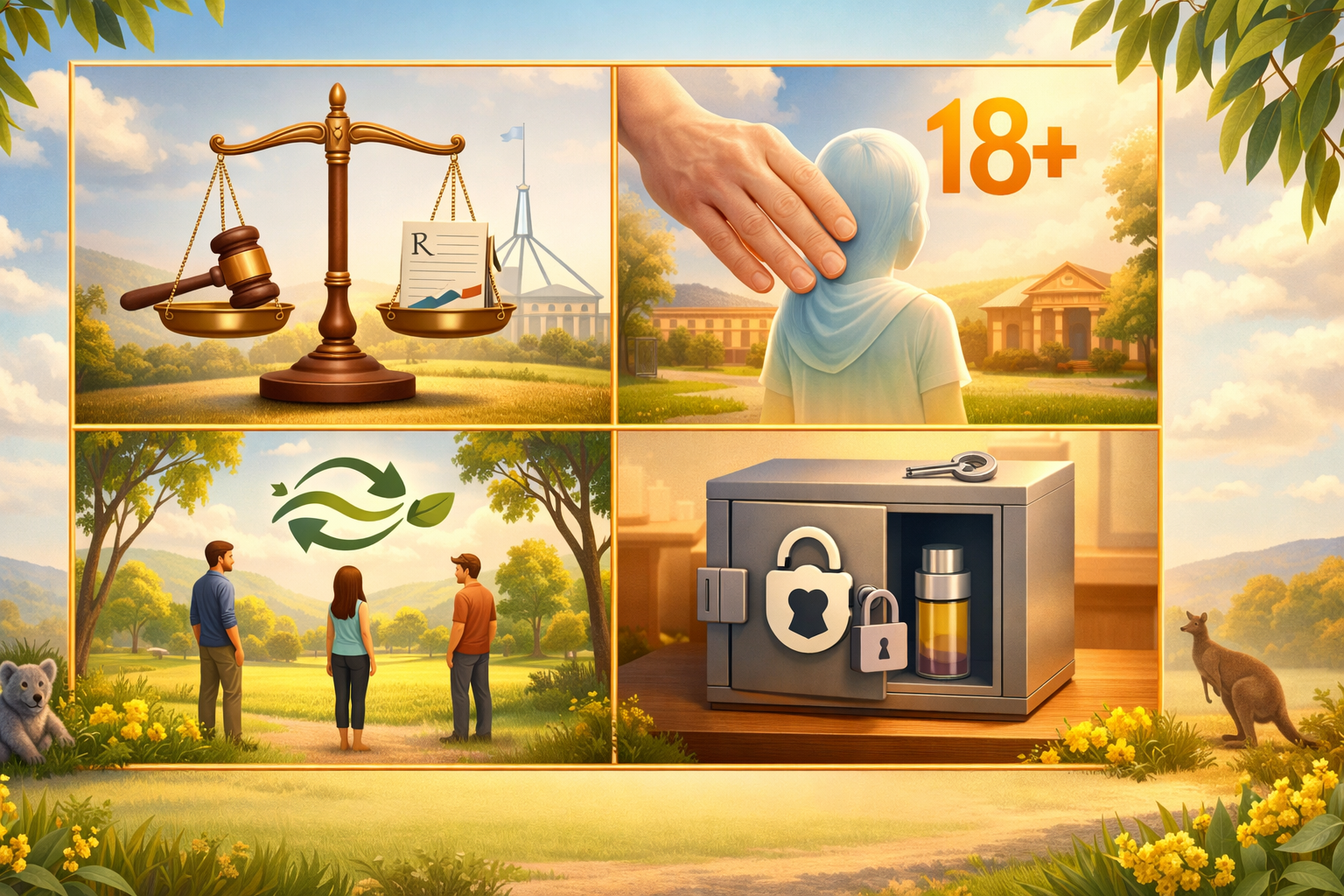
Throughout the evidence on vaping—regulations, health impacts, cessation, and myths—a clear picture emerges. For Australian adults who choose to vape, responsible use means more than following laws. It means understanding what you're using, respecting those around you, protecting vulnerable populations, and making informed choices based on evidence rather than hype or fear .
This framework applies whether you're using nicotine products, alcohol, medications, or any substance with potential effects. Responsibility in this context is about harm reduction in the truest sense: reducing risks for yourself, your family, and your community .
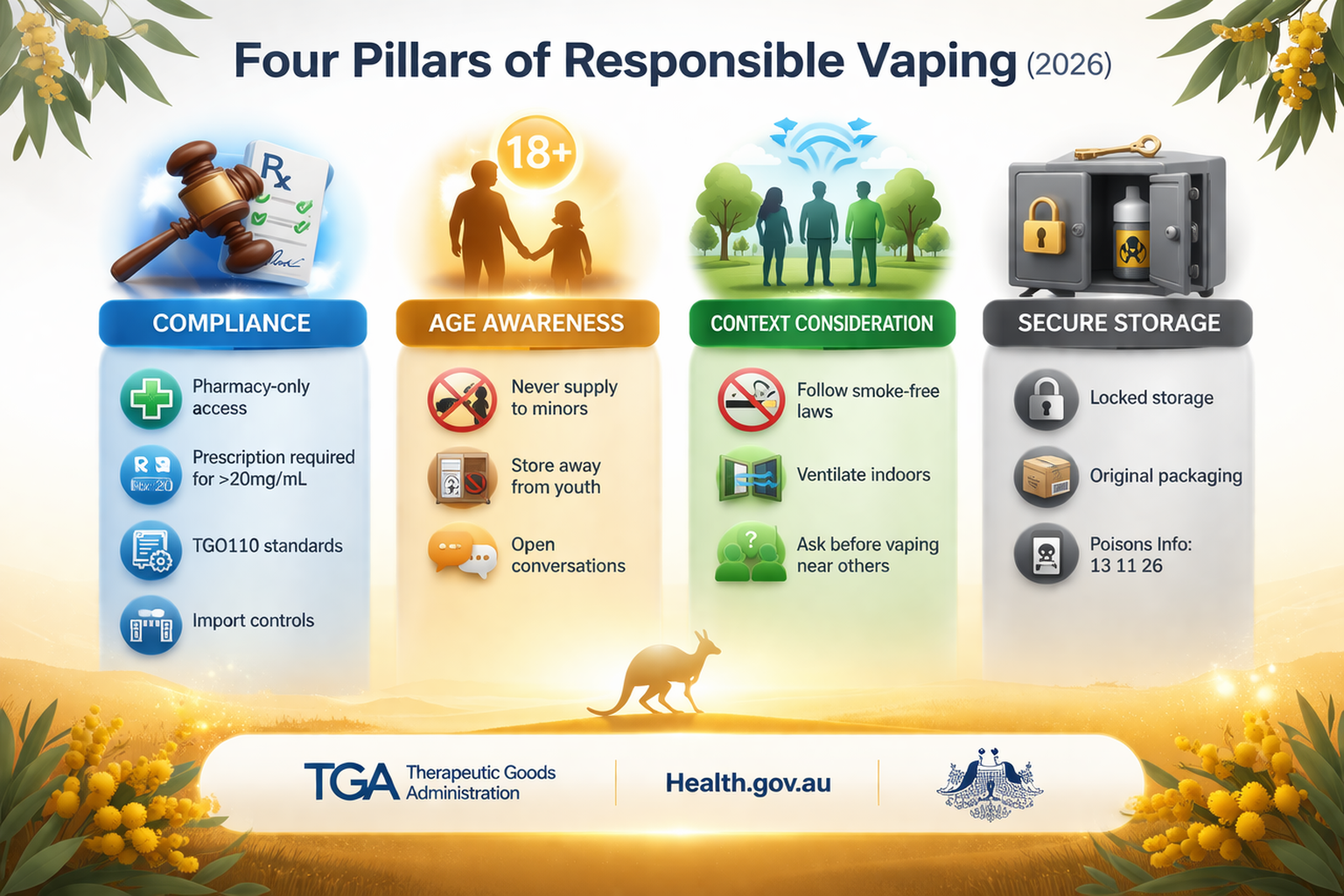
Pillar 1: Compliance
Understanding and following Australia's vaping regulations—not as obstacles, but as a framework for public health and safety .
- Prescription required for nicotine >20mg/mL
- Pharmacy-only retail since July 2024
- TGA-approved product standards (from July 2025)
- Import restrictions and border controls
Pillar 2: Age Awareness
Protecting those who shouldn't use—adolescent brains are still developing, and nicotine exposure during this period can affect attention, learning, and addiction susceptibility .
- Never purchasing for minors
- Not normalizing use around children/teens
- Open conversations about adult-only products
- 18+ purchase age enforced nationally
Pillar 3: Context Consideration
Respecting shared spaces and the people in them—aerosol contains fewer toxins than cigarette smoke, but "fewer" isn't "none" .
- Follow local smoke-free laws (now often include vaping)
- Ventilation matters in private spaces
- Ask before vaping around non-users
- Never vape around children or pregnant women
Pillar 4: Secure Storage
Preventing accidental ingestion—the most immediate physical danger in households. Over 60% of pediatric nicotine exposures occur when products are left accessible .
- Locked cabinets or lockboxes
- Original child-resistant containers
- Elevated locations out of reach
- Poisons Information: 13 11 26
Legal Compliance: What Australian Users Need to Know (2026)
Australia's vaping regulations have evolved significantly since 2018. Responsible use begins with knowing and respecting current laws .
Nicotine ≤20mg/mL: available from pharmacies without prescription (adults 18+). Nicotine >20mg/mL: prescription required. Under 18s: prescription always required .
Personal import of nicotine vapes allowed only with a valid prescription under TGA's Personal Importation Scheme (3-month maximum supply) .
Comprehensive ban across all media, including digital and social platforms. No public promotion, sponsorship, or influencer content .
Products outside regulated channels may contain unknown ingredients, incorrect nicotine levels, or contaminants. Responsible sourcing means legal pathways .
Age Awareness: Protecting Youth Development
The most consistent public health message across all nicotine products is clear: young people should not use them. This isn't moralizing—it's neuroscience. Adolescent brains are still developing, and nicotine exposure during this period can affect attention, learning, and addiction susceptibility .
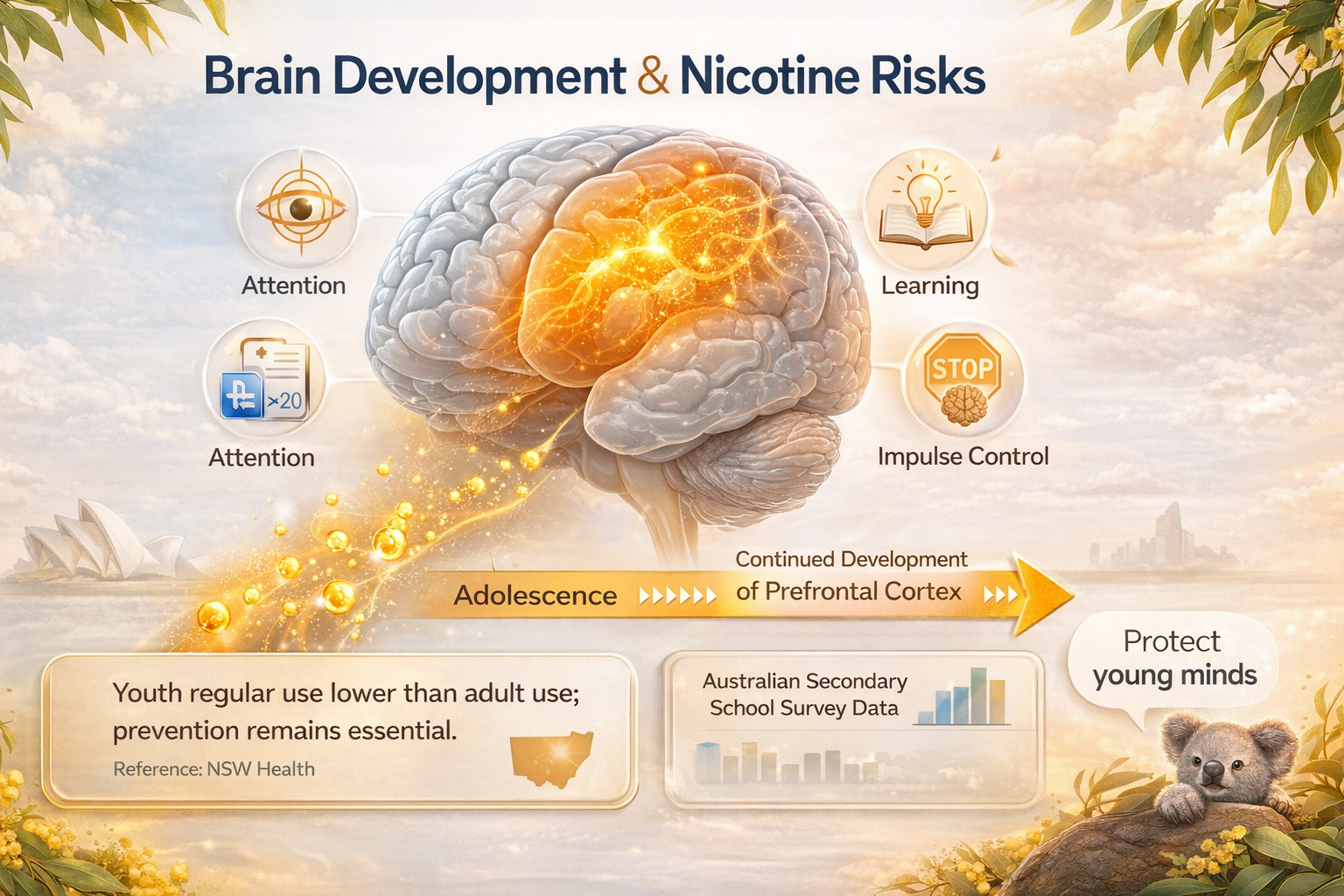
Australian secondary school surveys show that while youth experimentation exists, regular use remains significantly lower than adult use. However, prevention efforts remain essential, and adults play a key role in setting norms .
Context Consideration: Respecting Shared Spaces
Responsible use extends beyond legal compliance to basic consideration for others. Just as smoking has become restricted in public spaces, vaping raises questions about aerosol exposure and social norms .
- In private homes: Your space, your rules—but consider household members, especially children, pregnant women, or those with respiratory conditions. Ventilation matters.
- In vehicles: Vaping while driving can be distracting. With children present, aerosol concentrates in small spaces—best avoided entirely.
- Public spaces: Follow local laws—many smoke-free areas now include vaping. When uncertain, ask or err on the side of outdoor, distanced use.
- Around non-users: Not everyone wants exposure. A simple "do you mind?" shows respect and prevents discomfort.
Second-Hand Aerosol: What We Know
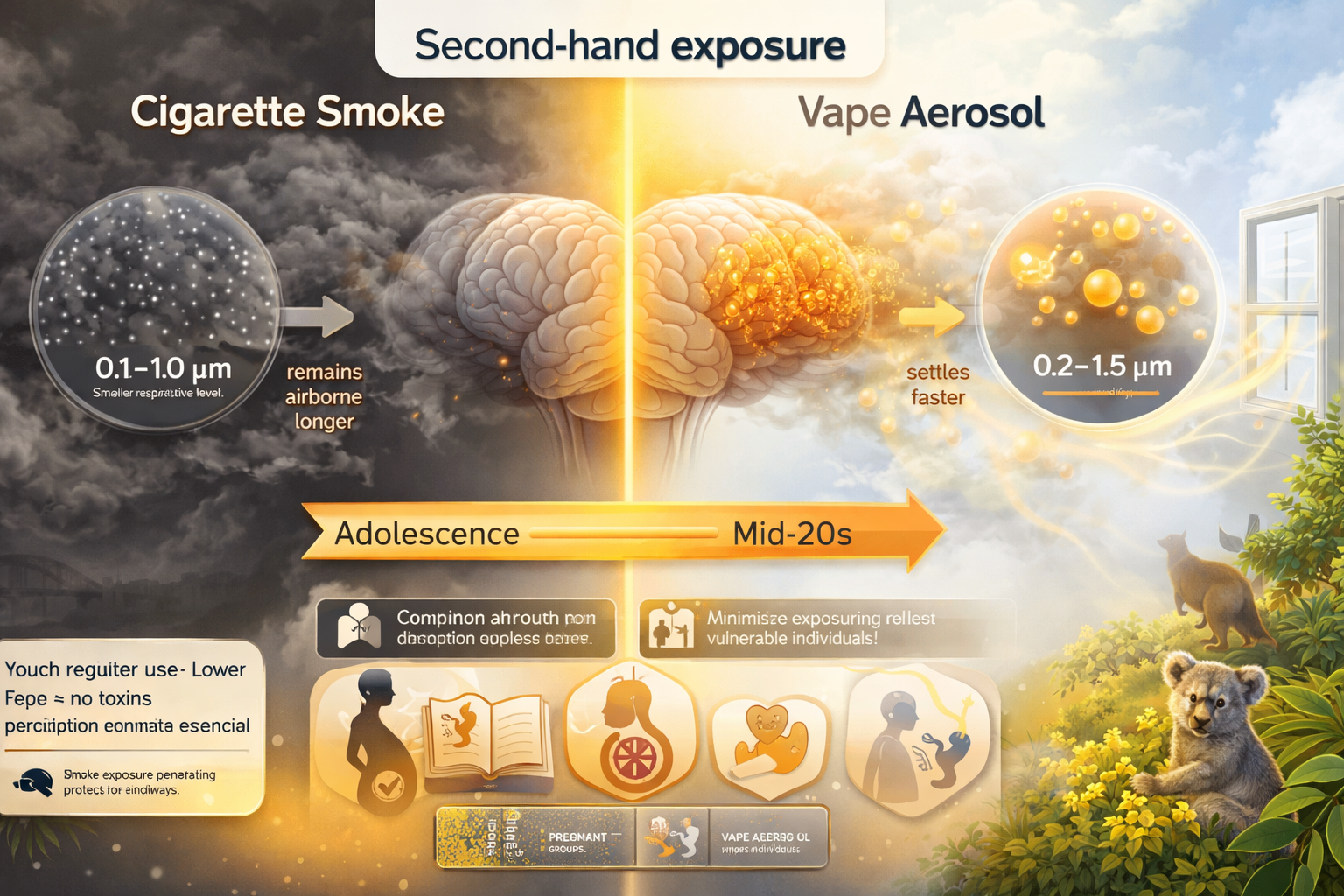
As detailed in health science research, aerosol contains fewer toxins than cigarette smoke and dissipates faster. However, "fewer toxins" isn't "no toxins." For vulnerable individuals (asthmatics, pregnant women, children), minimizing exposure is the prudent approach .
Secure Storage: Preventing Accidental Exposure
Data from Australian poisons centers shows that over 60% of pediatric nicotine exposures occur when products are left accessible—on countertops, in bags, or improperly stored . Secure storage eliminates the vast majority of these incidents.
Locked cabinets or lockboxes • Original child-resistant containers • Elevated locations out of reach • Treat liquids like medications
Dispose of used pods/cartridges immediately • Never in open household trash • Rinse empty bottles before disposal • Use hazardous waste options when available
Save Poisons Information: 13 11 26 • Know symptoms of nicotine exposure • Keep product packaging for reference • Never induce vomiting if ingestion occurs
📋 The Responsible Vaper's Checklist
- Legal compliance: I obtain products through regulated Australian channels with valid prescription when required
- Age verification: I never purchase for minors and keep products away from young people
- Context awareness: I'm mindful of where and when I vape, respecting non-users and following local rules
- Secure storage: All nicotine products are locked away, out of sight and reach of children
- Informed choice: I base my decisions on evidence, not hype or fear, and stay updated on health information
- Honest self-assessment: I'm clear about why I vape and whether it serves my goals (cessation, reduction, etc.)
Bringing It Together: Health, Choice, and Responsibility
For Adult Smokers Considering Switching
If you currently smoke and are considering vaping as an alternative, the evidence suggests:
- Vaping likely carries lower health risks than continued smoking because it eliminates combustion .
- Some smokers successfully use vaping to quit or reduce smoking .
- Complete cessation of all nicotine products remains the optimal health outcome.
- The goal should be switching completely, not dual use .
For Non-Smokers
If you don't smoke, starting to vape introduces:
- Risk of nicotine addiction
- Unknown long-term effects of inhaling aerosol
- Potential lung irritation from certain compounds
- No countervailing benefit (you're not replacing smoking)
The clear public health message: non-smokers, particularly youth, should not start .
For Those Concerned About Vaping
If you're worried about vaping—as a parent, partner, or community member:
- Distinguish between different risk profiles (smoking vs vaping)
- Focus prevention efforts on youth access and initiation
- Support regulated, quality-controlled products over black market alternatives
- Have conversations based on facts, not fear
Conclusion: Knowledge, Respect, and Balance
Vaping exists in a complex space: it's not "safe" in absolute terms, but it's different from smoking. It's regulated for good reason, but regulations alone don't create responsibility. It raises legitimate concerns about youth, but those concerns shouldn't obscure the reality for adult users .
Responsible vaping in 2026 Australia means:
- Knowing the rules and following them
- Protecting those who shouldn't use (children, non-smokers)
- Respecting shared spaces and the people in them
- Storing products securely to prevent accidents
- Making informed choices based on evidence
- Being honest about your own reasons and goals
These principles apply whether you're a smoker considering switching, an adult who vapes, or someone trying to understand this evolving landscape. They're not about judgment—they're about harm reduction in the truest sense: reducing risks for yourself, your family, and your community .
🇦🇺 G'DayVape difference: We're committed to providing accurate, evidence-based information to help Australian adults make informed decisions. Always consult health professionals for personal medical advice and follow current Australian laws.
📚 References & trusted sources
- Australian Government Department of Health – Vaping laws in Australia (updated 2026). health.gov.au [Official information on prescription requirements, pharmacy access, and legal pathways]
- The Sydney Children's Hospitals Network (NSW Health) – Laws in Australia (vaping and smoking). health.nsw.gov.au [Age restrictions, penalties, and state variations]
- Royal Australian College of General Practitioners (RACGP) – Supporting smoking cessation (2026). racgp.org.au [Clinical guidance on nicotine vaping products for smoking cessation]
- Australian Border Force (ABF) – Tobacco and E-cigarette Reforms (2026). abf.gov.au [Import controls, personal importation scheme, seizure data]
- Poisons Information Centre – Nicotine exposure data (2025). poisonsinfo.nsw.gov.au [Pediatric nicotine ingestion statistics and prevention]
- Therapeutic Goods Administration (TGA) – Nicotine Vaping Products Hub. tga.gov.au [Product standards, compliance, and regulatory framework]
All sources are government, academic, or health organisations. Retrieved March 2026.
© 2026 G'DayVape — Australian vape knowledge, grounded in clarity. Always adult-only.
 RELX Pod