


Blog
Never Leave Your Vape in a Hot Car: Heat Damage, Battery Risks & Safe Storage

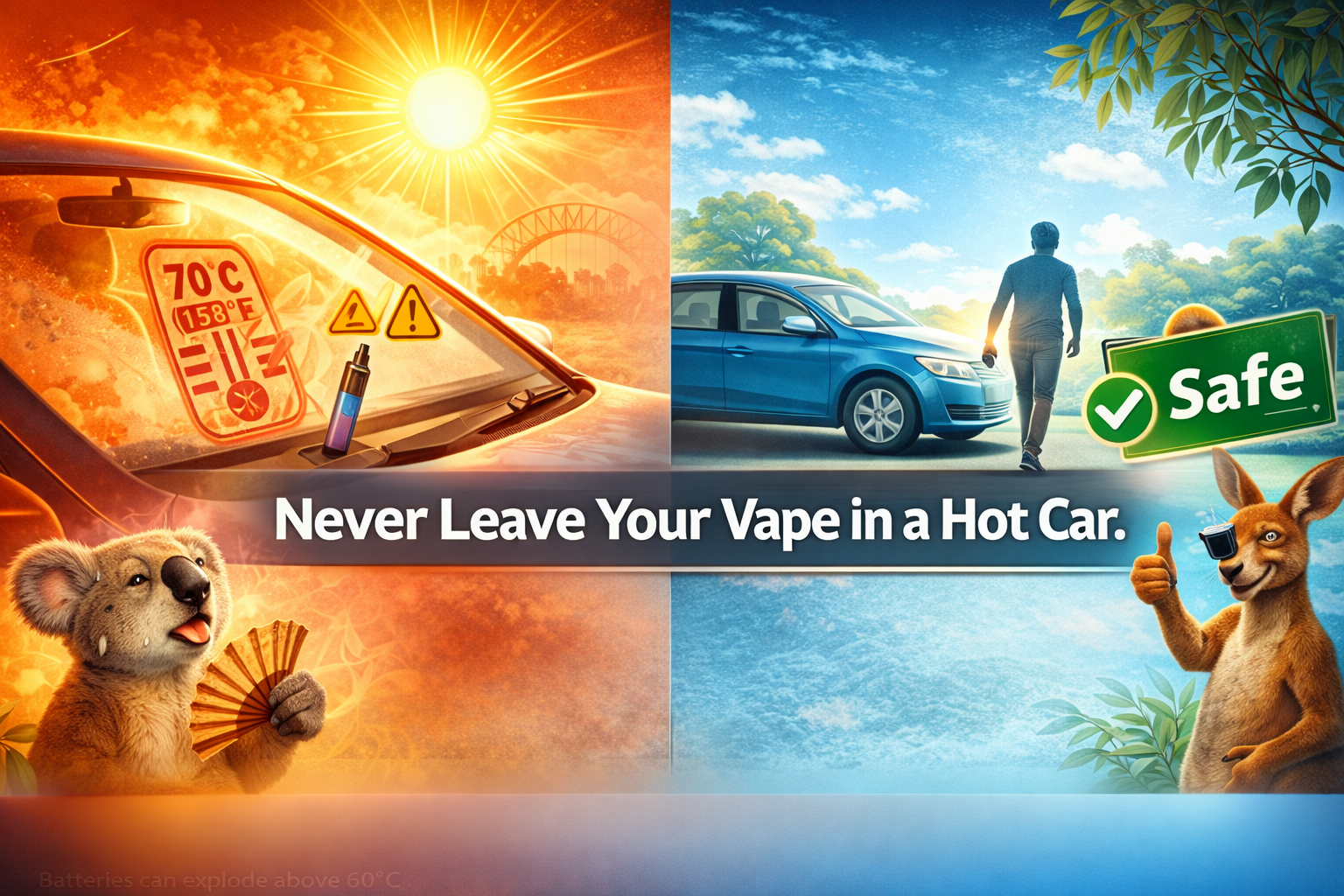
Why Your Vape Should Never Stay in a Hot Car
Every vape device—whether a disposable, pod system, or advanced mod—contains a lithium-ion battery. These batteries are highly sensitive to heat. When you park your car in the sun, the interior temperature rises far faster than you might expect. On a mild 30°C summer day, the inside of a parked car can reach over 70°C within just minutes [9].
The UK's National Fire Chiefs Council (NFCC) reports that most vape manufacturers strongly advise against exposing devices to temperatures exceeding 45°C [8]. A parked car in Australian summer far exceeds that limit—often within the first 10–15 minutes.
The Hidden Danger: Thermal Runaway
Lithium-ion batteries can experience a process called thermal runaway—a chemical chain reaction where increasing temperature leads to even higher temperatures, potentially causing the battery to catch fire or explode [0]. At high temperatures, the internal components of the battery break down, generating flammable gases and rapidly releasing stored energy [6]. The risk of thermal runaway is particularly high if a vape still has more than 50% charge [5].
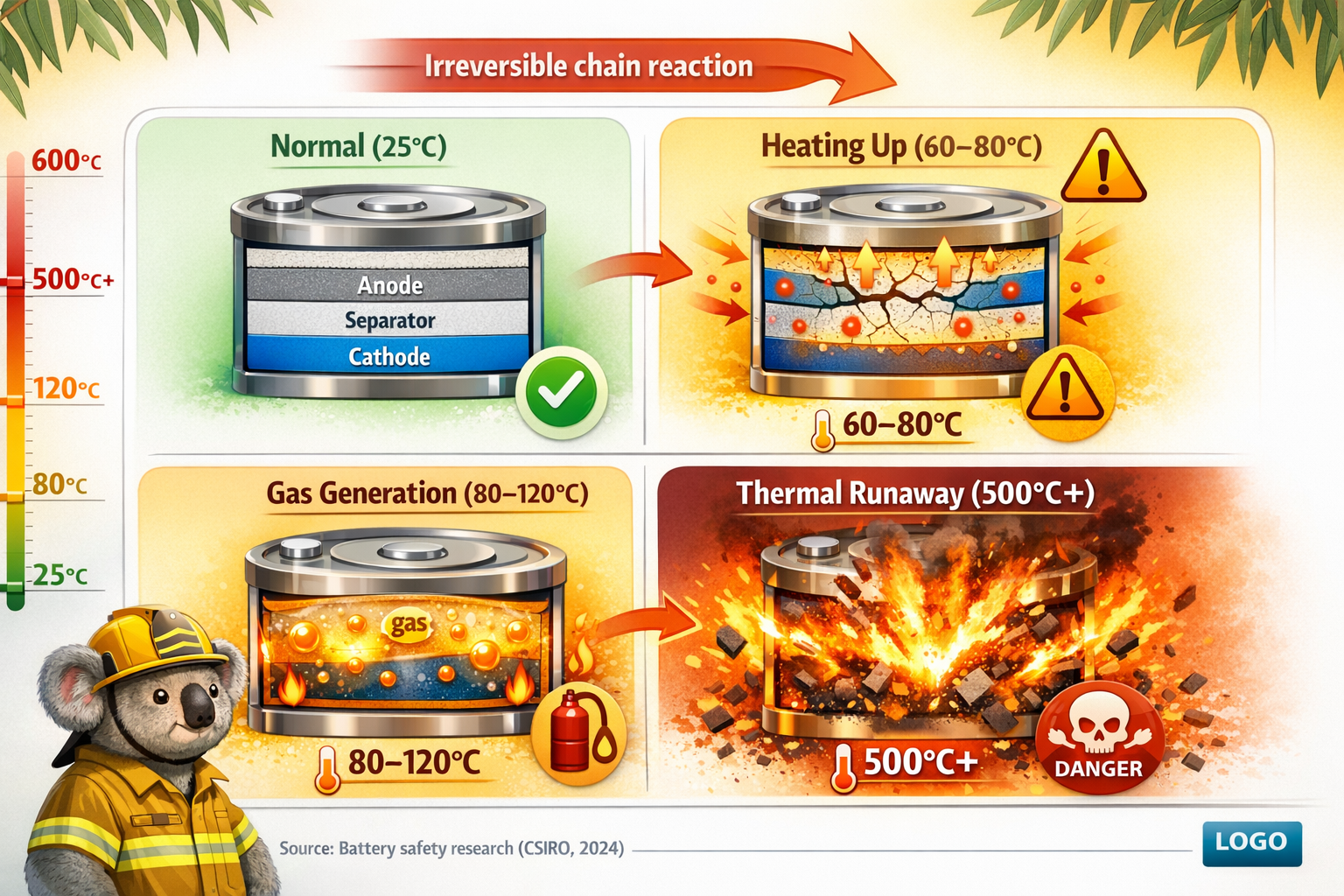
What Happens to Your Vape in a Hot Car?
The damage from heat exposure affects every component of your device—not just the battery.
Excessive heat can cause the lithium-ion battery to swell, leak, or rupture. Swollen batteries are a clear sign of internal failure and should be disposed of immediately.
Heat accelerates nicotine oxidation and flavour breakdown. E-liquid stored above 25°C degrades faster, becoming darker, harsher, and less flavourful.
High temperatures thin the e-liquid, reducing its viscosity. Thinner liquid can seep through pod seals, causing messy leaks inside your device and bag.
In extreme cases, the battery can catch fire. Documented incidents include vapes igniting inside vehicles, causing severe burns and vehicle fires [1].
Real-World Temperatures: The Australian Summer Reality
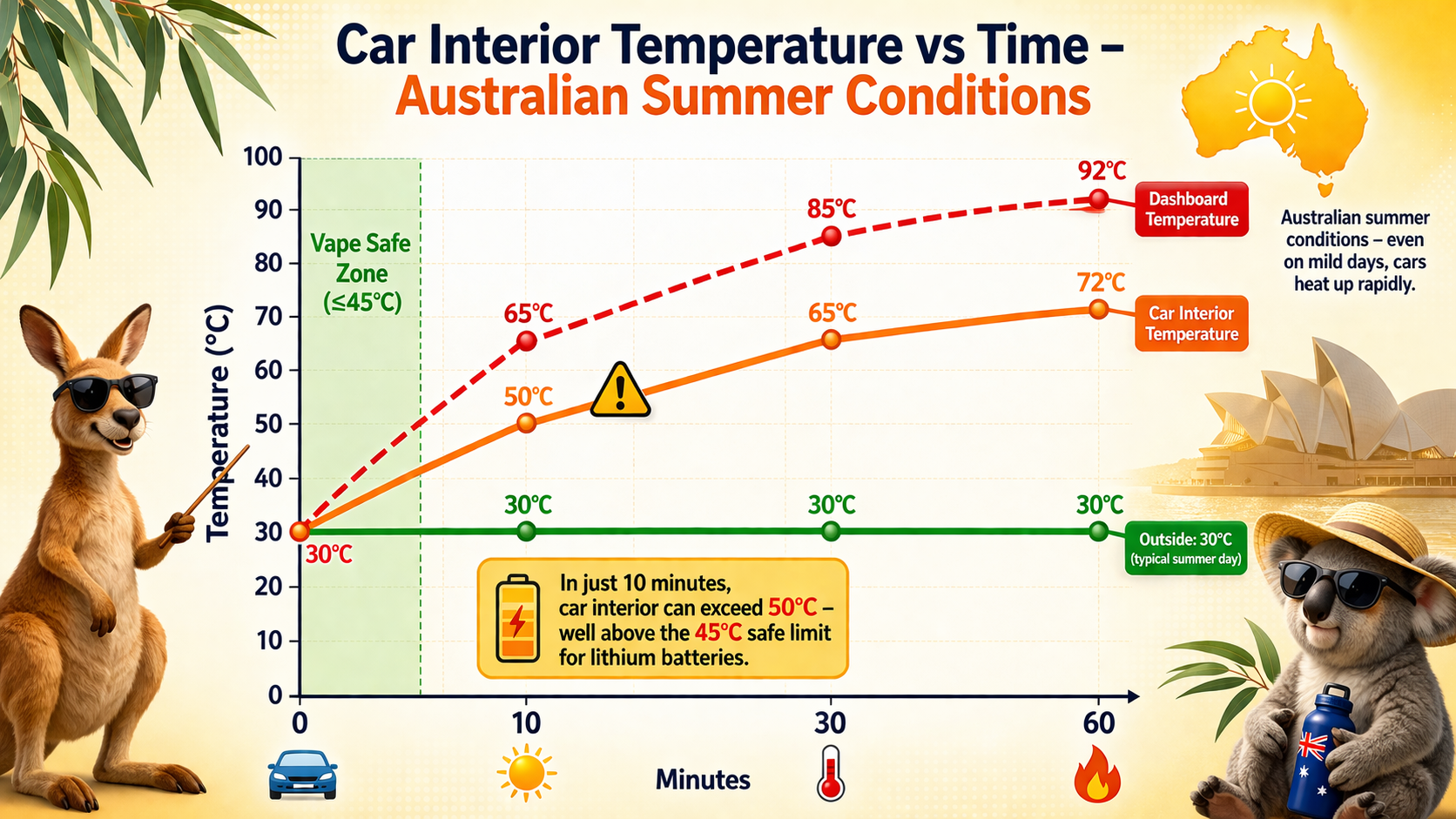
Australia's summer heat is intense. The RACV has found that vehicle interiors can reach more than 70°C in just minutes when the outside temperature is 30°C [9]. Dark-coloured cars can reach even higher temperatures—some tests recorded interior surface temperatures of 70–80°C [3].
- Recommended max for vape devices: 45°C (manufacturer guidelines)
- Car interior on 30°C day: 70°C+ within minutes
- Car dashboard on sunny day: Can exceed 80–90°C
Signs Your Vape Has Been Heat Damaged
- Swollen battery casing: The device feels bloated or bulging. This is a serious warning sign—stop using it immediately.
- Leaking liquid: E-liquid has escaped from the pod or tank, especially if you didn't notice a leak before.
- Burnt or strange taste: Even with a new pod, the flavour is harsh, metallic, or chemically.
- Reduced vapour production: The device produces less vapour than usual, even with a fully charged battery.
- Device won't charge: The battery refuses to take a charge, or the device gets unusually hot while charging.
- Visible damage: Cracks, discolouration, or melted plastic on the device body.
Safe Storage Tips: Protecting Your Vape
In the Car
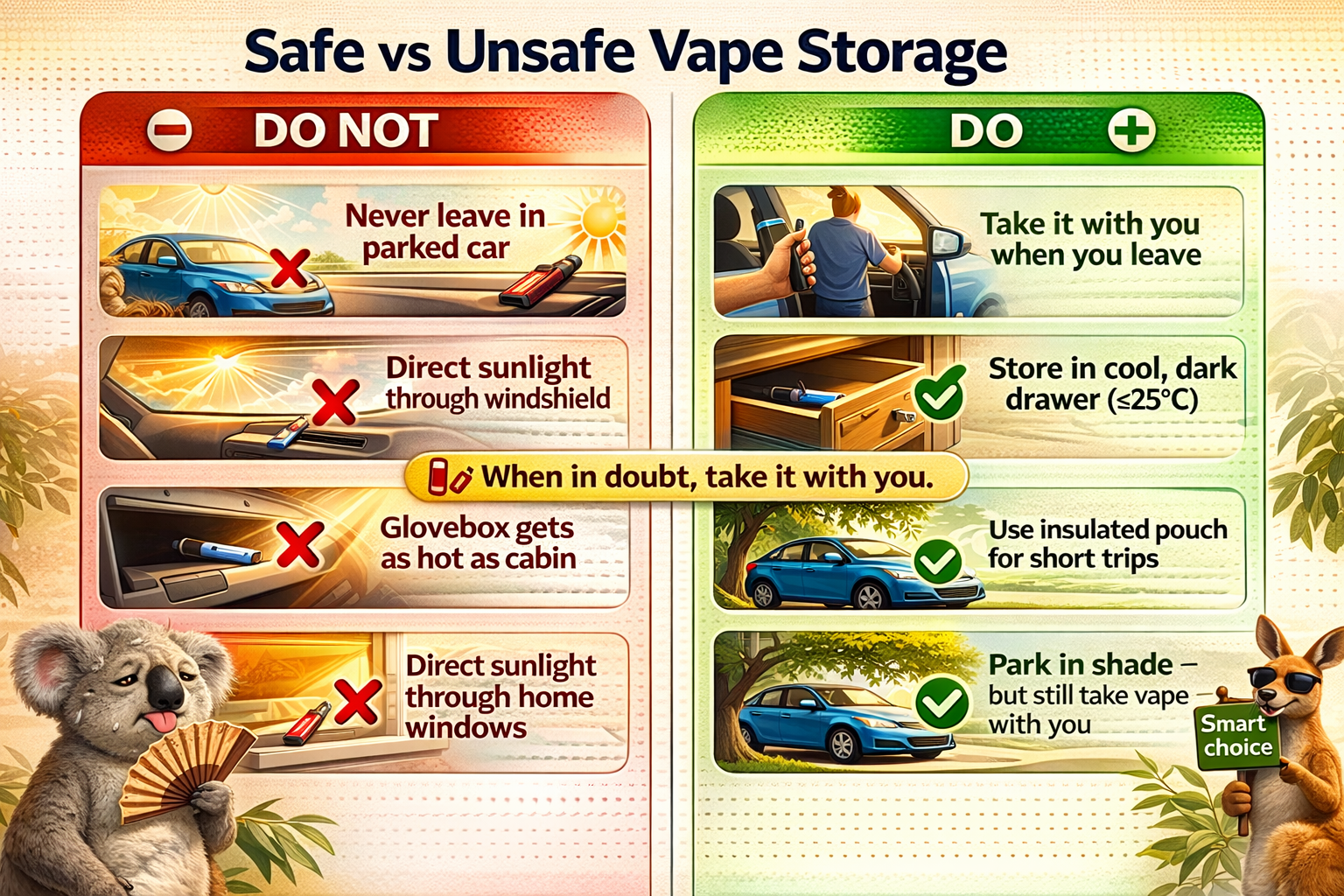
- Never leave your vape in a parked car — even for "just a few minutes." Temperatures rise rapidly.
- Take it with you — This is the only truly safe option. Your vape should be in your pocket, bag, or hand when you exit the vehicle.
- Avoid the glovebox and centre console — These enclosed spaces trap heat even more effectively than the cabin.
- Don't place vapes on the dashboard — Direct sunlight can heat the device to dangerous temperatures within minutes.
At Home
- Store at room temperature — Between 15–25°C (59–77°F) is ideal. Avoid places that get hot, like kitchens, bathrooms, or near radiators.
- Keep out of direct sunlight — Sunlight streaming through a window can heat a device even inside your home.
- Store e-liquids separately — Heat degrades e-liquid faster. Keep bottles in a cool, dark cupboard [2].
- Remove pods when not in use for extended periods — Prevents leaks if temperatures fluctuate.
Travel Tips
- Carry your vape in an insulated pouch — Some travel cases offer thermal protection for short periods.
- Never leave vapes in checked luggage — Besides being illegal due to lithium batteries, cargo holds can get very hot.
- Pack devices in your carry-on — Cabin temperature is regulated, making it safer for batteries [4].
What the Experts Say
The FDA explicitly warns users to "protect your vape from extreme temperatures by not leaving it in direct sunlight or in your car on a hot summer day" [4]. WorkSafe WA reports an incident where a vape battery spontaneously ignited in a worker's pocket, causing severe burns to his leg [6]. The National Fire Chiefs Council (UK) states that most vape manufacturers advise against exposing devices to temperatures exceeding 45°C [8].
What to Do If Your Vape Overheats
- Move it away from flammable materials — If you notice your device is unusually hot, place it on a non-flammable surface (metal, ceramic, concrete).
- Do not touch it directly — If the device is extremely hot, use heat-resistant gloves or let it cool naturally.
- Do not attempt to charge it — Charging an overheated battery can trigger thermal runaway.
- Do not immerse in water — Water can cause short circuits and make the situation worse.
- If it catches fire — Use a Class D fire extinguisher (for metal fires) or smother with sand. Do not use water.
- Call emergency services — If the fire is spreading or you're unable to control it, dial 000.
- Police / Fire / Ambulance (Australia): 000
- Poisons Information Centre: 13 11 26 (for nicotine ingestion)
Frequently Asked Questions
Can I leave my vape in the car if it's turned off?
No. Even when turned off, the lithium-ion battery inside your device is still present and susceptible to heat damage. The "off" switch does not protect the battery from thermal runaway.
How long can a vape sit in a hot car before it's damaged?
There's no safe duration. On a 30°C day, car interiors can exceed the 45°C manufacturer-recommended limit within 10–15 minutes. It's best to never leave your vape in a parked car.
Are disposable vapes safer in heat than rechargeable ones?
No. Disposable vapes also contain lithium-ion batteries and are equally susceptible to heat damage. In fact, the risk of thermal runaway is particularly high if a vape still has more than 50% charge—which is common with disposables [5].
Can I store e-liquid in the car?
Not recommended. Heat degrades nicotine and flavour compounds, making e-liquid harsh, dark, and unpleasant. Store e-liquids in a cool, dark place at home [2].
What should I do with a swollen vape battery?
Do not use or charge it. Place the device in a non-flammable container and take it to an authorised e-waste recycling facility. Never throw swollen batteries in household rubbish.
Product Recommendations for Reliable Performance
When you need a reliable device that you can trust, choose genuine products from authorised Australian supply chains. At G'DayVape, all our products are 100% authentic, sourced through verified distributors, and stored under appropriate conditions to ensure quality.
🔄 RELX Devices – Quality You Can Trust
🔄 RELX Pods – Fresh Flavour Every Time
🔞 Age verification required. Nicotine products require prescription or pharmacy access in Australia depending on strength.
🇦🇺 G'DayVape: We're committed to providing accurate, evidence‑based safety information to help Australian adults protect themselves and their devices. All products featured are 100% authentic and sourced through authorised Australian supply chains.
📚 References & trusted sources
- National Fire Chiefs Council (NFCC) – Safety Alert: Fire Risk Associated with Vape Devices in Vehicles (2025). nfrc.co.uk [Manufacturer warnings, dashboard temperatures 60-70°C, thermal runaway risks]
- Vuse UK – How To Store Your Vaping Device (2025). vuse.com [Room temperature storage, e-liquid degradation, keep away from heat sources]
- IQOS UK – Safe Storage of Vaping Devices & Accessories (2025). iqos.com [20-22°C ideal, cool dark place, out of direct sunlight]
- U.S. Food and Drug Administration (FDA) – Tips to Help Avoid Vape Battery Fires or Explosions (2024). fda.gov [Protect from extreme temperatures, don't leave in hot car, safe charging practices]
- RACV – Heatwave safety tips for summer in Victoria (January 2026). racv.com.au [Vehicle interior temperatures exceed 70°C in minutes when outside is 30°C]
- WorkSafe WA – Mines Safety Bulletin No. 181: Hazards associated with the use of e-cigarette devices (2025). wa.gov.au [Thermal runaway, worker injury from spontaneous ignition, ACCC concerns]
- CSG Recovery (UK) – Expert calls for packaging warning as vape fire risk increases (March 2026). csg.co.uk [Thermal runaway risk highest with >50% charge, 1,200 battery-related fires annually]
- Manchester Fire and Rescue Service – Vaping safety advice. manchesterfire.gov.uk [Store in cool dry place, never leave in hot environments like cars, keep away from children and pets]
- Geelong Times / Ambulance Victoria – Hot-car rescues trigger urgent warning (January 2026). timesnewsgroup.com.au [Car interior 20-30°C hotter than outside, 11 child rescue incidents in one day]
© 2026 G'DayVape — Australian vape knowledge, grounded in clarity. Always adult-only.
 RELX Pod