

Blog
Eco-Friendly Vaping Australia 2026: Brands, Practices & Take‑Back Programs

The Big Picture: Why Sustainability Matters in Vaping
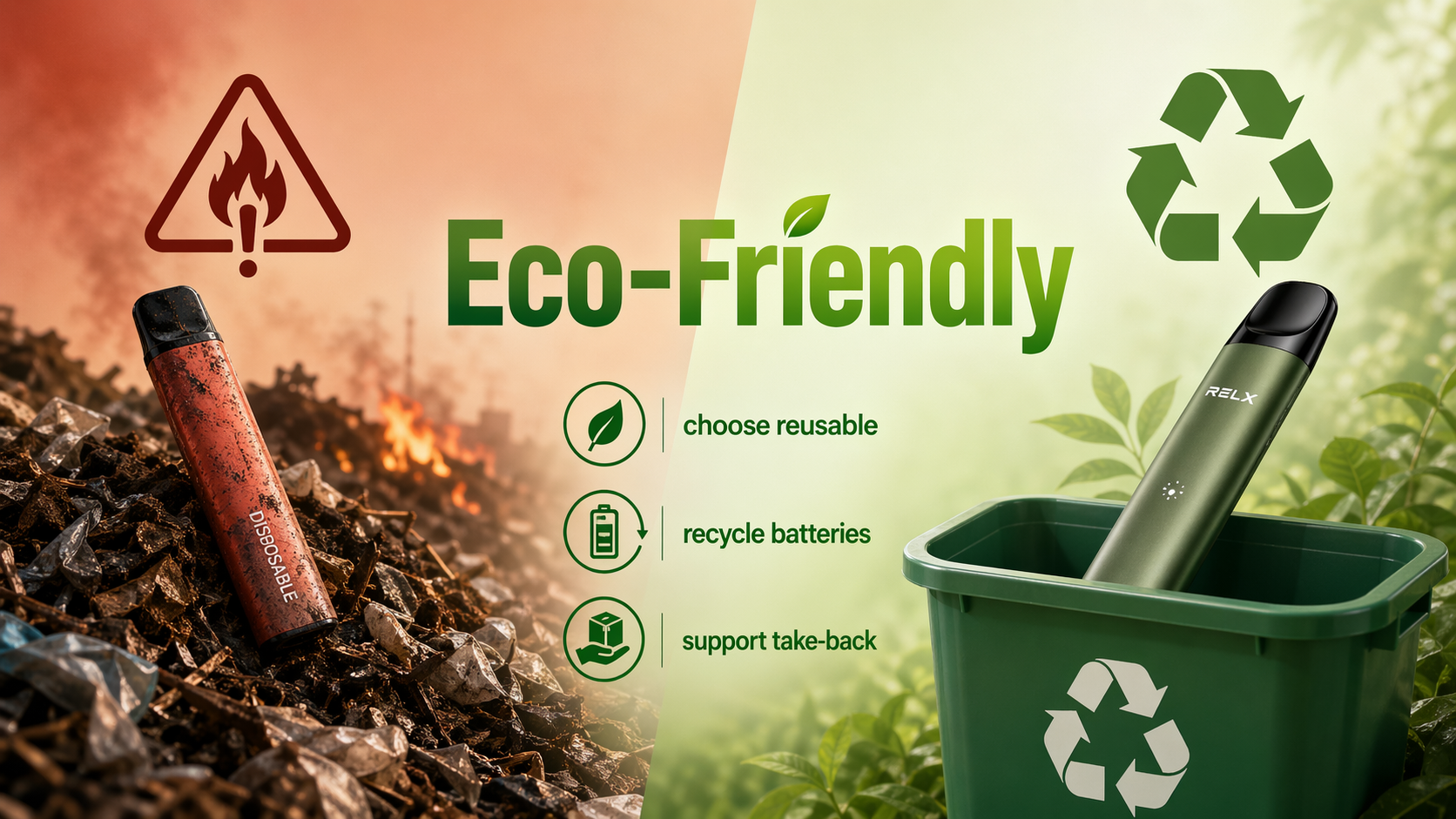
Every vape device contains a lithium‑ion battery, plus plastic casing and circuit boards. When tossed into household bins, these items become dangerous e‑waste. Lithium‑ion batteries embedded in vapes are a leading cause of fires in garbage trucks and waste facilities across Australia. Industry experts say at least 35 fires break out in recycling facilities nationwide every day, with lithium‑ion batteries being the direct cause.
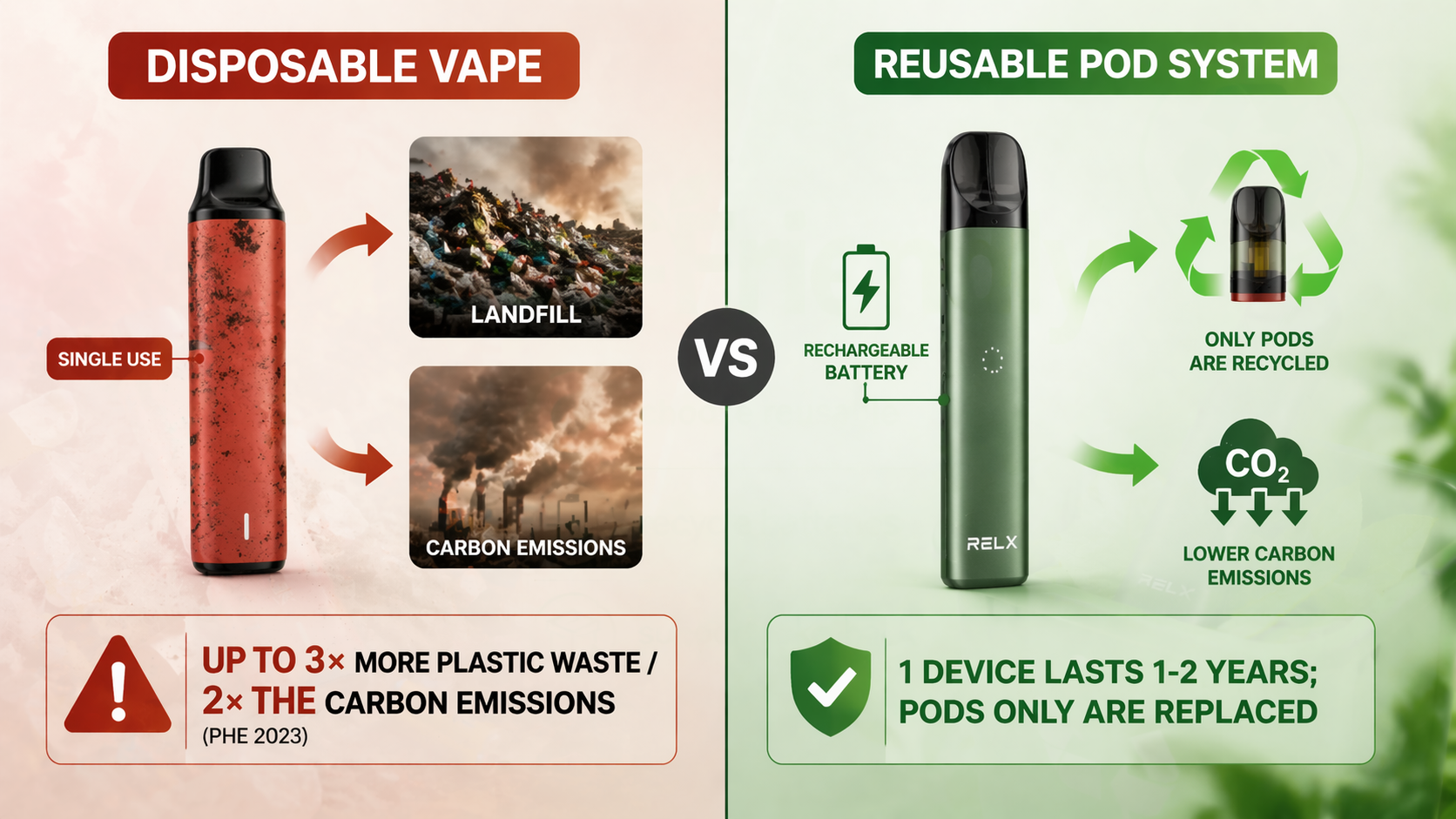
The broader environmental toll is equally alarming. A 2023 study by Public Health England estimated that a single disposable vape generates up to three times more plastic waste and twice the carbon emissions compared to a refillable system used consistently over six months. With millions of vapes being discarded each year, the waste is accumulating quickly.
Three Threats to the Environment
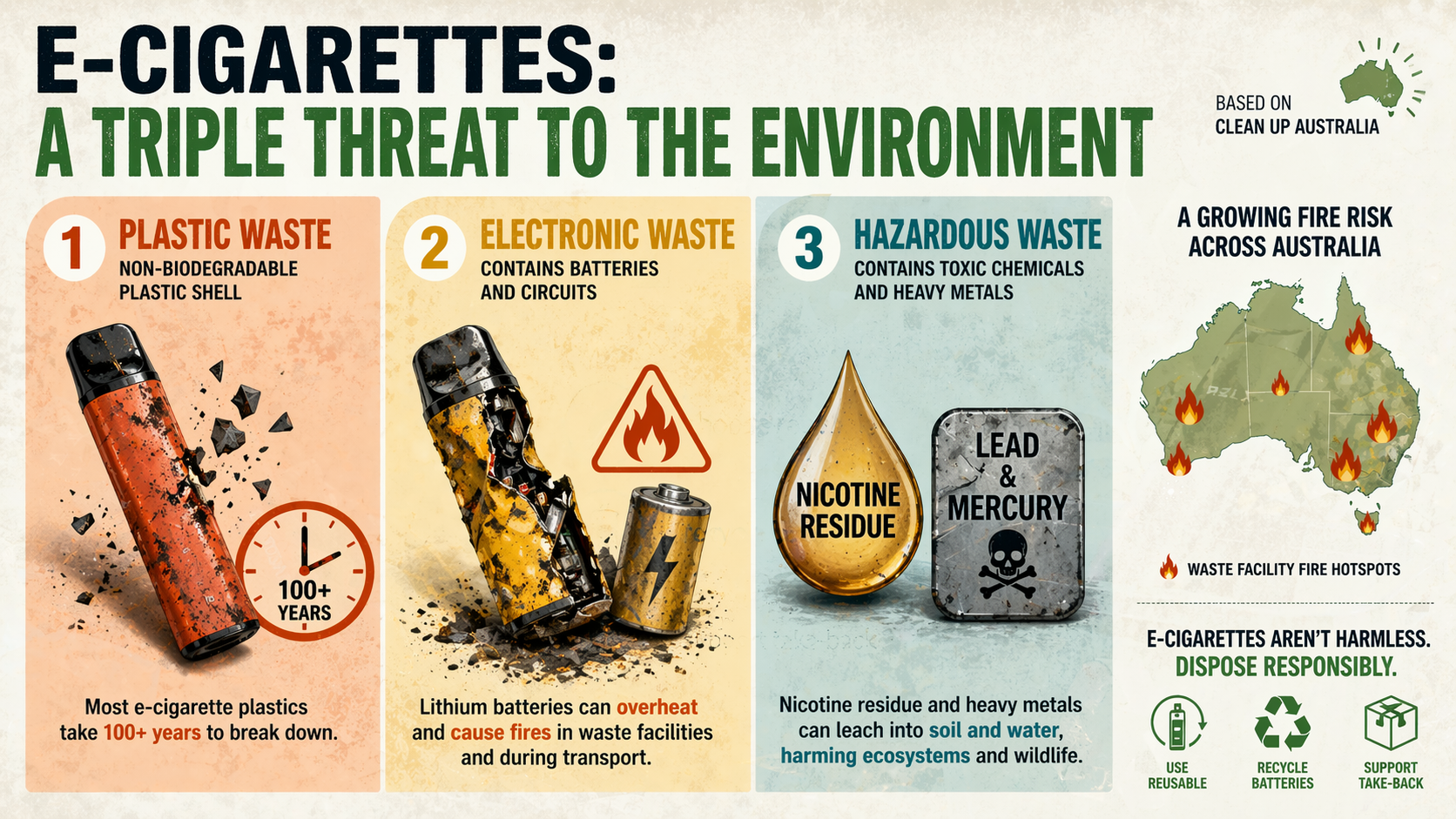
Clean Up Australia calls e‑cigarettes a “triple threat” to the environment: plastic waste (non‑biodegradable casings that take centuries to break down), electronic waste (lithium‑ion batteries and circuit boards), and hazardous waste (nicotine residues and heavy metals that can leach into soil and waterways). Once in landfill, the toxic contents of a vape can take hundreds of years to degrade.
Brands Leading the Way: Sustainable Design & Take‑Back Programs
Some manufacturers are already building sustainability into their products and business models.
RELX devices are rechargeable, reusable consumer electronics rather than disposables. They treat end‑of‑life devices as e‑waste and encourage users to follow local recycling guidance for lithium‑polymer batteries. RELX also promotes “green production” and responsible product stewardship.
A growing number of brands are using biodegradable or recycled materials for packaging and device components. Some newer disposable vapes are designed to break down naturally, although the battery and electronics still require proper e‑waste handling.
Public ESG reports from major manufacturers show ambitious targets for reducing carbon emissions and water consumption, alongside pilot “used pods recycling programs” that explore new possibilities for making products more eco‑friendly.
Reusable vs Disposable: Which Is Truly Better for the Planet?
At first glance, disposable vapes offer convenience. But the environmental math tells a different story over time.
- Disposable vapes: contain a fixed lithium‑ion battery, plastic shell and e‑liquid. Once empty, the whole device is typically discarded, leading to massive waste volumes. Fewer than 1% of disposables are recycled in most regions, meaning the rest end up in landfills or the environment.
- Reusable pod systems (e.g. RELX): A single rechargeable device can last 1–2 years or more. Only the small pod is replaced, generating far less physical waste. A well‑maintained reusable vape produces up to three times less plastic waste and half the carbon emissions of an equivalent disposable habit, according to a 2023 Public Health England study.
The catch? The sustainability advantage disappears if users frequently upgrade devices, ignore recycling, or dispose of used pods irresponsibly. The most eco‑friendly choice is always to not vape. But for those who do, switching to a reusable system is a clear step in the right direction.
Everyday Eco‑Practices for Australian Vapers
Sustainable vaping isn’t just about the device you buy—it’s about how you use and dispose of it. Here are four key habits to adopt today.
Australia’s Take‑Back & Recycling Network (2026)
Australia has dramatically expanded free vape and battery recycling options in recent months. Here is what is currently available.
🇦🇺 National & Federally Funded Programs
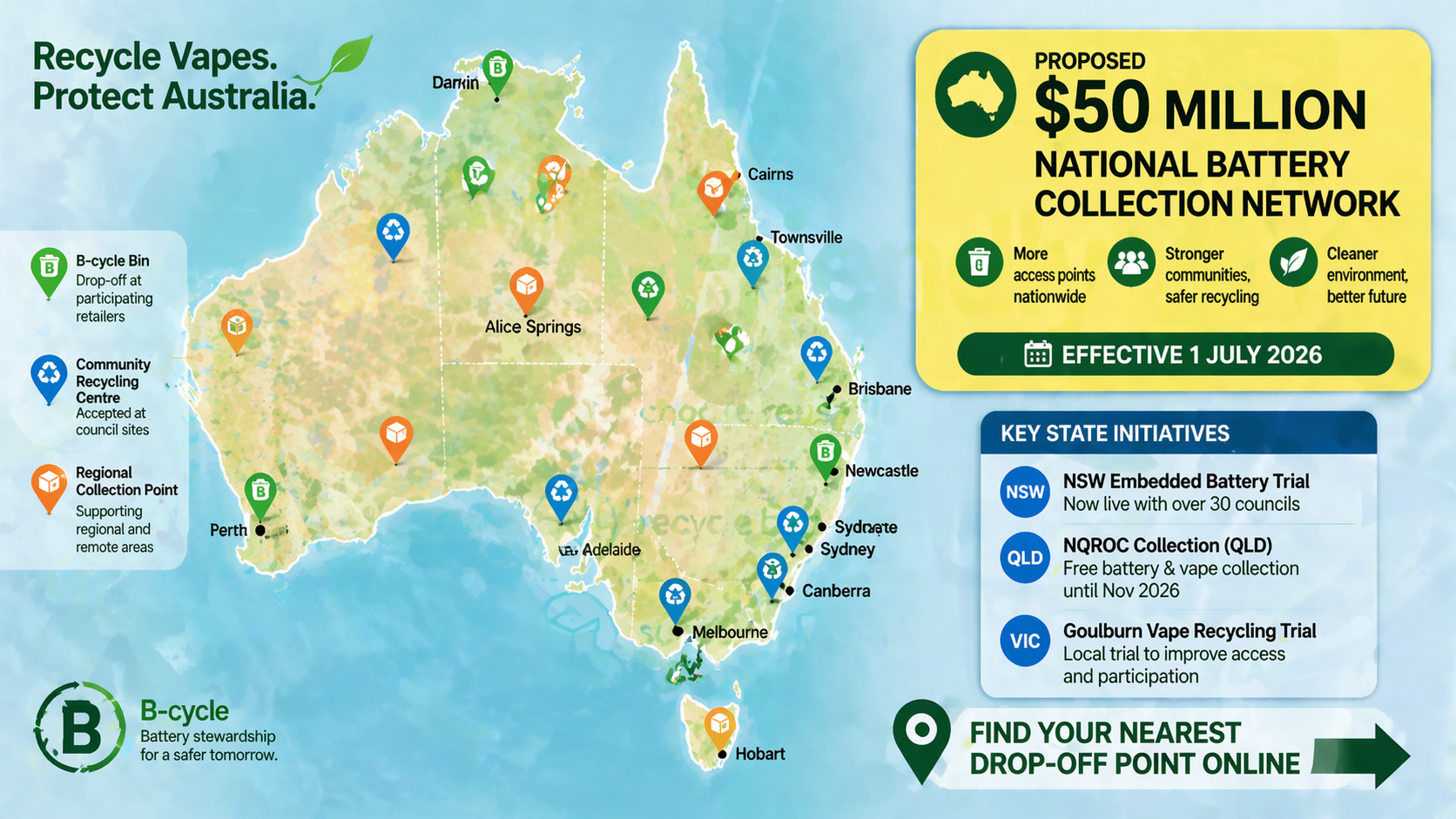
- $50 million national battery collection network proposed under the Australian Greens’ election commitment. Components would start from 1 July 2026, filling gaps in accessible disposal points and keeping batteries out of waste streams.
- Producer responsibility regulation proposed to make brand owners fully fund safe collection and recycling for all consumer electronics and battery‑containing products, including vapes.
🟢 State‑Led & Council Initiatives
Over 30 councils now accept vapes at Community Recycling Centres. More than 9,000 kilograms of problem waste has already been safely disposed of. The trial runs until September 2026.
The North Queensland Regional Organisation of Councils runs free embedded battery collection for vapes, electric toothbrushes, headphones and more until 15 November 2026. Drop‑off is free.
- Vape‑specific trials: Goulburn Mulwaree Council launched a free trial recycling service for vapes and soft plastics, running until June 2026. A similar trial in Moss Vale diverted 10 tonnes of soft plastic from landfill.
- B‑cycle network: Australia’s official battery recycling scheme accepts loose batteries at over 4,000 locations, including Coles, Woolworths, Aldi, Bunnings and JB Hi‑Fi.
What Can One Person Actually Achieve?
The numbers sound big, but individual actions add up fast. Here is what a single vaper can achieve in a year by making the right choices.
• B‑cycle locator → bcycle.com.au/drop‑off
• Recycle Mate → recyclemate.com.au
• NSW EPA embedded battery locations → epa.nsw.gov.au
Product Recommendations: Sustainable Choices at G'DayVape
When you purchase a new device, consider its full lifecycle. G’DayVape stocks only genuine, authorised products—and encourages responsible end‑of‑life disposal.
🔄 RELX Pods – Replacement Cartridges (Reusable System)
🔄 RELX Devices – Built to Last
🔞 Age verification required. Nicotine products require prescription or pharmacy access in Australia depending on strength.
🇦🇺 G'DayVape: We support Australian adults in making informed, responsible choices. All products are 100% authentic. For end‑of‑life disposal, always use the free recycling network.
📚 References & trusted sources
- Clean Up Australia – E‑cigarettes present a triple threat to the environment (2023). cleanup.org.au [Plastic, e‑waste and hazardous waste classification, litter survey data]
- Alibaba / Public Health England – Disposable vapes generate up to 3× more plastic waste and twice the carbon emissions of a refillable system (2023). alibaba.com [Comparison data]
- VicHealth – The impact of vaping on our environment (2023). vichealth.vic.gov.au [E‑liquid contamination, plastic pollution, lithium battery waste]
- Lung Foundation Australia – Vaping and the environment. lungfoundation.com.au [Microplastics, hazardous materials, fire hazards]
- NSW EPA – Embedded batteries trial (updated 2025). epa.nsw.gov.au [Vape drop‑off locations across NSW]
- Australian Greens election commitment (via PBO) – $50 million battery collection network proposal, starting 1 July 2026. pbo.gov.au
© 2026 G'DayVape — Australian vape knowledge, grounded in clarity. Always adult-only.
 RELX Pod