

Blog
Cotton vs Ceramic Vape Coils: Differences, Pros, Cons & How to Choose

The Core Difference: Material Science Explained
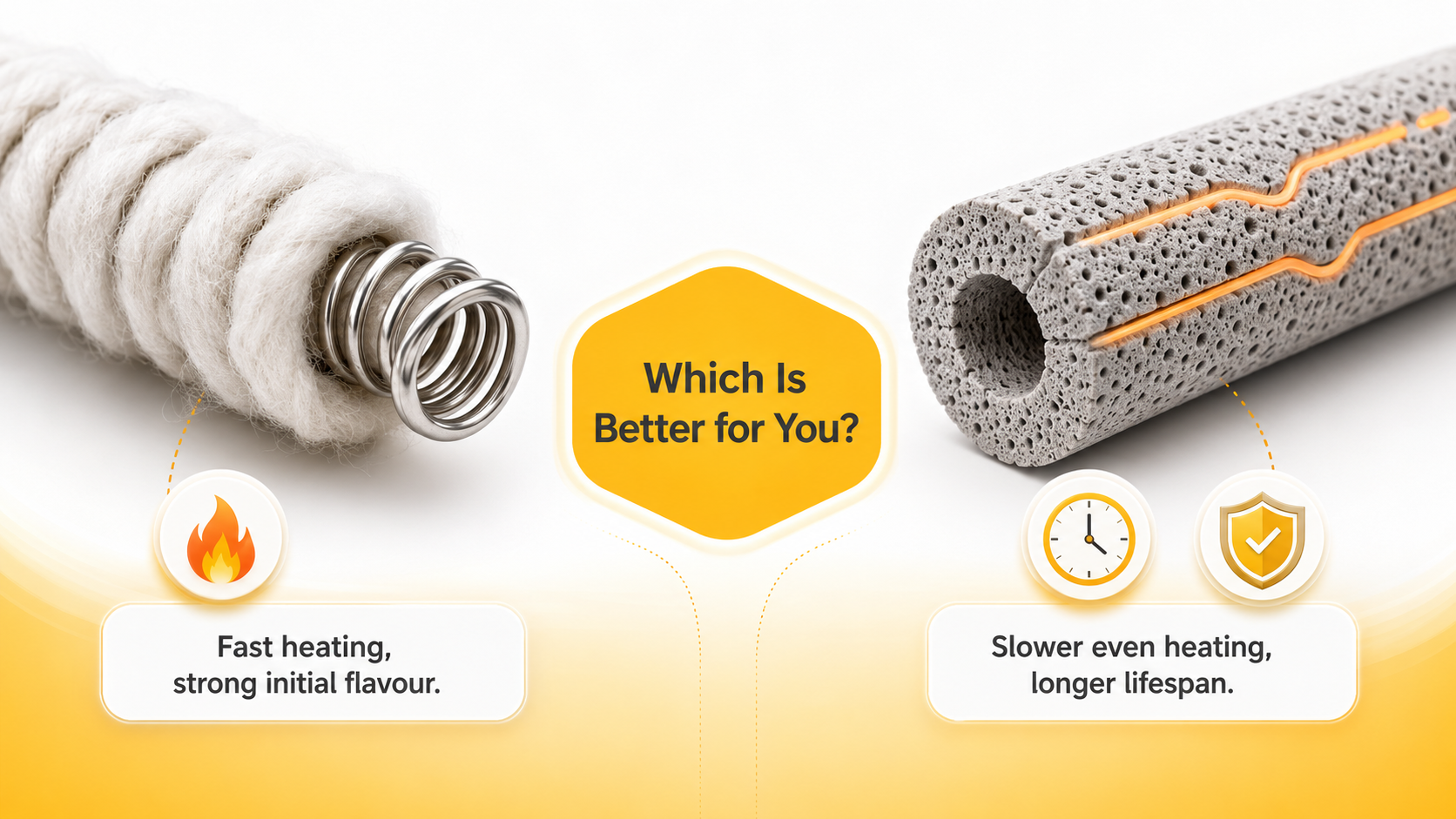
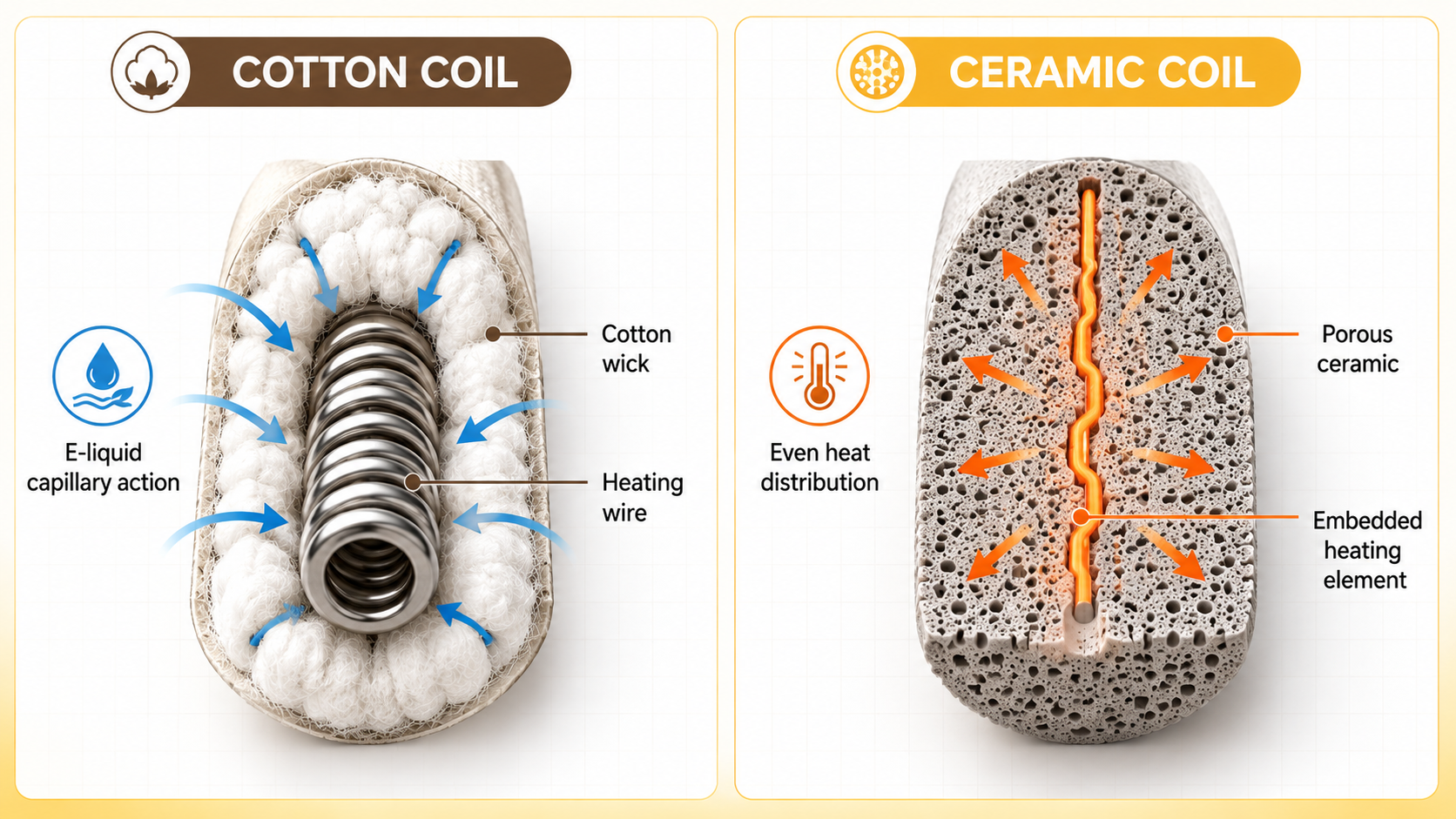
Both coil types serve the same purpose — heating e‑liquid into vapour — but they achieve this through fundamentally different materials and structures.
Organic cotton wick wrapped around a metal heating wire (typically Kanthal or Nichrome). Cotton absorbs e‑liquid via capillary action; the wire heats up and vaporises the liquid. Simple, affordable, and effective.
Porous ceramic material that acts as both wick and heating surface. A metal heating trace is embedded or printed onto the ceramic. The micro‑porous structure allows e‑liquid to flow evenly while the ceramic distributes heat uniformly. No cotton is used.
Quick Comparison: Cotton vs Ceramic at a Glance
| Feature | Cotton Coils | Ceramic Coils |
|---|---|---|
| Heating Material | Organic cotton wick + metal wire | Porous ceramic + embedded heating trace |
| Heat‑Up Time | Fast (almost instant) | Slower but more even heating[reference:0] |
| Flavour Profile | Pronounced, immediate flavour burst[reference:1] | Clean, consistent, often described as "pure"[reference:2] |
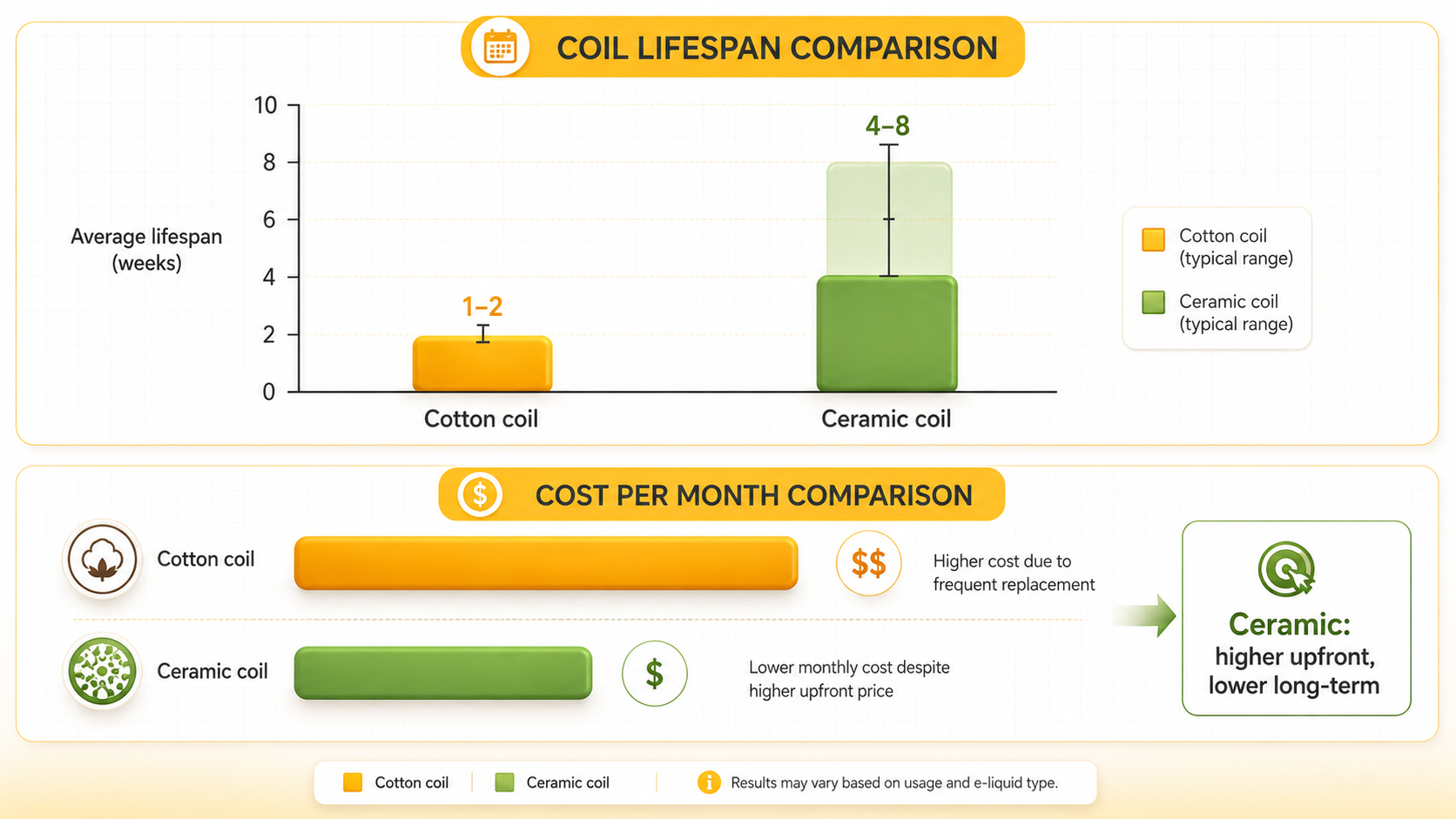
| Lifespan | Short (frequent replacement needed)[reference:3] | Long (weeks to months)[reference:4] |
| Dry Hit Risk | Higher — cotton burns when dry[reference:5] | Very low — ceramic does not burn |
| Cost | Low upfront, higher ongoing replacement costs | Higher upfront, lower long‑term costs[reference:6] |
Cotton Coils: Pros & Cons
Traditional cotton coils remain the most common coil type for good reason — they're accessible, affordable, and deliver excellent flavour when fresh.
Nearly instantaneous vapour production from the first draw — minimal waiting time.
Cotton delivers a pronounced flavour burst that many vapers find satisfying[reference:7].
Compatible with thousands of devices and easy to source locally[reference:8].
Low entry cost makes cotton coils ideal for budget‑conscious beginners[reference:9].
If e‑liquid runs low, cotton scorches quickly, producing an unpleasant burnt taste[reference:10].
Needs replacement every few days to 2 weeks depending on usage intensity[reference:11].
Flavour intensity drops noticeably as the coil ages and accumulates residue.

Ceramic Coils: Pros & Cons
Ceramic coils represent a newer generation of coil technology, increasingly found in premium pod systems and high‑end devices.
Weeks or even months of use before replacement is needed. One of the biggest advantages of ceramic[reference:12].
Delivers clean, pure flavour that stays stable from first puff to last[reference:13].
Ceramic material does not burn, virtually eliminating the risk of scorched flavour[reference:14].
Heat distributes uniformly across the ceramic surface, preventing hot spots[reference:15].
Takes slightly longer to reach optimal vaping temperature compared to cotton[reference:16].
Ceramic devices and replacement coils generally cost more upfront[reference:17].
Not all devices accept ceramic coils — you must choose compatible hardware.
Which Coil Should You Choose? Based on Your Vaping Style
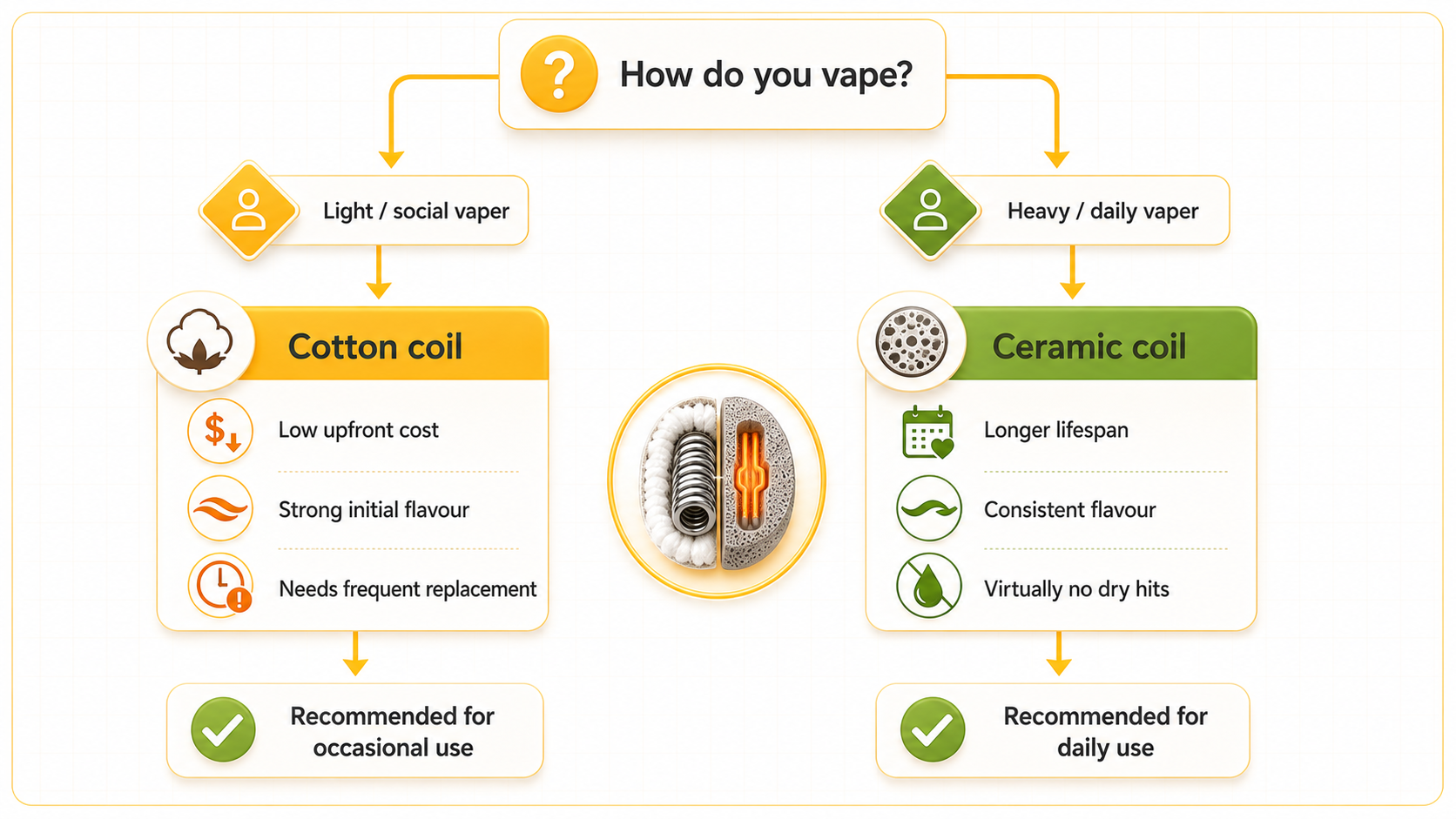
The choice between cotton and ceramic ultimately depends on how you vape, how often you vape, and what you value most.
You're a beginner starting with a simple device, you enjoy swapping flavours frequently, you prefer strong immediate flavour over subtle consistency, or you're on a tight budget and don't mind more frequent coil changes.
You're a heavy daily vaper who wants fewer coil changes, you prioritise smooth, consistent flavour over intensity, you dislike the risk of dry hits, or you want lower long‑term maintenance costs despite higher upfront investment.
Real‑World Experience: What Vapers Say
Cotton coils have been the industry standard for years, giving experienced vapers deep familiarity. The flavour from a fresh cotton coil is often described as 'punchy' and immediate — excellent for complex dessert or fruit profiles. However, that intensity fades as the cotton degrades, usually after only a few days of heavy use.
Ceramic coils, by contrast, are praised for their 'pure' flavour delivery. Since ceramic is chemically inert, it adds no taste of its own. Users report that the flavour remains consistent from the first puff to the last — the coil doesn't 'die' so much as eventually wear out gradually. For vapers tired of burnt hits and frequent coil changes, ceramic offers a compelling alternative[reference:18].
• For cotton coils: Always prime new coils by dripping e‑liquid directly into the cotton before first use. Keep your tank topped up to avoid dry hits.
• For ceramic coils: Allow a longer break‑in period — the first few puffs may feel lighter while the ceramic fully saturates. Avoid chain vaping at very high wattages, which can stress the ceramic structure.
• For both: Sweet e‑liquids (desserts, candies) will degrade any coil faster than clear, unsweetened flavours.
Quality Devices Featuring Coil Technology
The RELX device series uses advanced ceramic coil technology, delivering consistent flavour, long coil life, and smooth vapour — ideal for daily vapers who prioritise reliability and low maintenance.
RELX Devices — Ceramic Coil Technology
RELX Pods — Replacement Cartridges
※ Prices are for reference only and may be subject to change. Please check the website for the latest offers. 🔞 Age verification required.
🇦🇺 G'DayVape: We help adult vapers make informed choices about their hardware. All products are 100% authentic and intended for adult use only.
📚 References & trusted sources
- Vaporesso (Cotton vs. Ceramic Coils | Vaping Coil Comparison) — Detailed side‑by‑side comparison of cotton and ceramic coil characteristics, including heating speed, flavour, lifespan, cost, and dry‑hit risk. vaporesso.com
- iGeekphone (Vape Coil Technology Explained: Mesh vs. Ceramic vs. Cotton) — Technical breakdown of three dominant coil types, covering heat‑up time, flavour clarity, lifespan and suitability for different vaping styles. igeekphone.com
- Vape Direct (Mesh vs Ceramic Coils: Innovation Battle) — Comparative analysis focusing on flavour performance, vapour production, and user experience differences between mesh and ceramic coils. vapedirect.com
- GGS Ceramic (Ceramic Heating Coil Vs Cotton Coil: Which Is Right For You?) — Material science overview of ceramic and cotton coil properties, including durability, heat resistance, lifespan and energy efficiency. ggsceramic.com
- UKera USA (Cotton Wick vs. Ceramic Coil) — Practical guide to wicking materials, comparing thickness compatibility, flavour consistency, durability and application scenarios. ukerausa.com
© 2026 G'DayVape — adult vaping knowledge, grounded in clarity. Always adult‑only.
 RELX Pod