
Blog
Australia Vape Laws 2026: Shocking Truth About What’s Legal

🔗 Essential Guides to Australia's Vape Laws
Core Principle to Remember
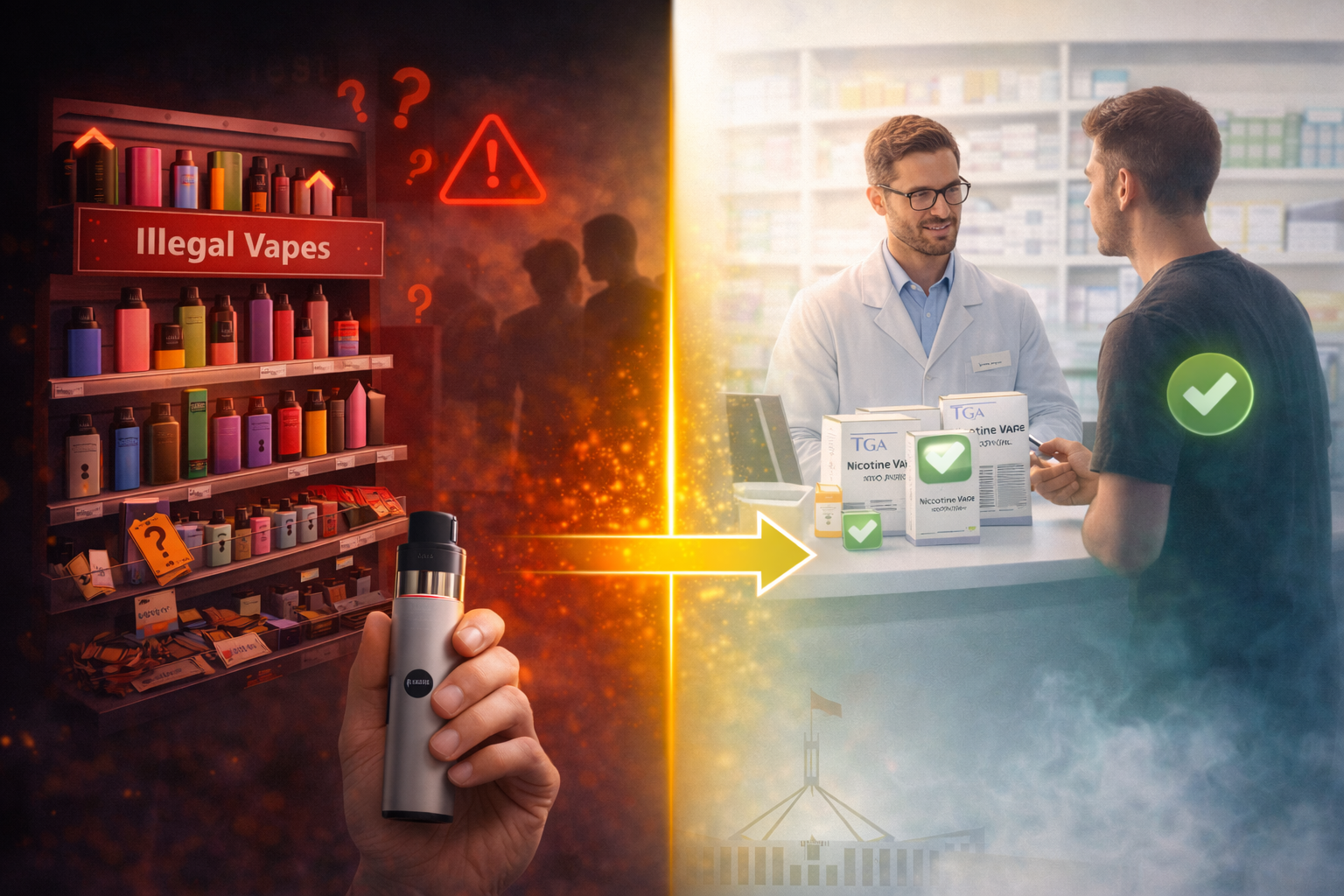
Since July 2024, all vapes (with or without nicotine) can only be legally sold in Australia through pharmacies for therapeutic purposes. Sales at tobacconists, convenience stores, or vape shops are illegal at the national level under Australia vaping regulations.
1. The Rules: What Does Australian Law Actually Say?
Australian vaping regulation operates on two main levels: federal law (which sets the national framework) and state/territory law (which adds further rules, especially on use in public). Understanding Australia vape laws 2026 requires looking at both. For a detailed breakdown of regional differences, see our Australia Vape Laws by State: 2026 State-by-State Guide.
Federal Laws: The Therapeutic Gateway
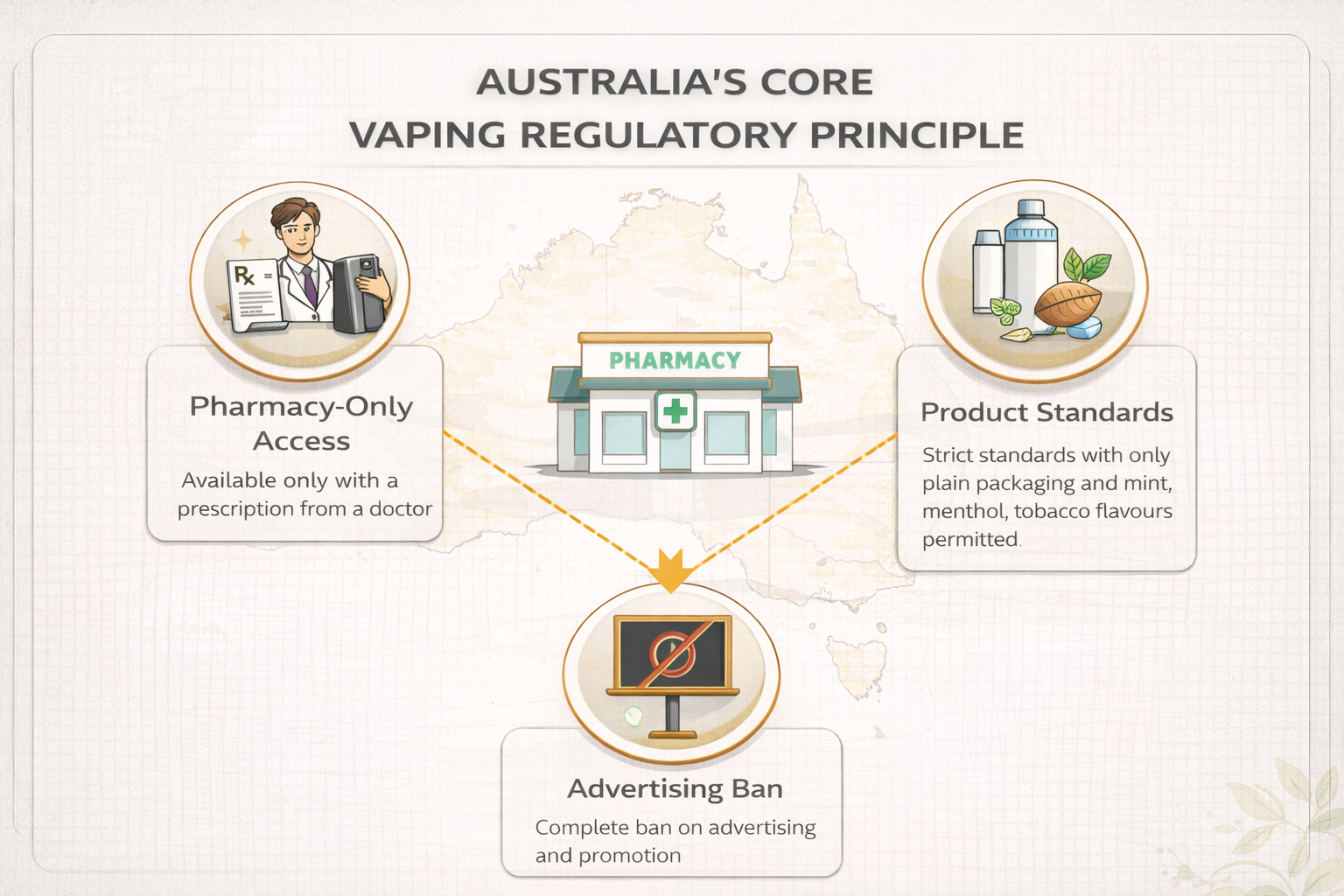
The Therapeutic Goods and Other Legislation Amendment (Vaping Reforms) Act 2024 created a single national framework. Its main pillars are:
Pharmacy-Only Access
Vapes are only lawfully available for supply through pharmacies and pharmacy settings.
No Prescription (adults, low nicotine)
Since 1 October 2024, adults (18+) can purchase from a pharmacist without a prescription if nicotine concentration is ≤20 mg/mL, after consultation.
Prescription Still Required
Anyone under 18, or anyone needing a vape with nicotine concentration above 20 mg/mL, still requires a prescription.
Product Standards: Legal therapeutic vapes are restricted to mint, menthol, or tobacco flavours and must be in plain packaging. Single-use disposable vapes cannot be sold as therapeutic goods.
Advertising Ban: The Public Health (Tobacco and Other Products) Act 2023 bans the advertising and promotion of e-cigarettes, similar to tobacco products.
State & Territory Laws: Where You Can and Can't Vape
States and territories enforce their own laws on using vapes in public, largely mirroring smoking bans. For example, in South Australia, it is an offence to vape in enclosed public places, workplaces, in cars with minors, within 10 metres of playgrounds, and at many outdoor dining and event areas. Queensland law similarly prohibits use in all indoor and outdoor no-smoking places. Always check your local regulations under Australia vaping regulations. Our state-by-state guide provides specific details for every region.
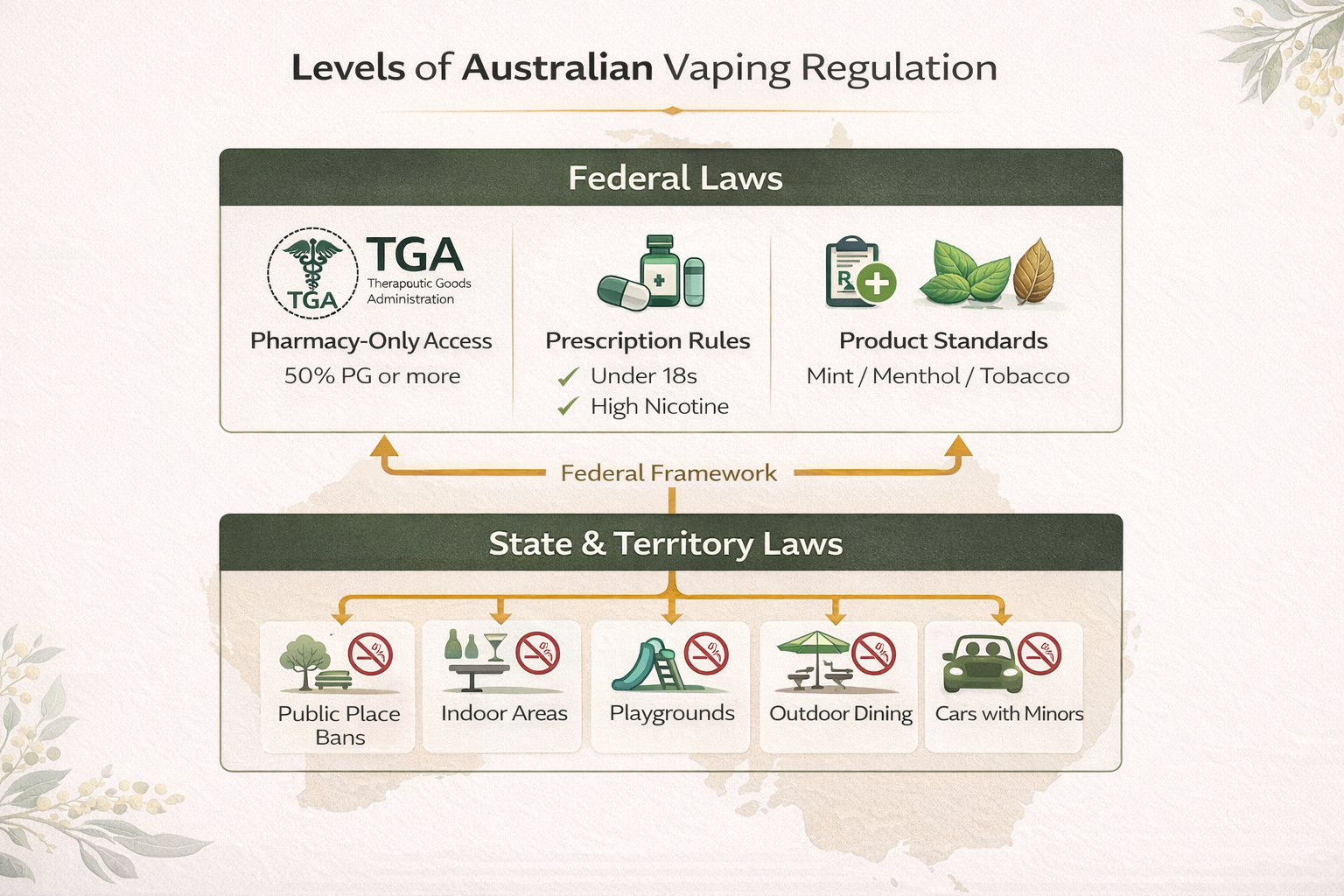
Federal Laws (TGA)
- Pharmacy-Only Access
- Prescription Rules (under 18s, high nicotine)
- Product Standards (mint/menthol/tobacco only)
- Advertising Ban
State & Territory Laws
- Public Place Bans
- Indoor Areas & Workplaces
- Playgrounds & Schools
- Outdoor Dining & Events
- Cars with Minors
2. The Reality: How These Laws Are Enforced and Their Impact
Understanding the law is one thing; seeing how it works in practice is another. The reality in 2026 involves a significant black market and targeted enforcement of Australia vape laws 2026.
Government Enforcement Focus
The Australian Government states that individuals with a small amount for personal use are not the target. Penalties are aimed at commercial, illegal supply. The Therapeutic Goods Administration (TGA) is the main federal regulator. For 2026-27, vaping goods are explicitly listed as a priority focus area for its compliance and enforcement activities. State laws prescribe severe penalties for illegal commercial activity—for example, in South Australia, certain offences can lead to fines up to $6.6 million.
The Persistent Black Market
Despite the law, illicit vapes are still widely available in non-pharmacy retail settings. The illicit tobacco and vape trade has been linked to organized crime, prompting states like Western Australia to draft new laws in 2026 promising tougher penalties, including jail time. The TGA warns that illegal vapes may contain unknown chemicals, incorrect nicotine levels, or other harmful substances—a major safety risk. For tourists, understanding these risks is crucial; read our guide Can Tourists Bring Vapes into Australia in 2026?.
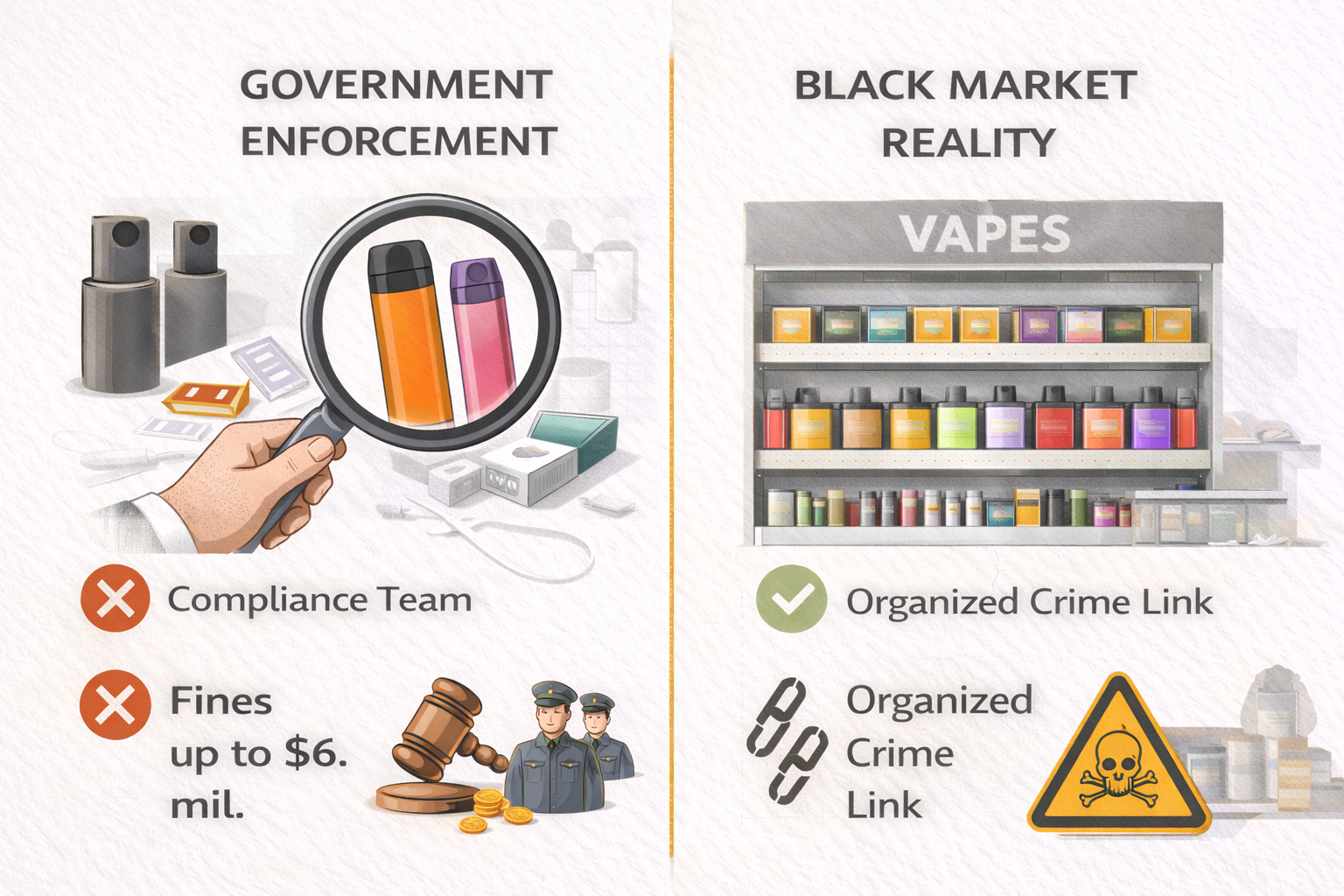
Government Enforcement
- Targeting commercial suppliers, not users
- TGA priority focus area 2026-27
- Fines up to $6.6 million for serious offences
- Compliance teams and investigations
Black Market Reality
- Widely available in retail shops
- Links to organized crime
- Unknown chemicals and incorrect nicotine levels
- No product safety standards
3. Clearing the Air: Common Myths and Misunderstandings
Let's address some frequent points of confusion about legal vaping Australia.
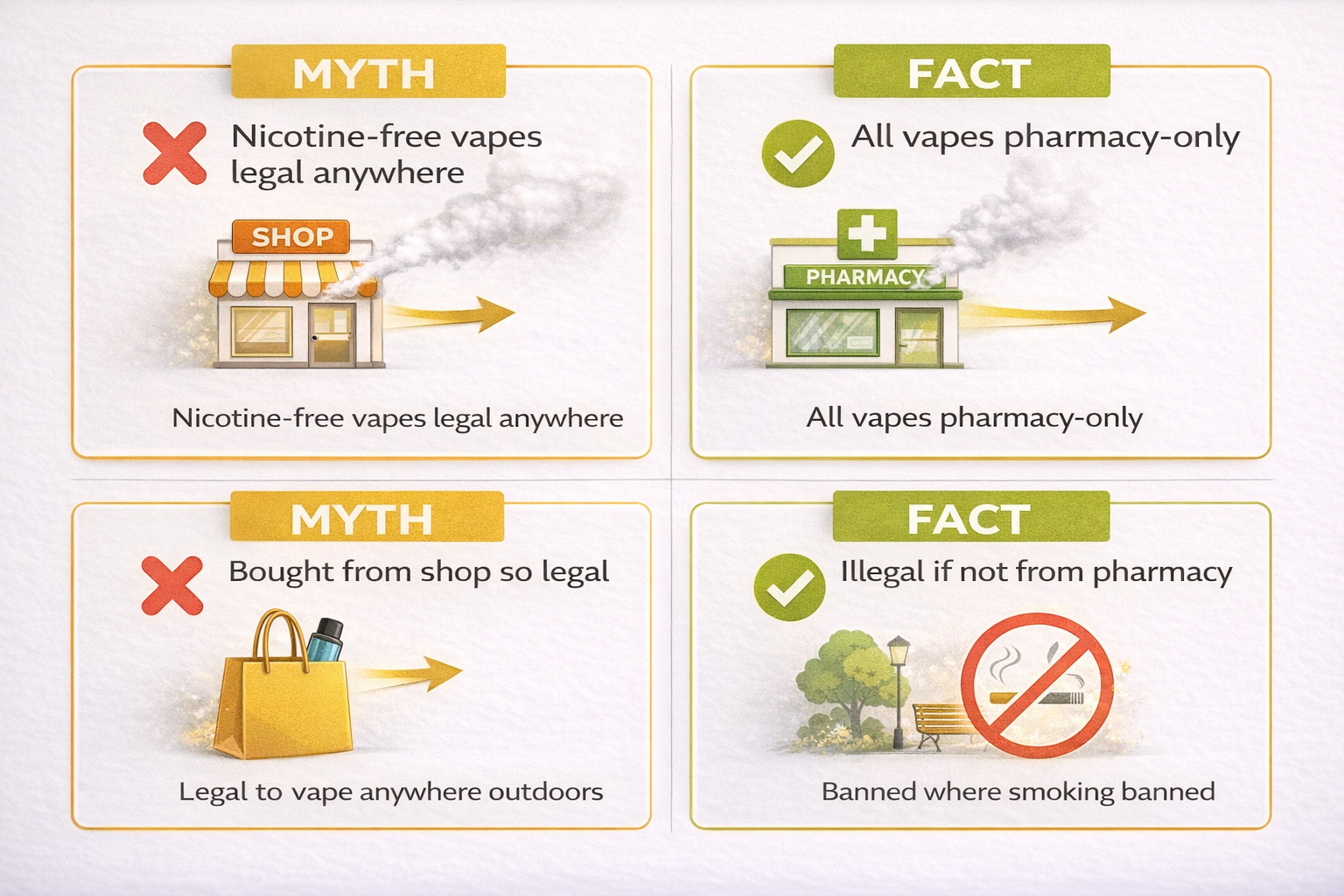
❌ Myth 1
Nicotine-free vapes are legal to sell anywhere.
✅ Fact 1
This is false. Federal law states that all vapes, regardless of nicotine content, can only be sold in pharmacies. A nicotine-free label does not make it a legal consumer product.
❌ Myth 2
I bought it from a shop, so it must be legal.
✅ Fact 2
Not necessarily. If you purchased a vape from a convenience store, tobacconist, or dedicated vape shop, you have purchased an illegal product under Australian law. Pharmacies are the only legal retail source. Our guide to legal pharmacy purchases explains the process.
❌ Myth 3
It's legal to vape anywhere outdoors.
✅ Fact 3
Most states and territories ban vaping anywhere smoking is banned. This includes many outdoor areas like public transport waiting areas, sporting grounds during junior games, patrolled beaches, and near building entrances. Always look for signage.
📖 Deepen Your Understanding
Health Information and Support
Australian health authorities consistently state that vaping is not safe. The Department of Health advises that e-cigarettes can contain harmful chemicals and that nicotine is highly addictive, particularly harmful to adolescent brain development.
If you are considering using a vape to quit smoking, the official advice is to first speak with your doctor or a pharmacist to discuss all available options. Support is available through services like Quitline.
🇦🇺 G'DayVape perspective: We are committed to full compliance with Australia vaping regulations. Our role is to provide clear, accurate information and connect adult vapers with legal pathways. Always consult a healthcare professional and check official government sources for the most up-to-date requirements.
📚 Official References & Authoritative Sources
- Therapeutic Goods Administration (TGA). (2026). Vaping Regulations Hub: Nicotine Vaping Products. Australian Government Department of Health. https://www.tga.gov.au/products/medicines/prescription-medicines/nicotine-vaping-products-hub
- Australian Government Department of Health. (2026). Vaping Laws and Reforms: Policy Documents and Legislative Updates. https://www.health.gov.au/health-topics/smoking-and-tobacco/about-smoking-and-tobacco/vaping
- Australian Border Force (ABF). (2026). Import Controls for Tobacco and Vaping Products. https://www.abf.gov.au/importing-exporting-and-managing-goods/importing/prohibited-and-restricted-goods/tobacco-and-cigarettes
- National Health and Medical Research Council (NHMRC). (2025). Health Advice on Vaping: Evidence-Based Information. https://www.nhmrc.gov.au/health-advice/all-topics/vaping
- Australian Institute of Health and Welfare (AIHW). (2025). National Drug Strategy Household Survey: Vaping Statistics. https://www.aihw.gov.au/reports/illicit-use-of-drugs/national-drug-strategy-household-survey
All external sources are Australian government or official health institutions. Links are dofollow and open in new tabs. Information current as of March 2026.
© 2026 G'DayVape — Australian vape knowledge, grounded in clarity. Always adult-only. This guide is for informational purposes only and does not constitute legal advice. Always verify current regulations with official government sources.
 RELX Pod