

Blog
Nicotine Withdrawal Symptoms: Timeline & What Happens When You Quit

What Is Nicotine Withdrawal?
Nicotine is the addictive drug found in tobacco and most vapes. When you quit smoking or vaping, your body craves nicotine. In the first few days and weeks after stopping, you will likely experience nicotine withdrawal symptoms—changes in your mood and body that are temporary and will pass[reference:0].
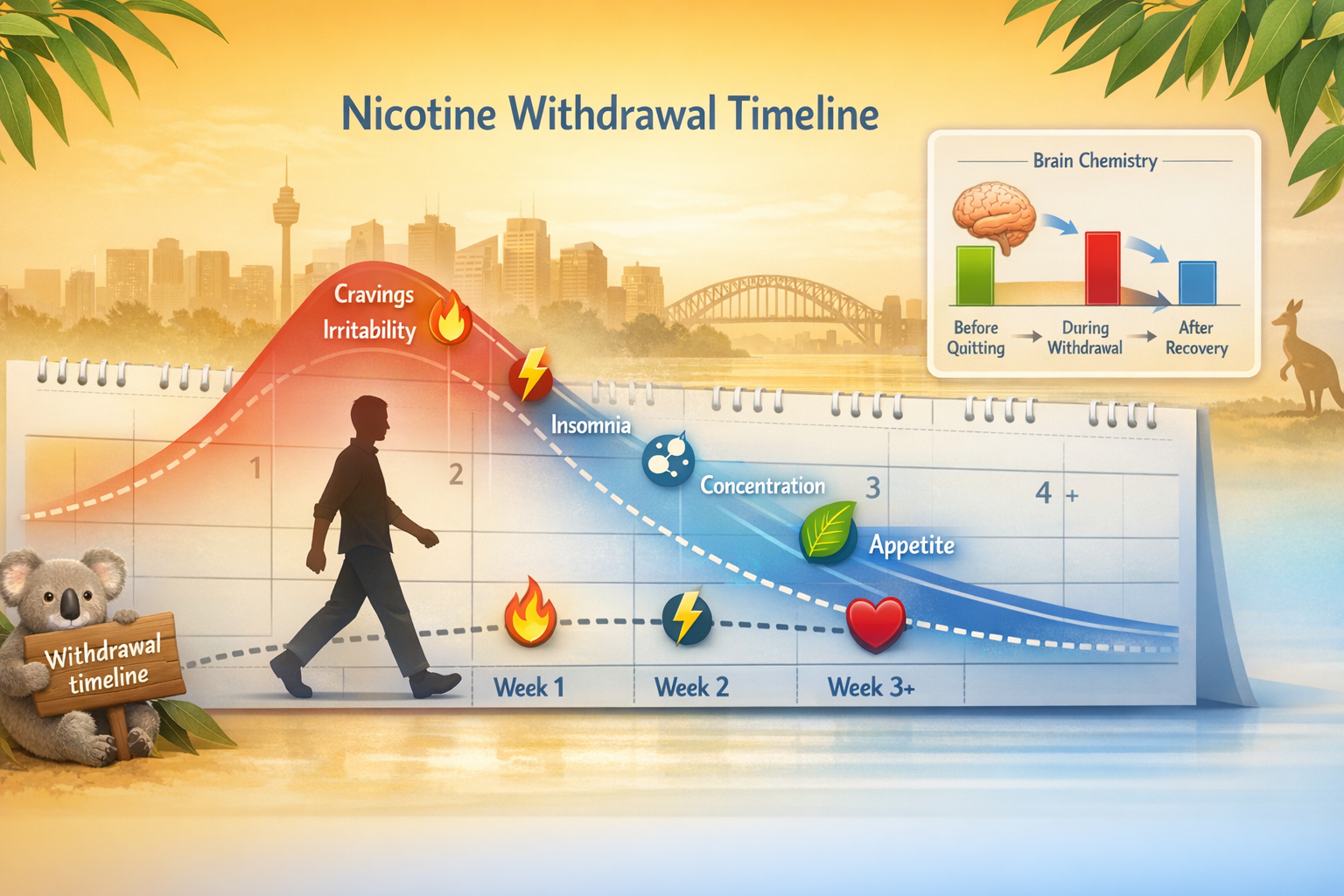
With repeated nicotine exposure, the brain adapts. Nicotine binds to nicotinic acetylcholine receptors in the brain, triggering the release of dopamine—the "reward" chemical. Over time, the brain becomes dependent on nicotine to maintain normal dopamine levels. When you stop, the brain must re‑adjust to functioning without it. This chemical shift causes withdrawal symptoms[reference:1]. The good news: these symptoms are not dangerous and are a normal part of recovery.
Why Withdrawal Happens
Nicotine withdrawal is not a failure of willpower—it's a biological response. Your brain has physically adapted to the presence of nicotine. When nicotine is absent, the brain's chemistry is temporarily unbalanced, leading to symptoms like irritability, anxiety, and cravings. These are signs that your brain is healing, not that you're weak[reference:2].
The Nicotine Withdrawal Timeline
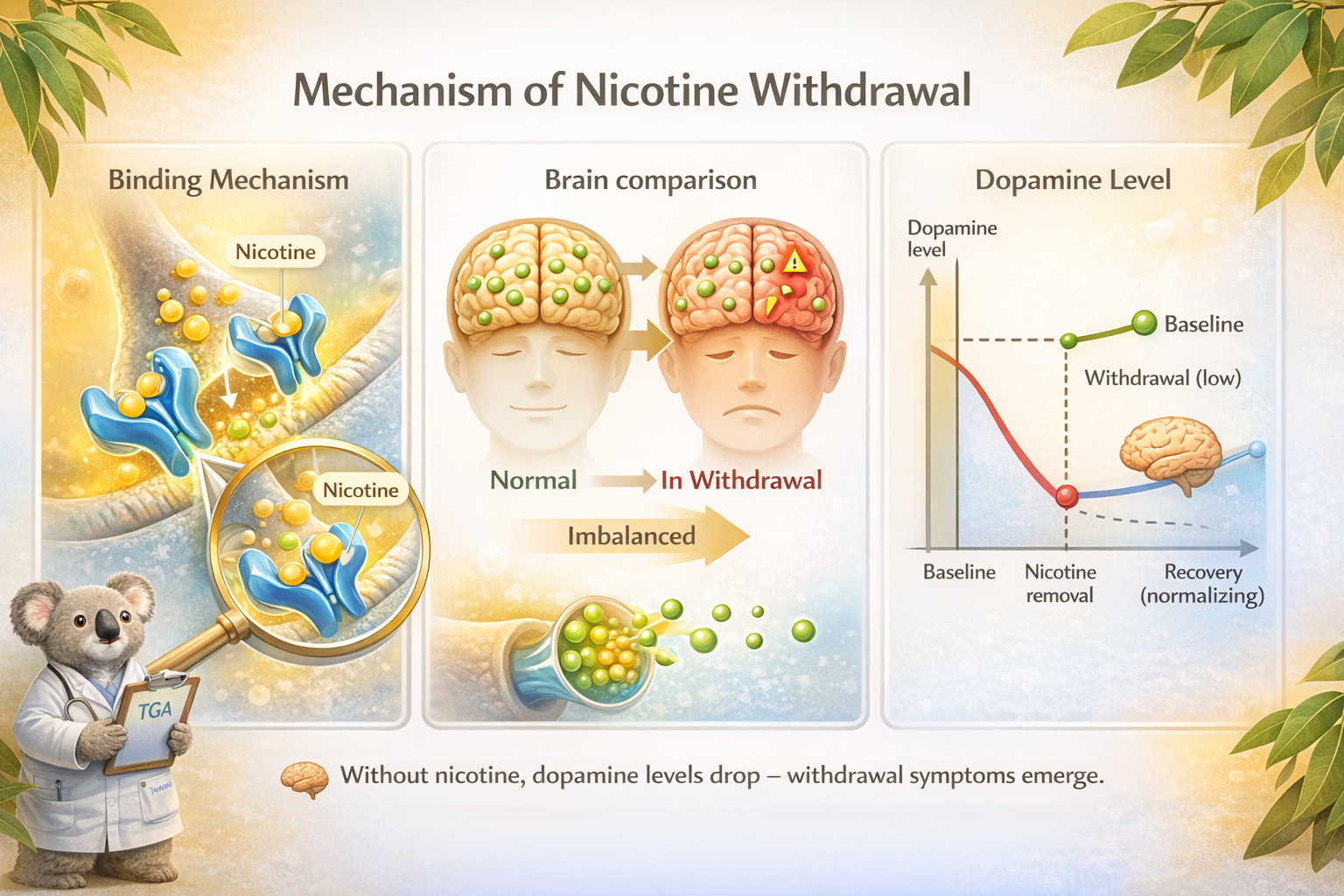
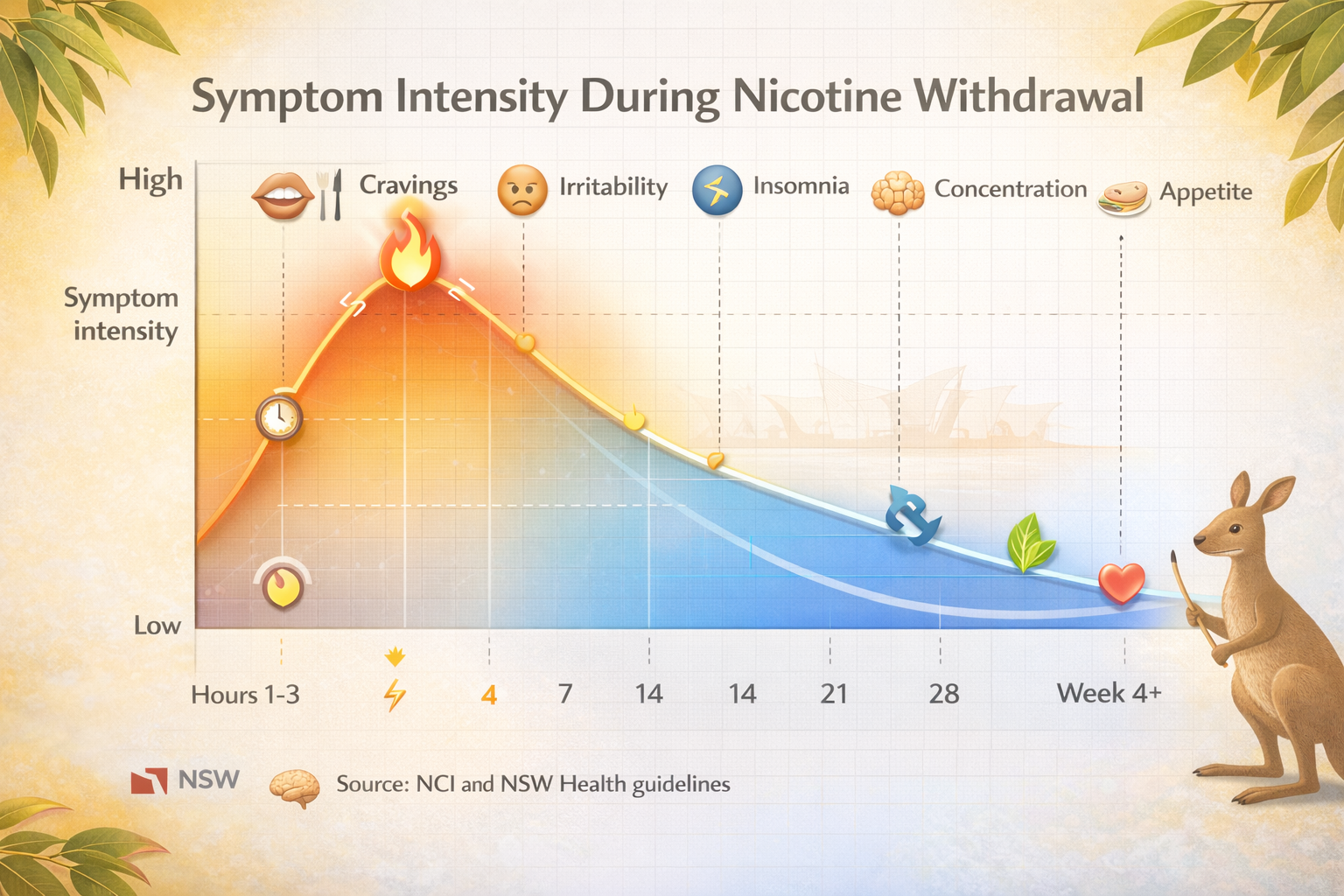
Everyone's experience is different, but most people follow a predictable pattern. Symptoms usually begin within a few hours of your last use, are strongest in the first week (peaking around days 2–3), and gradually fade over 2–4 weeks[reference:3]. However, occasional cravings may persist for months[reference:4].
Common Nicotine Withdrawal Symptoms
According to the National Cancer Institute and NSW Health, common withdrawal symptoms include[reference:11][reference:12]:
Intense urges to smoke or vape. Usually last 5–10 minutes and become less frequent over time[reference:13].
Feeling easily upset, frustrated, or angry. Often the most noticeable emotional symptom[reference:14].
Feeling anxious, restless, or down. Mood changes are temporary and subside as the brain readjusts[reference:15].
Trouble focusing on tasks. Improves after a few days as the brain gets more oxygen[reference:16].
Trouble sleeping or feeling unable to sit still. Physical activity and reducing caffeine help[reference:17].
Feeling hungrier due to nicotine's appetite‑suppressing effect. Healthy snacks and water help manage weight[reference:18].
Blood pressure changes can cause headaches and dizziness. Usually resolves within a few days[reference:19].
The lungs begin clearing out toxins. Increased coughing is a sign of healing, not a problem[reference:20].
Symptom Management: Coping Strategies That Work
While withdrawal is uncomfortable, there are proven ways to reduce symptoms and stay on track.
Nicotine Replacement Therapy (NRT)
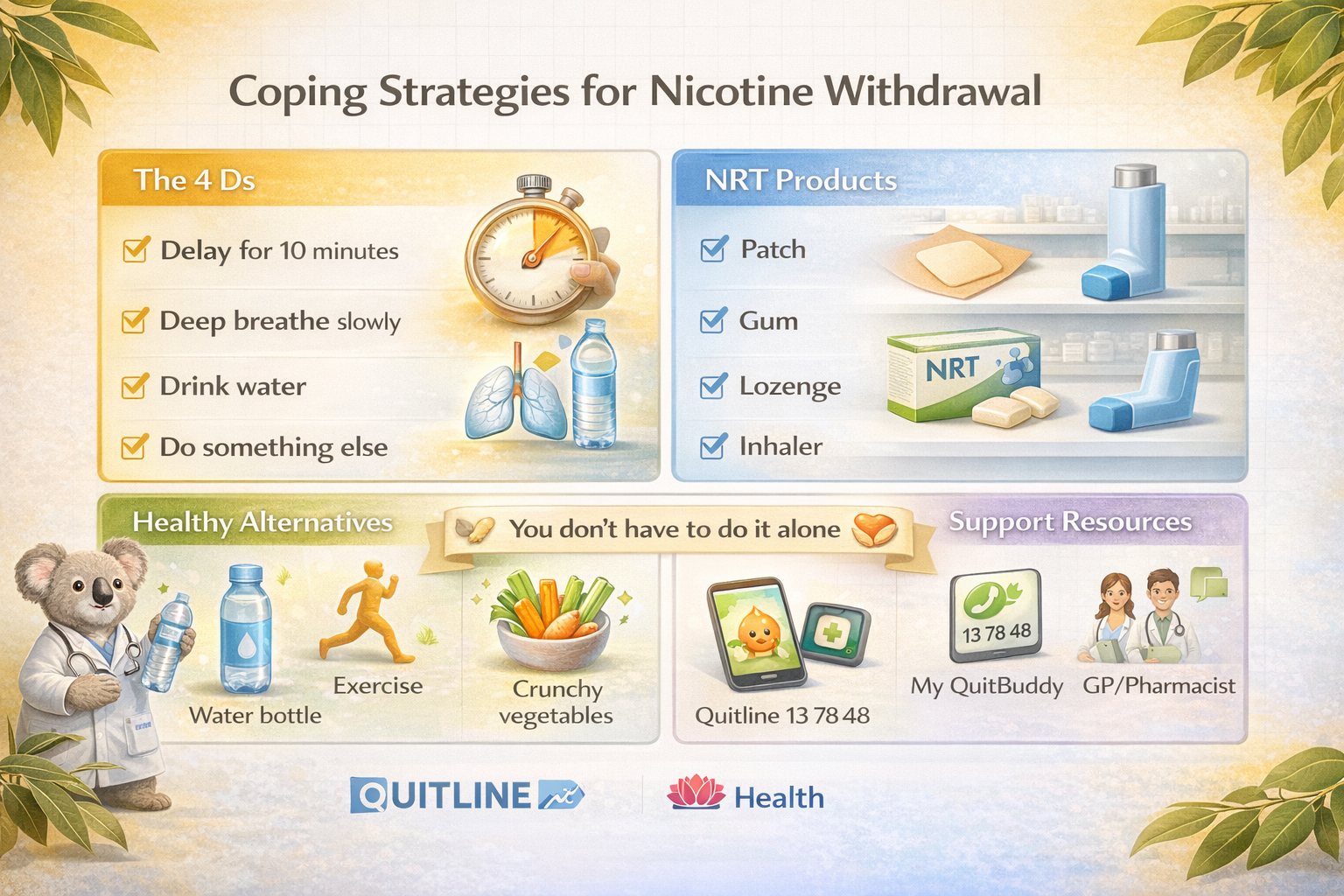
NRT products—patches, gum, lozenges, inhalers, and mouth sprays—deliver controlled doses of nicotine without the harmful chemicals in smoke. Using NRT can dramatically reduce withdrawal symptoms and double your chances of quitting successfully[reference:21]. The combination of a long‑acting patch with a short‑acting gum or lozenge is particularly effective[reference:22].
Prescription Medications
Medications like varenicline (Champix) and bupropion (Zyban) work on brain receptors to reduce cravings and withdrawal symptoms. They are available by prescription through the PBS. Speak with your GP to see if they are right for you[reference:24].
The 4Ds: Quick Craving Management
Additional Coping Tips
- Reduce caffeine: Smoking reduces caffeine's effects. When you quit, you become more sensitive to caffeine. Try halving your usual intake of coffee, tea, and energy drinks[reference:29].
- Stay active: Physical activity helps briefly reduce cravings and improves mood. Even a short walk helps[reference:30].
- Avoid triggers: Identify situations where you used to smoke or vape (e.g., with coffee, after meals, on breaks). Have a plan for those moments[reference:31].
- Use healthy substitutes: Keep sugar‑free gum, mints, nuts, or crunchy vegetables handy to keep your mouth busy[reference:32].
- Talk to someone: Call Quitline (13 7848) for free, confidential support. Counsellors can help you build a personalised quit plan[reference:33].
Australian Support Services
You don't have to go through withdrawal alone. Free, confidential support is available across Australia.
- Quitline (13 7848): Free, confidential telephone counselling from trained professionals who understand quitting. Available for both smoking and vaping cessation[reference:34].
- My QuitBuddy app: Free smartphone app providing tips to overcome cravings and track your progress. Now supports both smoking and vaping quit journeys[reference:35].
- Speak to your GP or pharmacist: They can advise on NRT, prescription medications, and personalised quit plans[reference:36].
- Give Up For Good campaign: Australian Government initiative launched January 2026 to help people quit both smoking and vaping, with resources available at health.gov.au[reference:37].
Products That May Support Your Quit Journey
For those using vaping as a step‑down approach before quitting completely, here are quality options available through pharmacy‑authorised supply chains. In Australia, nicotine vaping products require a prescription or pharmacy access depending on strength.
🔄 RELX Devices – For Controlled Nicotine Reduction
🔄 RELX Pods – Replacement Cartridges
🔞 Age verification required. Nicotine products require prescription or pharmacy access in Australia depending on strength.
What Happens After Withdrawal: Health Benefits Timeline
While withdrawal is uncomfortable, the health benefits of quitting begin almost immediately and continue to build over time[reference:39].
- 20 minutes after quitting: Heart rate and blood pressure drop.
- 12 hours after quitting: Carbon monoxide level in blood drops to normal.
- 2 weeks to 3 months after quitting: Circulation improves, lung function increases.
- 1 to 9 months after quitting: Coughing and shortness of breath decrease; cilia regrow, improving lung cleaning[reference:40].
- 1 year after quitting: Risk of coronary heart disease drops to half that of a smoker.
- 5 to 10 years after quitting: Risk of stroke and various cancers drops significantly.
Frequently Asked Questions
How long does nicotine withdrawal last?
Most physical symptoms resolve within 2–4 weeks. Cravings and emotional symptoms can persist for several months but become less frequent and less intense over time[reference:41].
Is nicotine withdrawal dangerous?
No. Nicotine withdrawal is uncomfortable but not life‑threatening. It is a normal part of the body's healing process[reference:42].
Will I gain weight when I quit?
Some people experience increased appetite because nicotine suppresses appetite. Drinking plenty of water, eating a healthy diet with fresh fruits and vegetables, and increasing physical activity can help manage weight[reference:43].
Can I use vaping to gradually reduce nicotine before quitting completely?
Yes. Many smokers use vaping as a harm reduction tool to transition away from cigarettes, then gradually reduce nicotine strength over time. This approach is supported by evidence from the 2025 Cochrane review. In Australia, nicotine vaping products are available through pharmacies with appropriate access pathways.
What if I relapse?
Most successful quitters try multiple times before succeeding permanently. Each attempt teaches you something about what works. Don't be discouraged—get support and try again[reference:44].
🇦🇺 G'DayVape: We're committed to providing accurate, evidence‑based information to help Australian adults make informed health decisions. For personalised quitting support, call Quitline on 13 7848 or speak with your GP or pharmacist.
📚 References & trusted sources
- National Cancer Institute – Handling Nicotine Withdrawal and Triggers. cancer.gov [Comprehensive guide on withdrawal symptoms and management]
- NSW Health – Nicotine dependence and withdrawal. health.nsw.gov.au [Australian clinical guidance, symptoms, and NRT advice]
- Quit Victoria – What is nicotine withdrawal? quit.org.au [Australian peer‑support resources and the 4Ds]
- Australian Government Department of Health – Give Up For Good campaign. health.gov.au [Quitline, My QuitBuddy app, and NRT information]
- International Journal of Community Medicine and Public Health – A review on strategies for smoking cessation and the management of nicotine dependence (2024). ijcmph.com [Behavioural and pharmacological interventions for nicotine dependence]
- NIH / NCBI – Nicotine withdrawal syndrome pathophysiology (PMC). pmc.ncbi.nlm.nih.gov [Neurobiological mechanisms of withdrawal]
© 2026 G'DayVape — Australian vape knowledge, grounded in clarity. Always adult-only.
 RELX Pod