
Blog
What Defines a Smooth Vape? Heat, Airflow & Liquid Explained

What Makes a Vape "Smooth"?
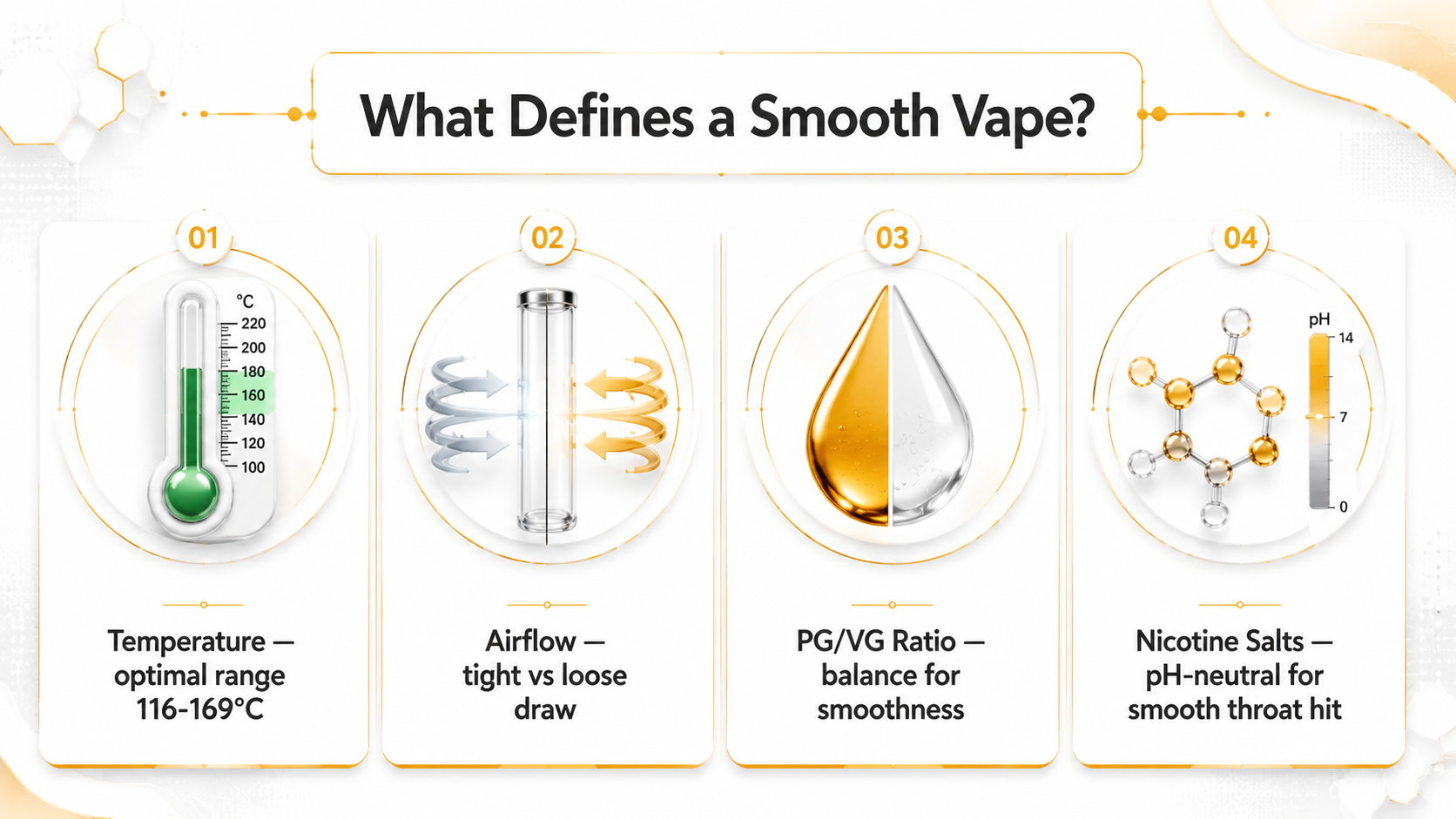
The sensation of smoothness is the absence of throat irritation, harshness, or scratchiness. It's the feeling of vapour gliding down your throat without triggering a cough or a sharp bite. This experience is not accidental — it's the result of four key variables working in harmony: temperature, airflow, e-liquid composition, and nicotine chemistry.
1. Temperature — The Heat Factor
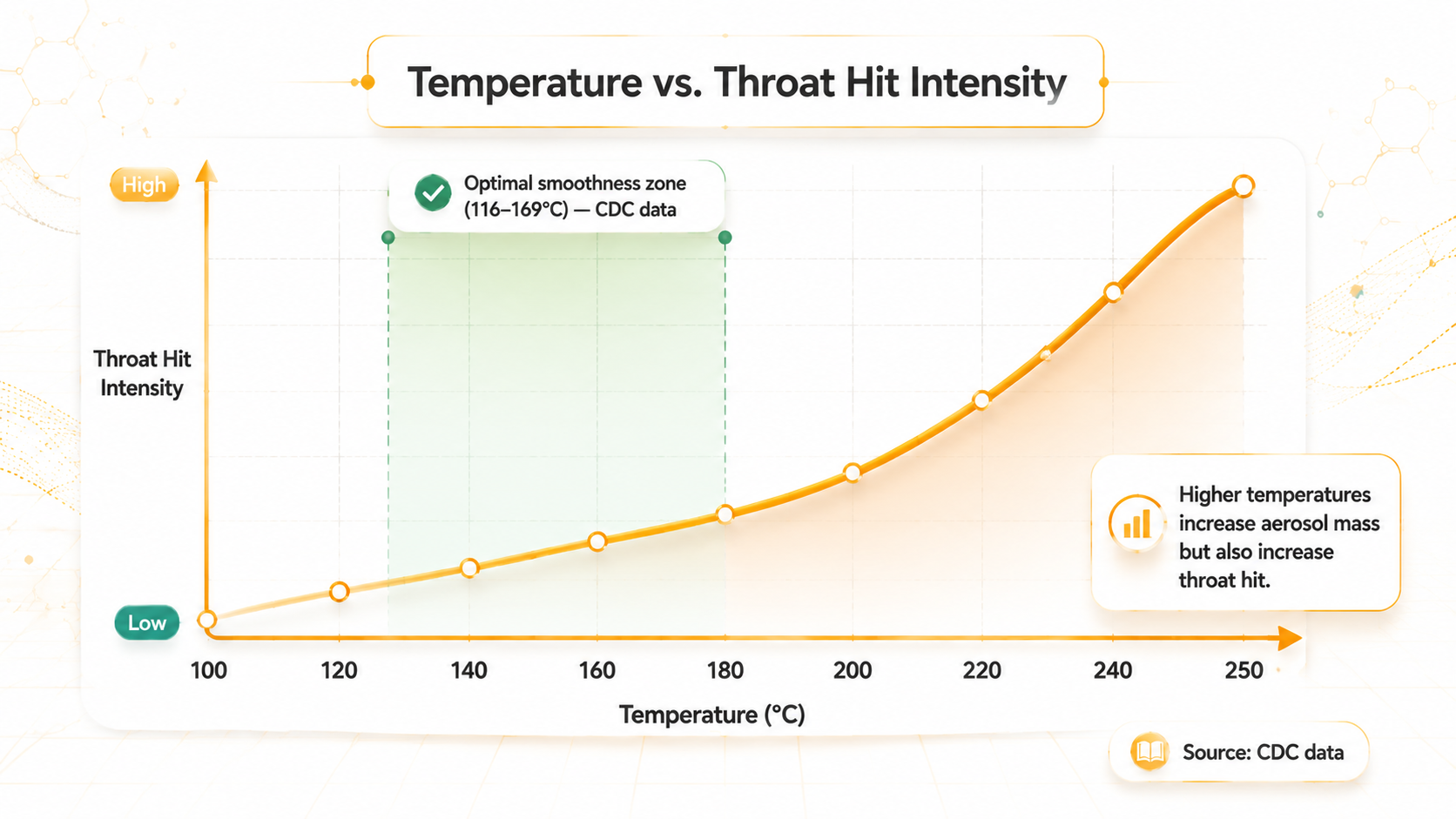
Temperature is the most fundamental determinant of vapour smoothness. When e-liquid is heated, the coil temperature directly affects the aerosol's physical properties. Research shows that e-liquid temperatures typically range between 116°C and 169°C, depending on puff volume and device settings. Coil resistance also plays a critical role — lower resistance coils run hotter and generate more aerosol mass, while higher resistance coils run cooler and produce a gentler vapour.
In practical terms, a cooler vape generally feels smoother. When the coil operates at higher temperatures, the aerosol becomes more concentrated and can carry more throat irritation. Devices with fixed power output, like many pod systems, are engineered to maintain a consistent temperature range that balances vapour production with smoothness. Overheating e-liquid not only creates harshness but can also generate carbonyl compounds that are undesirable from a health perspective.
2. Airflow — The Draw Resistance Balance
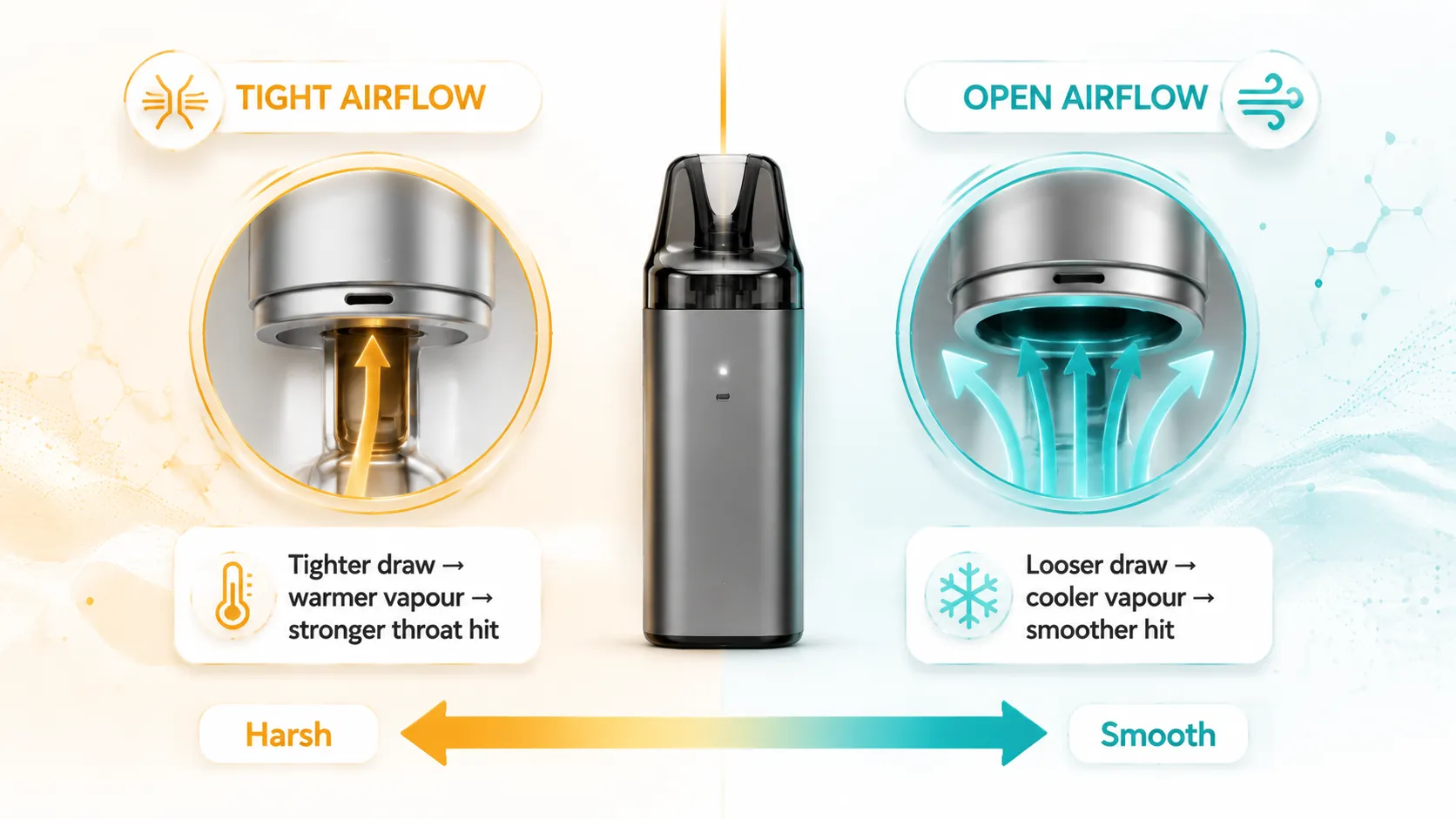
Airflow is arguably the most powerful flavour and smoothness control on any vape device. The relationship is straightforward: tighter airflow concentrates warmth and intensifies throat hit, while looser airflow cools the vapour, increases volume, and smooths out the hit. Tighter airflow creates higher air speed over the coil, producing warmer vapour, stronger throat hit, and more concentrated flavour. Looser airflow delivers greater air volume, cooler vapour, bigger clouds, and a smoother finish.
For mouth-to-lung (MTL) vaping — the style most similar to smoking — a tighter draw with higher resistance coils (≥1.0Ω) and modest wattage produces warm, concentrated flavour and a pronounced throat hit, well‑suited to nicotine salts and 50/50 PG/VG e‑liquids. This is the airflow profile most pod systems and disposables are designed around.
3. PG/VG Ratio — The Liquid Foundation
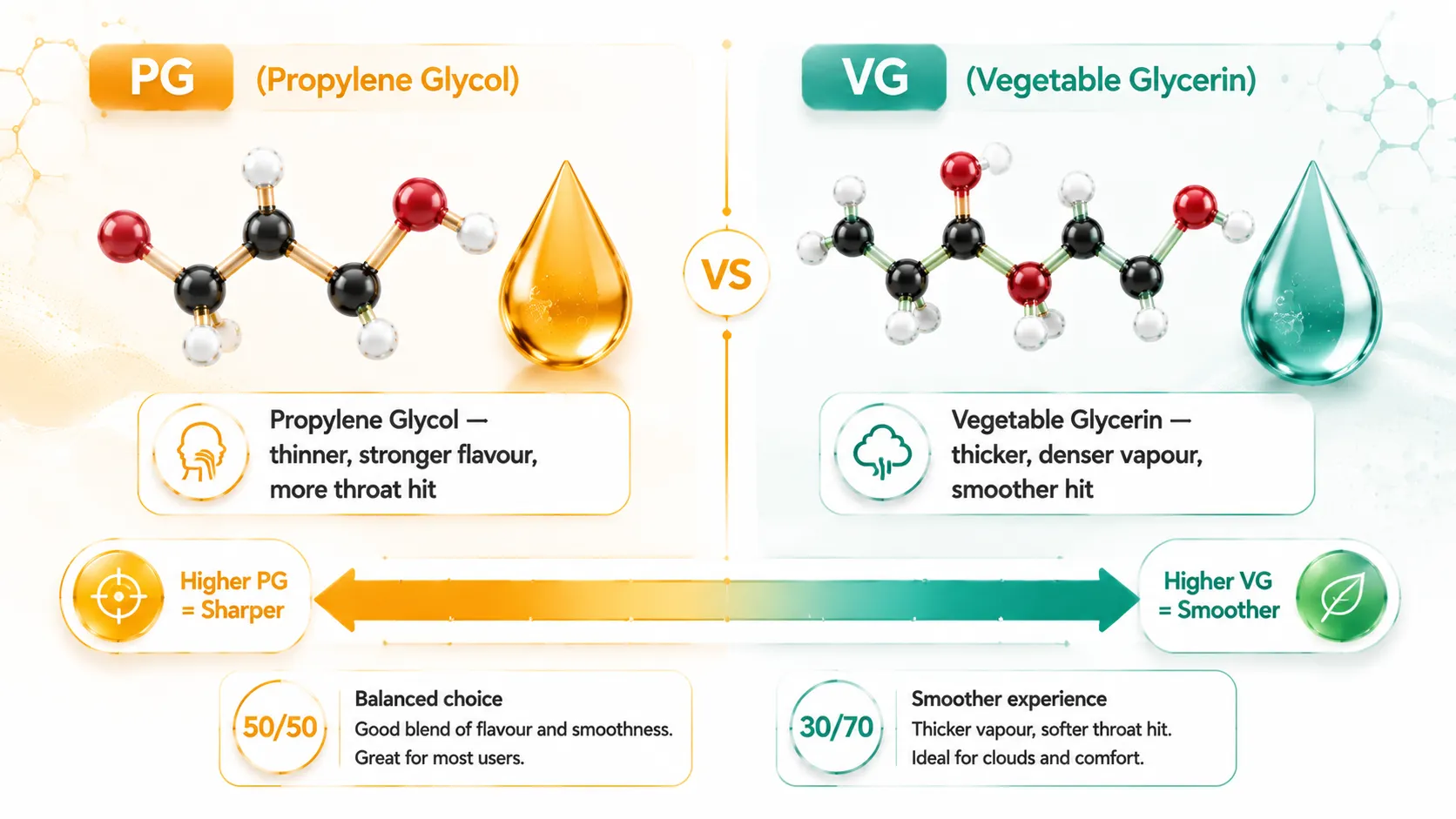
The ratio of propylene glycol (PG) to vegetable glycerin (VG) in e-liquid fundamentally shapes the vaping experience. PG is a thinner liquid that carries flavour effectively and produces a pronounced "throat hit". VG is thicker, slightly sweet, and responsible for dense, voluminous vapour production. Research indicates that higher PG concentrations produce significantly stronger throat hit than lower PG concentrations.
In practice, the PG/VG ratio directly determines smoothness. Higher VG blends (e.g., 70% VG / 30% PG) produce smoother vapour with less throat irritation, while higher PG blends (e.g., 50% PG / 50% VG) deliver more flavour intensity and a sharper throat hit. Most modern pod systems and disposables are optimised for a balanced ratio — typically around 50/50 or 30/70 PG/VG — to deliver both flavour and smoothness without compromising wicking performance.
Thicker liquid, denser vapour, softer throat hit. Ideal for vapers who prioritise smoothness.
Thinner liquid, stronger flavour, more pronounced throat hit. Preferred by ex‑smokers seeking cigarette‑like sensation.
4. Nicotine Salts — The Chemistry of Smoothness
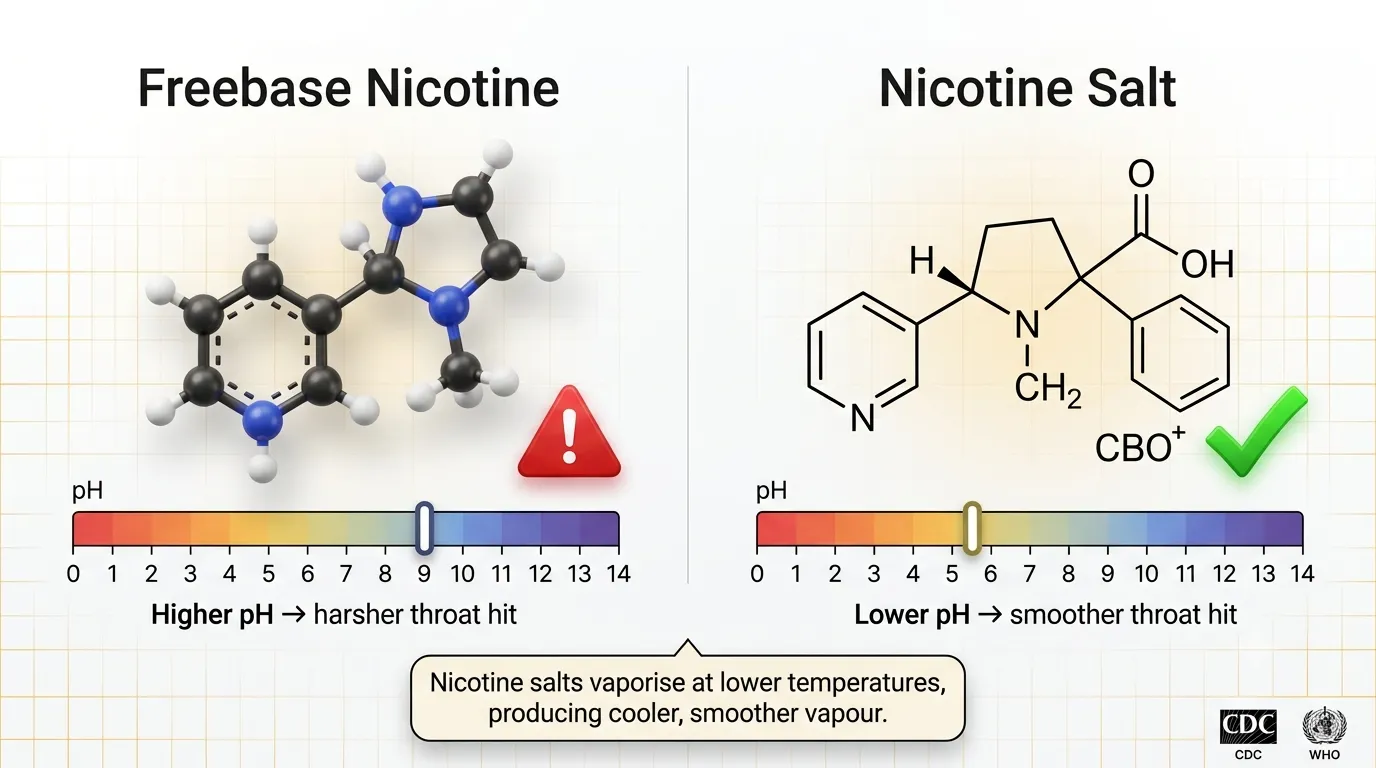
One of the most significant advances in vaping technology has been the introduction of nicotine salts. Unlike traditional freebase nicotine, nicotine salts are formulated with organic acids that lower the pH of the e-liquid, making it less alkaline and significantly smoother on the throat. This chemical adjustment allows for much higher nicotine concentrations — up to 50 mg/mL — without the harshness that would make high‑strength freebase liquids unvapeable.
Nicotine salts have a lower pH than freebase nicotine, allowing particularly high levels of nicotine to be inhaled more easily and with less irritation to the throat. This is why virtually all disposable vapes and pod systems use nicotine salts — they deliver satisfying nicotine levels while maintaining a smooth, palatable vapour.
Putting It All Together — What Creates a Smooth Vape?
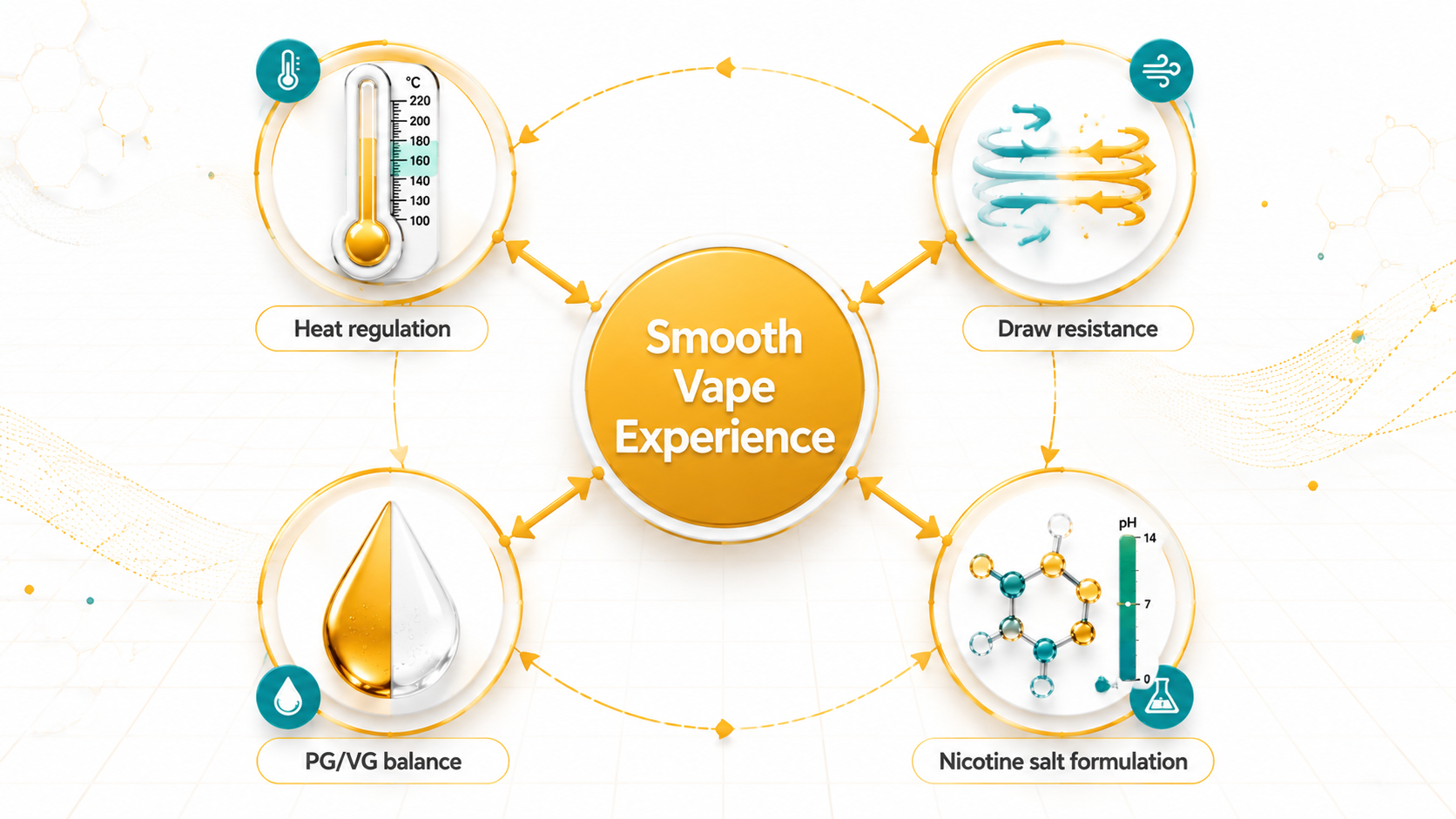
A smooth vape is the result of four factors working in harmony:
- Temperature: Cooler vapour is gentler on the throat. Pod systems are calibrated to stay within an optimal temperature range.
- Airflow: More airflow dilutes and cools the vapour, reducing perceived harshness.
- PG/VG Ratio: Higher VG content produces a smoother, denser vapour with less throat hit.
- Nicotine Type: Nicotine salts are chemically designed to be smooth even at high strengths.
These factors are not independent — they interact. For example, a high‑PG liquid used with tight airflow and a hot coil will produce a harsh, throat‑scratching experience. The same liquid with open airflow and a cooler coil will feel noticeably smoother. Understanding these interactions allows you to choose devices and formulations that match your preference.
Product Recommendations — Smooth, Consistent Vaping
RELX pod systems are engineered with fixed power output, optimised airflow, and nicotine salt formulations to deliver consistently smooth vapour. These devices are designed for MTL vaping with balanced PG/VG ratios, making them ideal for adult vapers who prioritise smoothness.
RELX Devices — Engineered for Smoothness
RELX Pods — Pre-filled with Nicotine Salts
※ Prices are for reference only and may be subject to change. Please check the website for the latest offers. 🔞 Age verification required.
🇦🇺 G'DayVape: We support adult vapers with accurate, science‑based information about vaping devices. All products are 100% authentic and intended for adult use only.
📚 References & trusted sources
- NIH / PMC (2016) – Analysis of symptoms and their potential associations with e-liquids’ components. [PG provides more throat hit, VG produces more vapour]
- NIH / The Impact of E-liquid PG:VG Ratio on Subjective Effects (2019) – Highest PG concentration rated as having stronger throat hit.
- CDC / Notes From the Field (2020) – Nicotine salts have lower pH, allow high nicotine with less throat irritation.
- CDC / Influence of Puff Topographies on E-Liquid Heating Temperature (2023) – Puff Bar e-liquid temperatures: 116.6°C, 128.3°C, 168.9°C depending on puff volume.
- Springer / Physicochemical Aspects of Aerosol Generation – E‑aerosol reaches stable Sauter Mean Diameter ~0.42μm at ~3 seconds.
- CDC / Carbonyls and Aerosol Mass Generation (2023) – Coil resistance inversely related to temperature; temperature directly proportional to aerosol mass.
- Vape Direct / Airflow Science in Vapes – Tighter airflow = warmer vapour, stronger throat hit; looser airflow = cooler vapour, smoother hit.
- Vaporesso / What is Nicotine Salt? – Nicotine salt is pH‑neutral, smooth even at 20‑50mg, vaporises at lower temperatures.
- WHO / World No Tobacco Day 2026 – Nicotine salts allow higher nicotine doses to be inhaled or absorbed more smoothly.
© 2026 G'DayVape — adult vaping knowledge, grounded in clarity. Always adult‑only.
 RELX Pod