

Blog
Why Your Rechargeable Vape Keeps Breaking: Charger Mistakes You Must Avoid

Before We Start: A Critical Safety Reality
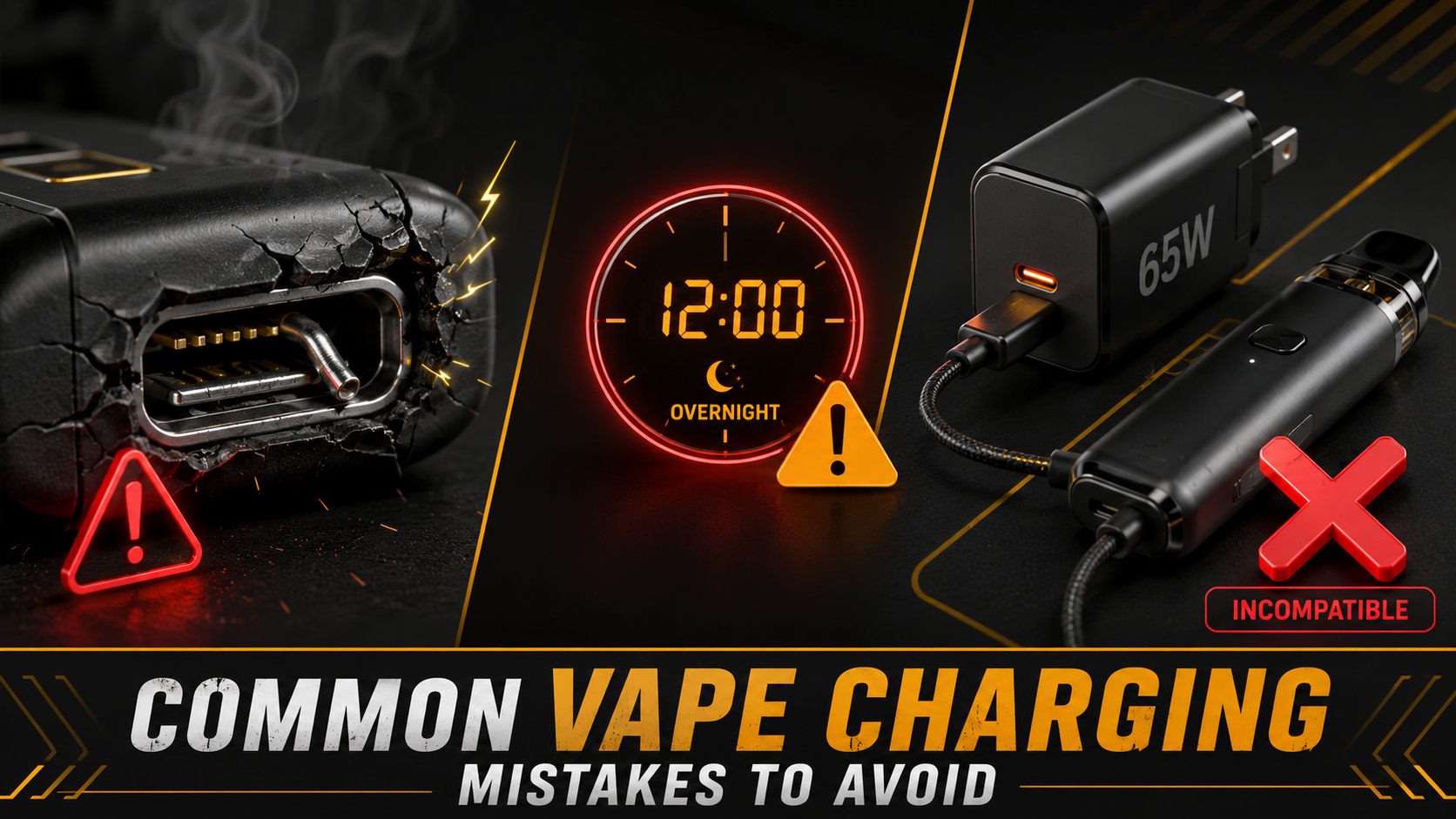
Charging mistakes don't just break devices — they start fires. Lithium‑ion batteries, the powerhouse inside nearly every rechargeable vape, can overheat, catch fire, or even explode when mishandled[reference:0]. Health Canada notes that if mishandled, they can overheat, catch fire, and explode[reference:1]. The FDA, USFA, and multiple fire rescue services have issued explicit warnings about the dangers of improper charging practices. Follow these guidelines not only to extend your device's life but to protect your home and family.
Mistake #1 — Using the Wrong Charger
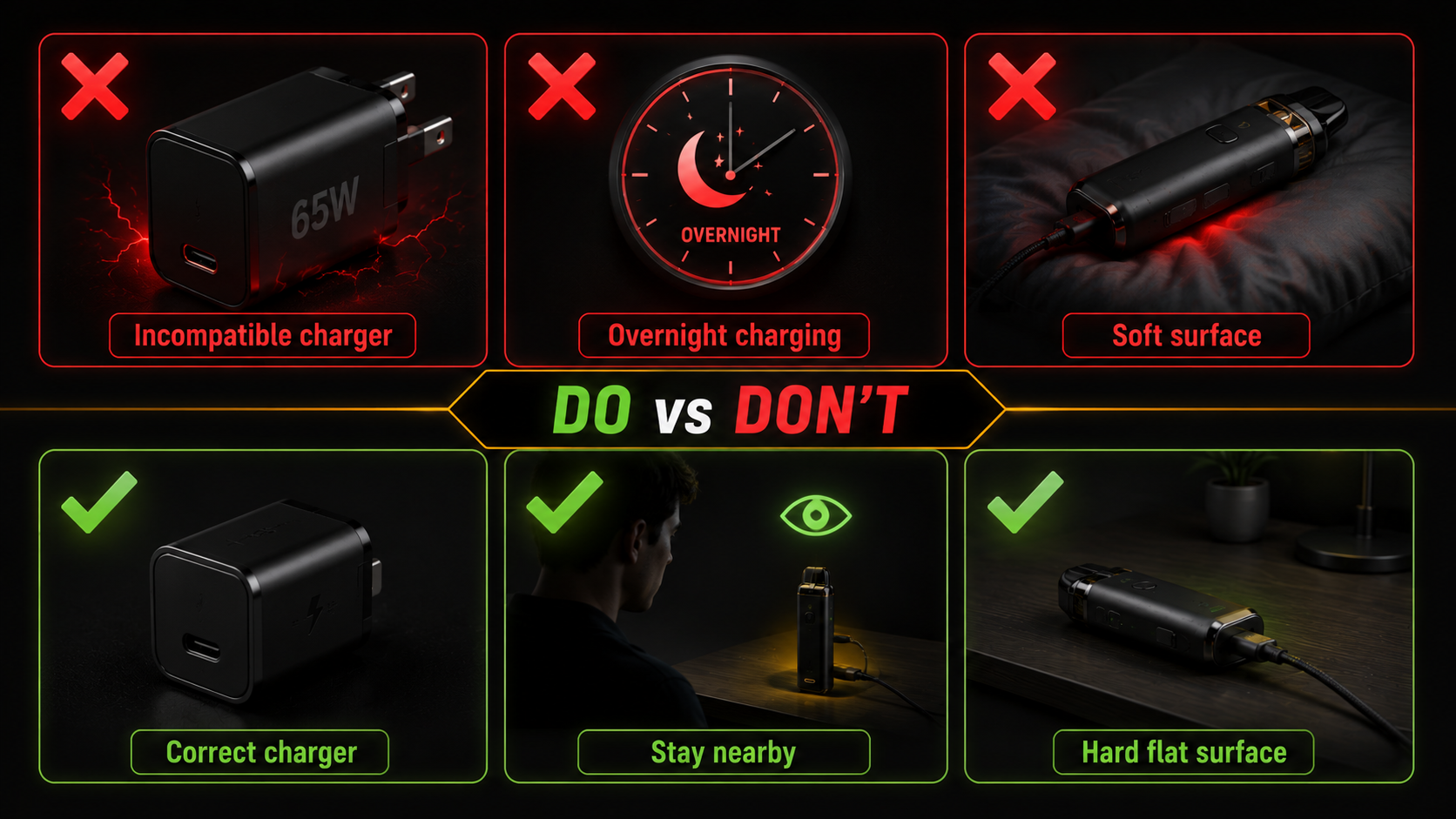
Using a phone charger or fast‑charging block is one of the fastest ways to destroy your vape's battery. Phone chargers often output higher current (amps) than what your vape is designed to handle. Overpowering the battery causes it to overheat, reducing its lifespan dramatically and potentially causing dangerous thermal runaway. The US Fire Administration explicitly warns: "Do not charge your e‑cigarette with a phone or tablet charger"[reference:2].
Vape batteries are sensitive to voltage and current fluctuations, and using an incompatible charger can cause overheating, battery swelling, or even explosions[reference:3]. The only charger you should trust is the one that came with your device. If you need a replacement, ensure it matches your device's voltage (usually 3.7V or 4.2V) and current requirements — a 5V/1A power source is the standard safe option[reference:4]. Avoid cheap, no‑name chargers lacking safety mechanisms[reference:5].
Mistake #2 — Leaving Your Vape Unattended (Especially Overnight)
Plugging your vape in before bed is convenient, but it's also one of the riskiest charging habits. Once a lithium‑ion battery reaches full charge, continued charging forces energy into an already saturated cell, creating internal stress, heat buildup, and eventual capacity loss. Overcharging also increases the risk of the battery entering thermal runaway — a chemical chain reaction that leads to fire or explosion[reference:7].
The FDA advises: "Once the indicator shows that a device or battery has been fully charged, disconnect it from the charger"[reference:8]. Fire authorities similarly recommend never leaving e‑cigarettes plugged in overnight or while you are out of the house[reference:9][reference:10]. Instead, charge your device during times you're awake, present, and able to monitor it[reference:11]. A full charge typically takes only 30–60 minutes — set a timer and unplug when done.
Mistake #3 — Charging on Soft, Flammable Surfaces
Beds, sofas, carpets, and pillows are terrible places to charge any device with a lithium battery. These soft surfaces trap heat, preventing proper airflow around the device. They're also highly flammable. A battery that would simply get warm on a hard surface can overheat dangerously when buried in bedding or pressed into a cushion[reference:12][reference:13]. Northern Ireland Fire & Rescue Service warns: "Don't leave e‑cigarettes charging on flammable surfaces"[reference:14]. Always place your device on a clean, flat, non‑combustible surface such as a desk, tile floor, or countertop, away from curtains, papers, and other flammable materials[reference:15].
Mistake #4 — Ignoring a Damaged Charging Port or Cable
If you have to wiggle the cable to get your vape to charge, your charging port is already damaged. Continuing to use a loose or bent port leads to intermittent electrical contact, which creates sparks, heat, and eventual battery damage. Most vaping problems blamed on batteries are actually charging problems in disguise — wrong cable, wrong wattage, a neglected port, and a perfectly good device starts behaving like a dead one[reference:16].
Before concluding your device is dead, try cleaning the port with a dry toothpick or cotton swab (not metal)[reference:17]. Test a different USB cable. Check that the connector is free of pocket lint. And most importantly, if your cable is frayed, the charging connector is bent, or the port feels loose, stop using it. Replace the cable immediately; replace the device if the port is permanently damaged. And never attempt to solder a broken charging port yourself unless you have professional electronics repair training — the tiny components are delicate, and a bad solder joint can cause a short circuit and fire[reference:18].
Mistake #5 — Exposing Your Vape to Extreme Temperatures
Heat is the silent battery killer. Leaving your vape in a parked car on a warm day can push internal battery temperatures well above safe limits, accelerating chemical degradation inside the cell. The FDA warns: "Protect your vape from extreme temperatures by not leaving it in direct sunlight or in your car on a hot summer day"[reference:19]. The same warning applies to freezing cold conditions, which can also damage lithium cells[reference:20]. Store and charge your vape at room temperature, away from radiators, windowsills, and direct sunlight. A battery that lives its life at comfortable room temperatures will outlast one that's regularly heat‑stressed.
The "Safe Charging" Workflow — Your Six‑Step Habit
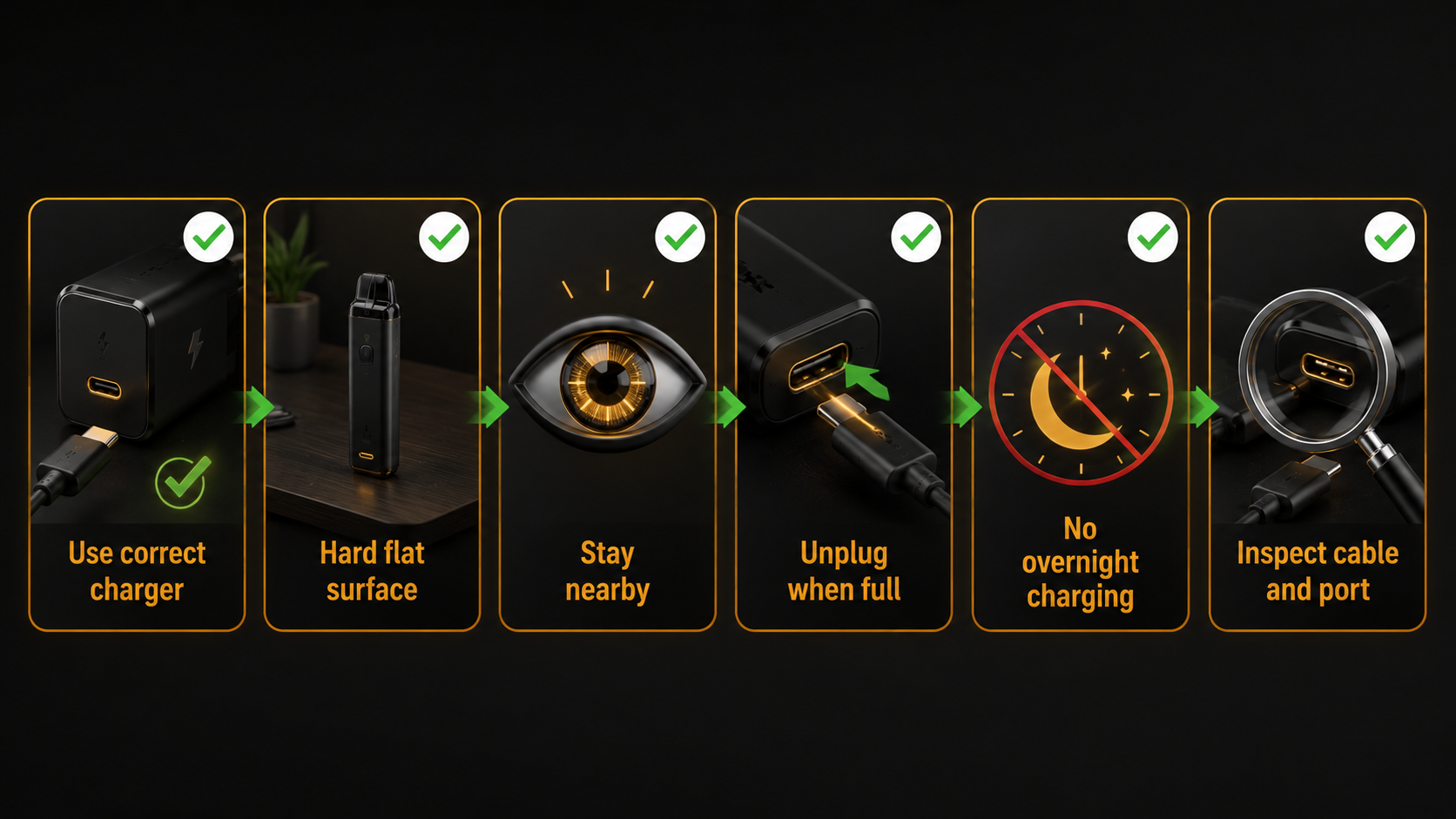
Adopting this simple routine will keep your device alive longer and keep you safe.
- Step 1 — Use only the supplied charger or a certified replacement with matching specs (5V/1A is standard). Avoid phone fast‑chargers[reference:21].
- Step 2 — Charge on a hard, flat, non‑flammable surface — never on a bed, sofa, or carpet. Heat needs to escape[reference:22].
- Step 3 — Stay nearby while charging. Don't plug it in and walk away for hours[reference:23].
- Step 4 — Unplug as soon as the indicator shows a full charge. Overcharging degrades battery life[reference:24].
- Step 5 — Never leave your vape charging overnight or while you're asleep. Most incidents happen during unattended charging[reference:25].
- Step 6 — Regularly inspect your cable and port for damage. A frayed cable or loose connection is a warning sign, not a minor annoyance[reference:26].
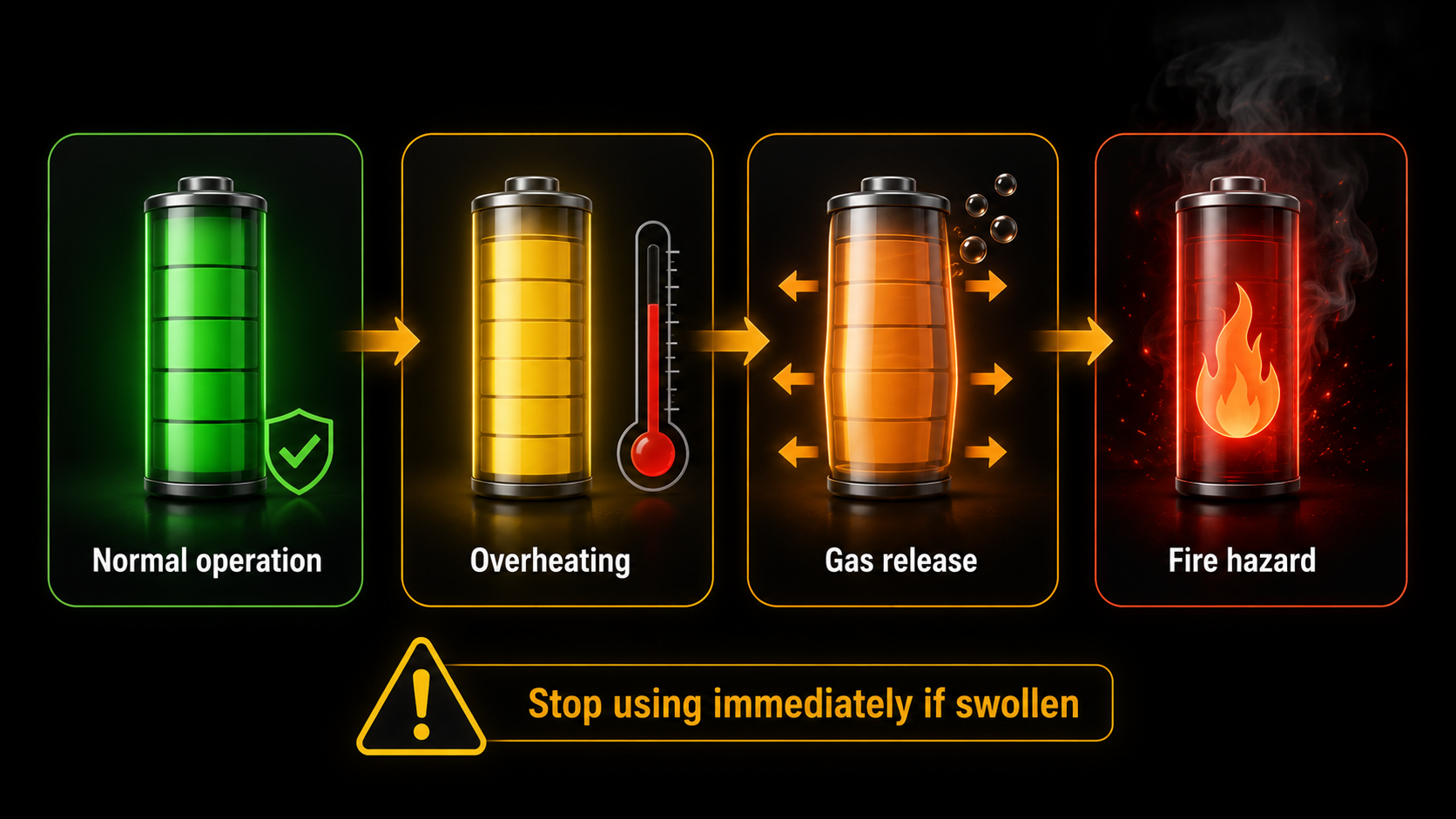
What About Swollen Batteries? (Stop Using Immediately)
If your device looks swollen, bulging, or the case won't close properly, the battery inside has failed. A swollen lithium battery is extremely dangerous — it can ignite spontaneously or explode. Never attempt to charge a swollen battery. The NFCC advises: "Never charge a battery that has been dropped or shows signs of damage"[reference:27]. Instead, look up your local e‑waste collection point or battery recycling location. Many electronics retailers and council waste facilities accept swollen batteries for safe disposal. Never throw a swollen battery into household trash — it poses a fire risk to sanitation workers and waste facilities[reference:28].
Signs Your Device Is Beyond Repair
Sometimes, no amount of good charging habits can bring a device back to life. Replace your device immediately if you notice any of the following:
- Bulging case or visible swelling — internal battery failure
- Hissing or popping sounds during charging — gas release from a failing cell
- Burnt plastic smell while charging — internal component melting
- Extreme heat (too hot to touch) during charging — electrical fault
- Device won't hold a charge for more than a few puffs — battery capacity permanently degraded
Safe Travel: How to Charge When Away from Home
When you're on the go, you might be tempted to plug your vape into any available USB port — a car charger, a public USB kiosk, or a friend's laptop. Exercise caution. Not all USB power sources are created equal. Car chargers can deliver inconsistent voltage. Public USB ports are often unregulated. The safest approach when traveling is to use your original charger plugged into a wall outlet, or use a reputable power bank with built‑in surge protection. If you must use another USB source, monitor your device closely for the first few minutes to ensure it's not overheating. Using the original or a certified vape charger is always safer than untested alternatives[reference:29].
Product Recommendations — Devices That Reward Good Charging Habits
The products below are genuine, reliable devices that perform best when charged correctly. Pair them with good habits — original charger, hard flat surface, no overnight charging — and they'll deliver consistent performance for years. Prices are current as of June 2026 and subject to change.
RELX Rechargeable Devices
RELX Pods – Replacement Cartridges
※ Prices are for reference only and may be subject to change. Please check the website for the latest offers. 🔞 Age verification required.
🇦🇺 G'DayVape: We help adult vapers keep their devices running safely and reliably. All products are 100% authentic and intended for adult use only.
📚 References & trusted sources
- FDA – Tips to Help Avoid Vape Battery Fires or Explosions. fda.gov [Battery handling, charging environment, temperature extremes]
- US Fire Administration (USFA) – E‑cigarette Fire Safety. usfa.fema.gov [No phone/tablet chargers, no overnight charging, temperature protection]
- Health Canada – Lithium‑ion batteries: Don't Go up in Smoke! canada.ca [Charging on hard surfaces, room temperature storage, damage inspection]
- NT Fire and Rescue Service – How can I prevent my devices or batteries from catching fire? pfes.nt.gov.au [Unplug when fully charged, avoid charging on soft surfaces, no unattended charging]
- Northern Ireland Fire & Rescue Service – E‑cigarettes Fire Safety Bulletin. nifrs.org [Never charge damaged batteries, follow manufacturer instructions, avoid overcharging]
- Greater Manchester Fire and Rescue Service – Battery Safety. manchesterfire.gov.uk [Vape charging safety, battery signs of damage, safe disposal]
- WakaVaping – Vape Charging Port Not Working? How to Fix It. ca.wakavaping.com [Cleaning charging ports, testing cables, common charging failure causes]
- Vape Grove – Choosing the Right Vape Charger Guide. vapegrove.com [Voltage/current compatibility, safety certifications, original charger recommendations]
© 2026 G'DayVape — adult vaping knowledge, grounded in clarity. Always adult‑only.
 RELX Pod